A renewed US oil embargo on Cuba is deepening hardship on the island, reflecting a long-standing pattern of intervention driven as much by ideology as strategy.
On 16 April, P&I republished an article about Donald Trump’s mental state from the American progressive magazine Common Dreams. In it, Professor Jeffrey Sachs from Colombia University and several eminent psychiatrists and health workers appealed to Congress and senior Cabinet members to hold urgent consultations regarding President Donald Trump’s fitness for office.
Their concerns were not only about Trump’s decision to go to war against Iran, his illegal kidnapping of Nicolas Maduro of Venezuela and his public musings about taking over Canada and Greenland, but also his oil embargo against Cuba.
This embargo has already damaged the capacity of Cuba’s 11 million people to survive, and the situation can only get worse. Food is spoiling for lack of power to refrigerate food, rat-infested rubbish is rotting in urban streets, hospitals, even with their own generators, are unable to operate, public transport is grinding to a halt for lack of diesel fuel, the poor and elderly are becoming beggars as they poke through rubbish in search of the odd aluminium can to sell for food.
And by all informed accounts, Trump has imposed the embargo, not for any altruistic reasons, but to destroy the government and return the ownership of properties nationalised by Fidel Castro into the hands of their previous American owners.
This is an aggressive and illegal ambition which has its own rationality, echoing the aims of a number of American leaders before Trump. At the end of his term in office in 1961, the year which coincided with Castro’s coup d’état against Fulgencio Batista, President Eisenhower considered invading Cuba, ostensibly to restore ‘democracy’, but more to restore nationalised property to its American owners. Meanwhile John Foster Dulles, Eisenhower’s Secretary of State patronisingly asserted that Latinos were child-like people who had no capacity for self-government.
President Kennedy supported the failed Bay of Pigs invasion of Cuba in April 1961, but only by Cuban exiles in Miami. According to records, his feelings were a complex mixture anti-communist determination, cautious hesitancy regarding US credibility, and ultimate reluctance to commit US forces if the plan went wrong.
President Nixon held similar prejudices to Eisenhower and Dulles. He didn’t even profess to want to see restoration of human rights, declaring that Latinos showed preference for dictatorial government rather than democracy. John Connally, a Texas oil executive appointed as Nixon’s Treasury Secretary was among the first US officials publicly to muse about cutting off Cuba’s oil supply. The effect, he said, would be devastating to them within a month or six weeks.
To refute Dulles et al. the Cubans have strong aptitude for equitable self-government. They have a higher literacy rate than Americans, and a higher life expectancy – or they did before Trump so unreasonably imposed the current oil embargo. There are few landless farmers. Historic buildings in Havana, state-owned, have been restored by the government, the upper floors of which are used to house elderly people and for free child care.
And Cuba’s medical system is among the best and cheapest in the world, a system promoted by satirist Michael Moore in his 2007 movie Sicko. In it, he shows how 50 million Americans cannot afford health insurance and those who have it are frequently denied coverage for certain treatments. Moore exposes American vested commercial interests who condemn universal health care as ‘socialised medicine’. He takes a group of 9/11 rescue workers to the US base at Guantanamo Bay to see if they can get the same free high-quality medical treatment as prisoners. When they cannot, he takes them to Havana where they do get it free from Cuban medical professionals.
Cuba’s international health system remains an admirable national achievement. Despite its impoverishment, the country still had the capacity in 2026 to send 24,000 medical professionals to 56 countries in Latin America, Africa and the Caribbean. This was and remains a major diplomatic and economic initiative, predictably criticised by the United States as exploitative because of the proportion of doctors’ salaries retained by the Cuban government.
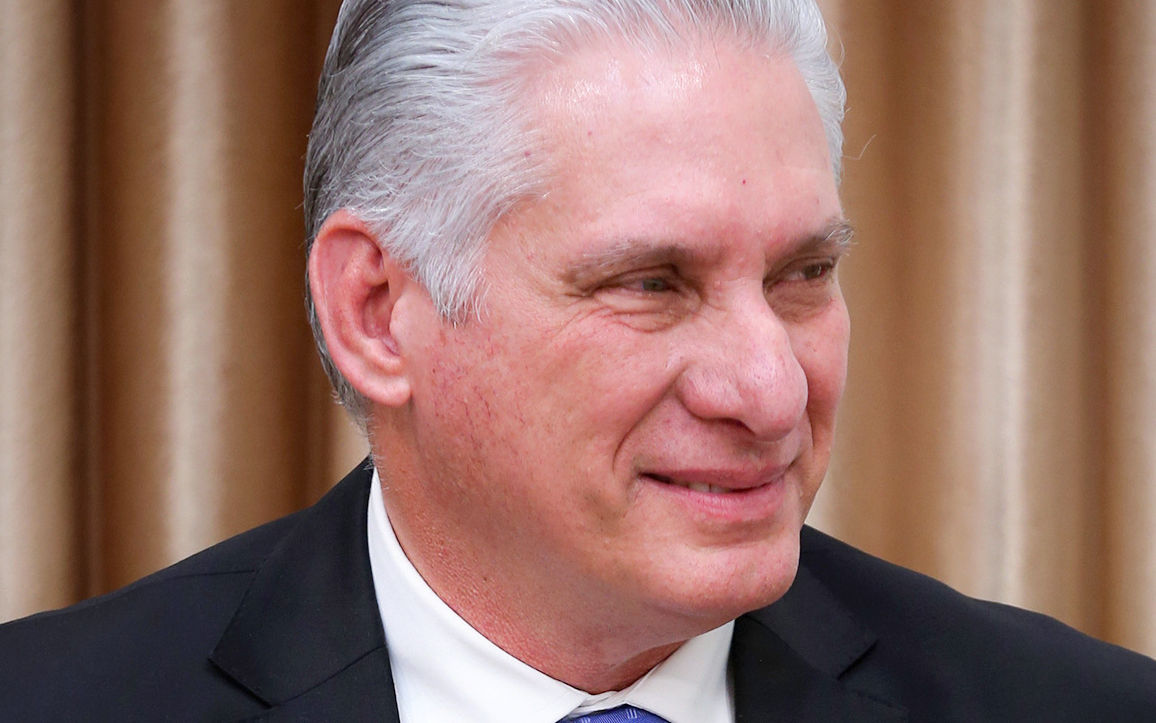
The tragedy, still to play out, might be that under Trump’s destructive oil embargo, the Cuban government led by President Miguel Diaz-Canel and Foreign Minister Bruno Rodriguez may not have the capacity to continue it.
Nor would the destruction of its health system be Cuba’s only casualty under the embargo. During my time in Havana during the mid-1990s, I grew to admire the capacity of Cubans, their inventiveness and stoicism, and their ability to make do with extremely limited resources. I also experienced at first hand how Washington’s prohibition on US companies to trade with Cuba was so destructive. An Australian example was a Queensland sugar milling company that had a profitable commercial business selling equipment to Cuba until taken over by a US company, forcing it to terminate its sales. Indeed, Cuba’s sugar industry is a shadow of its former strength.
In my view, I would hope that the appeal from Jeffrey Sachs and his psychiatric colleagues to senior executives in the American government to examine President Trump’s capacity to govern would be a step taken in the right direction. But given the visceral anti-Cuban sentiment of Secretary of State Marco Rubio and the religious right-wing views about holy war held by Secretary of Defence (War) of Pete Hegseth, I doubt that anyone in Congress or out of it would have the guts to do it.
Richard Broinowski AO is a former Australian diplomat, general manager of Radio Australia and adjunct professor at the Universities of Canberra and Sydney. He has published eight books, the latest being an expansion of his 2003 book Fact or Fission – the truth about Australia’ nuclear ambitions. The later edition includes extra chapters on Australia’s intention to acquire nuclear-powered submarines. (Scribe 2022). Richard Broinowski was a senior Australian diplomat who served in Iran in the 1970s and the Australian Ambassador to Cuba in the mid-1990s.