The government’s new migration measures tighten rules for students, visa overstayers and protection claims. A fair migration system should address genuine policy challenges without turning vulnerable communities into political scapegoats.
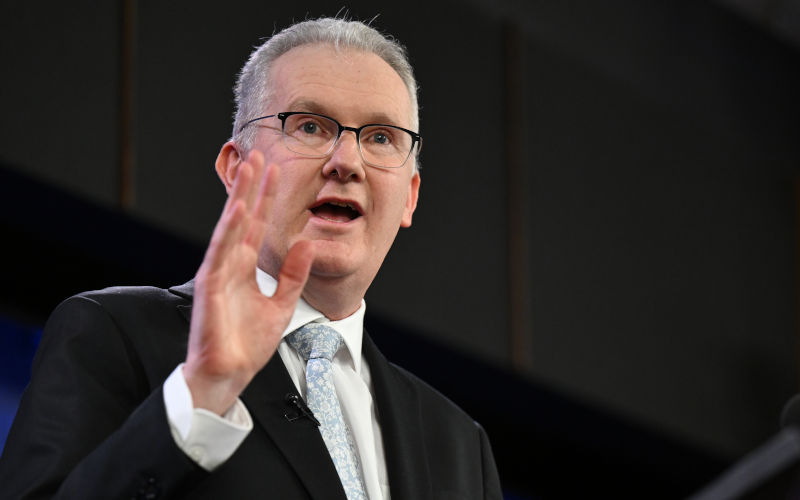
As Minister for Home Affairs and Immigration Tony Burke unveils the federal government’s latest overhaul of Australia’s migration policy, our political landscape feels uncomfortably familiar.
Once again, the national microphone is being tuned to the language of restriction, slash-and-burn targets and artificial urgency. Once again, migrants are positioned not as human beings who live, love and work beside us, but as abstract numbers on a ledger, as easy scapegoats for political campaigning purposes and structural crises decades in the making.
At Democracy in Colour, we’ve seen this play out over and over and over again.
The changes introduced this week fail to address our most pressing challenges – including the cost of living, environmental degradation and rising hate speech – while missing the root causes of the housing crisis.
Instead of addressing these foundational problems, immigration restrictions are targeting two of the most vulnerable migrant groups: students and asylum seekers, while also introducing tougher Trumpian ICE-like (Immigration and Customs Enforcement) penalties for people who overstay their visas.
This is a dangerous, dishonest distraction.
Migration should be built on a transparent, rights-based system that treats every human being with fairness and dignity. Yet political parties seem increasingly willing to indulge a familiar, reactionary narrative. They want the public to believe that cutting off the flow of people seeking to migrate to Australia will magically fix the housing crisis, solve the infrastructure problem and lower the cost of groceries.
A shortage of affordable housing is the direct result of decades of federal tax incentives that turned shelter into a speculative asset class, coupled with continuous failures across state and federal jurisdictions to build public housing. Our crumbling infrastructure and strained public transport systems were starved by successive governments that privatised public assets and failed to invest in public good. The sky-high cost of living is driven by corporate profiteering and structural economic shifts.
Successive governments and their failed policies, mega-corporations and vested interests are to blame for these crises.
By framing the issue around ‘visa-hopping’ students and asylum seekers who ‘manipulate the system’, these policies weaponise housing and cost-of-living anxieties against vulnerable migrant groups. Crucially, detaining people who overstay their visas or preventing a student from reuniting with their families fails to construct a single affordable home or raise worker wages. Instead, it strips families of stability, fosters systemic insecurity and entrenches a tier of second-class residents denied basic institutional support, and brings us closer to Trump’s America.
Our migration system must be guided by human rights, international law and the long-term national interest, grounded in clear evidence and genuine human need – not shaped by political panic or far-right political pressure. For years, the political debate on population has been held hostage by anti-immigrant dog-whistling and panic-mongering. Far-right actors and reactionary parties routinely demand dramatic, arbitrary slashes to migration numbers. But where is the rigour behind these calls? Where is the transparent modelling showing what these cuts to migration would actually mean for Australia?
Political leaders must explicitly leave race out of the migration debate. Our communities won’t be manipulated or used as pawns in a political game that ultimately risks our safety. We refuse to be weaponised against each other. Migration has always been a natural part of human history and a necessary step towards societal evolution.
Our strength lies in standing together. When political parties try to pit established migrant communities against newer arrivals, First Nations people or other marginalised and disenfranchised groups, it weakens us as a whole, as a nation. We need real commitments from all leaders to tackle inequality, protect civil rights and ensure every community can thrive.
Look around you. Migrants are your neighbours, your friends who share your joys and struggles. They are your colleagues who stand beside you at work. We are an integral part of the daily life of this continent.
We deserve a migration framework that is built on fairness, clarity and dignity.
We deserve migration with dignity.

Noura Mansour
Noura Mansour (she/her) is a Palestinian educator, political analyst, writer and community organiser and National Director at Democracy in Colour, an anti-racist national organisation that works for racial justice.Noura studied Political Science and Education and received masters in International Relations from Haifa University. Noura’s passion for racial justice and commitment to building people power are deeply rooted in her lived experiences as a Palestinian woman, academic training in politics, and professional journey in international development.