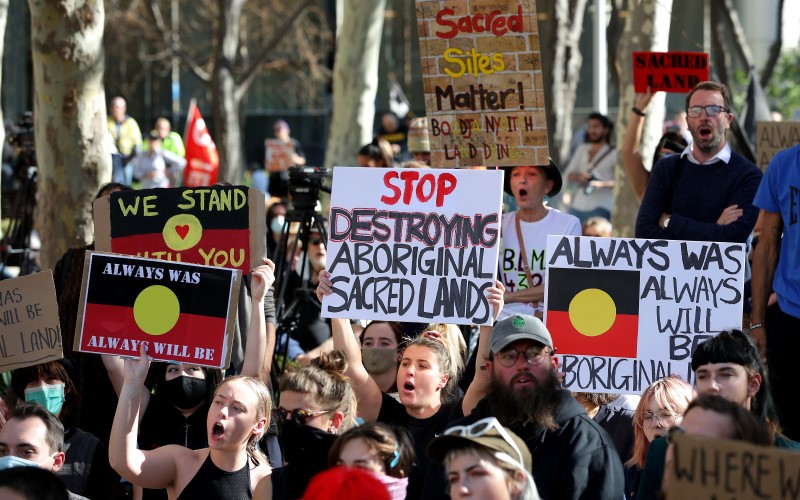
The destruction of sacred Aboriginal sites by Rio Tinto was an egregious example of how heritage protection laws have shortchanged Indigenous peoples. (more…)
Category: Indigenous affairs
-
A deaf ear to disadvantage: time to fix an Aboriginal health crisis
An ear condition that overwhelming affects Indigenous children can lead to social disadvantage. Yet it can be fixed with simple measures. So why doesn’t the government act?
-
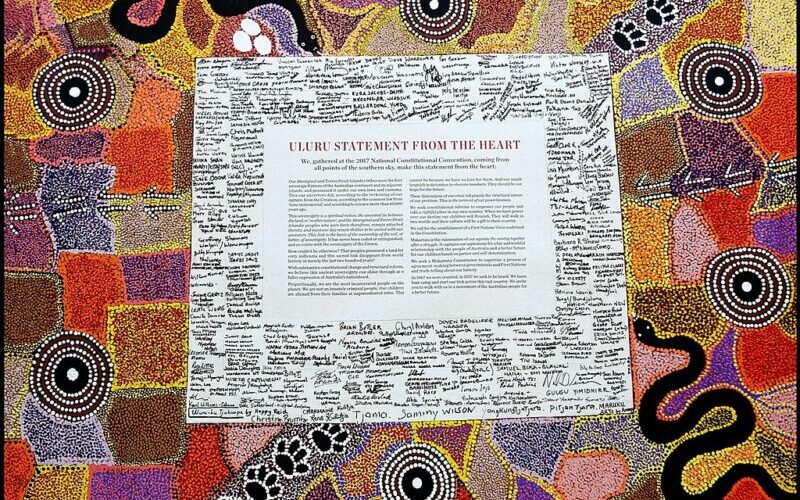
The biggest issue for the 2022 federal election is the Uluru Statement from the Heart
There are many issues in contention between the major parties at the next federal election. The biggest question to be determined by that election is the nature of our response to the Uluru Statement from the Heart.
-

If ever a writer and historian were deserving of a Nobel Prize, it’s Henry Reynolds
It is hard to overestimate Henry Reynolds’ influence in the great movement that culminated in the Uluru Statement from the Heart.
-

Reaching 80% vaccination isn’t the same for all communities. The vulnerable will continue to suffer.
The NSW government has made much of the promise that something good will happen when localities achieve 80 per cent of second jabs of eligible people. But not all numbers are equal.
-
A perverse consequence of the Census in the counting of indigenous people.
Public policies can have unintended consequences. So does the Census, the data from which many of these policies are designed.
-
Catholic Plenary Council – an opportunity for Indigenous reconciliation
It is encouraging that the Instrumentum Laboris (Working Document) of the Catholic Plenary Council due to meet in October 2021 affirms, “We honour and acknowledge the continuing deep
spiritual relationship of Aboriginal and Torres Strait Islander peoples to this country and commit ourselves to the ongoing journey of reconciliation”. (more…) -
Unsettled – seeing First Nations histories represented in the Australian Museum
Museums, libraries and archives are traditionally not culturally safe spaces for First Nations peoples. As state institutions, they have supported the colonial process and they have privileged certain histories over others. The collections that they hold often position Aboriginal and Torres Strait Islander people as objects or specimens of scientific and anthropological study. The historically biased nature of collecting institutions compounds the level of distrust they can raise for First Nations people, and access to them can cause significant discomfort when the materials deny or misrepresent First Nations peoples’ lived cultures and experiences. (more…)
-
The class of 1942: The brilliance behind the Pastoral Strike
The three great figures in 20th Century Australian public life all met their appointments with destiny in 1942 – Australia’s darkest hour. John Curtin was in Canberra. Weary Dunlop was in Singapore’s Changi Prison. Don McLeod was in Australia’s north-west, recruited to rescue what he called, with his wicked sense of humour, the black sheep of the family. (more…)
-
Evelyn Araluen’s Drop Bear demands our engagement
No objective observer could fail to notice how inadequately we are closing the gaps we have created between Indigenous and other Australians. Part of the difficulty could be that 250 years of European occupation have damaged the language on which oral cultural transmission depends.
-
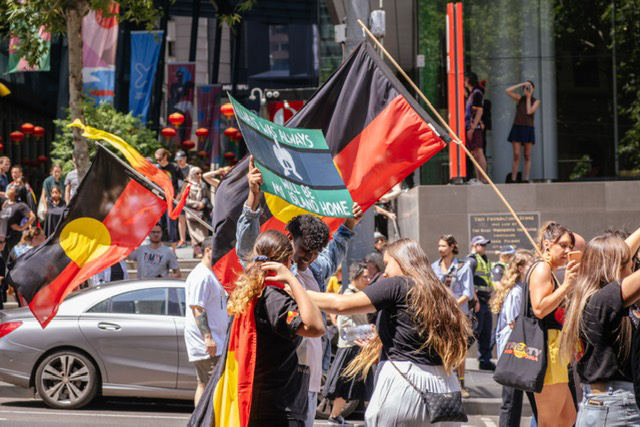
What have our governments done to tackle rates of Indigenous custody?
From one perspective one could see the conviction of Derek Chauvin for the murder of George Floyd as a triumph of the American justice system – a proof, somehow, that American police are accountable to the law, that bad police practice, having its roots in racism will be found out, and that the jury system will get things right. (more…)
-
Nationhood and the deadly incarceration pandemic of our First Nations people
“For the vast bulk of our people the legal system is not a trusted instrument of justice. It is a feared and despised processing plant that propels the most vulnerable and disabled of our people towards a broken and bleak future.” (more…)
-
Holidays and symbols matter and demand independent review
John Howard’s refusal to say ‘Sorry’ on the grounds that he believed in practical rather than symbolic reconciliation actually highlighted the fact that the symbolism of the ‘S-Word’ was so important to him that he just couldn’t utter it. The Anglo in him had similar difficulty with the ‘M-word’; Multiculturalism. (more…)
-
It took an accounting book to teach me the importance of Indigenous peoples’ connection to ‘Country’
It is said that Einstein’s Theory of Relativity came to him as he was leisurely riding a bike. Christopher Stone’s inspiration to write a potentially world-changing paper came to him as a result of a flippant question he posed to a law class he was teaching in 1972: Should trees have rights? Both changed the way planet earth should logically be viewed.
-
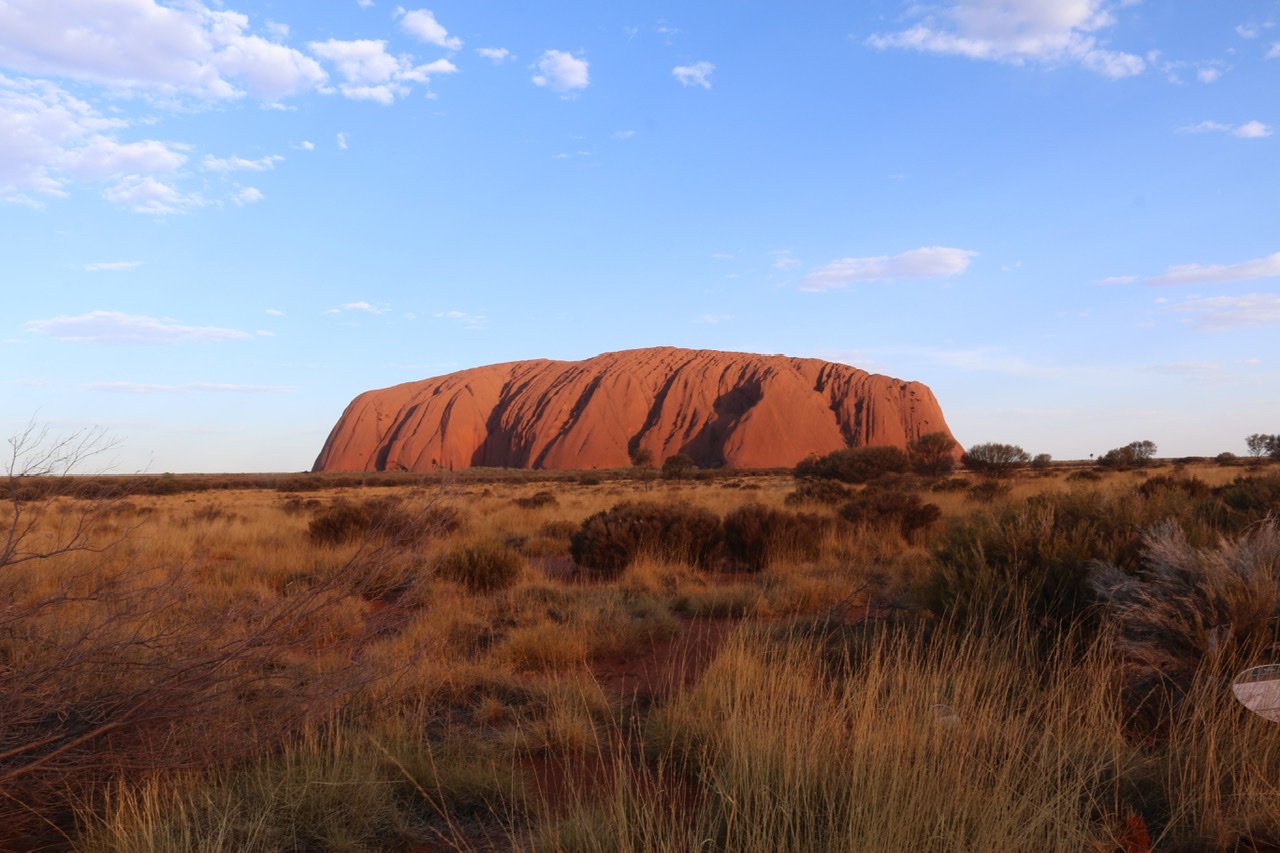
Truth and Treaties: the ongoing legacy of the Uluru statement
The 27th of October 2017 was the most shameful day in Malcolm Turnbull’s tenure as Australia’s Prime Minister. It was the moment when he peremptorily rejected the Uluru Statement which had been addressed to the people of Australia five months earlier. He declared that the projected voice to parliament would not be ‘either desirable or capable of winning acceptance in a referendum.’ It was a stinging collective insult to the first nations’ leaders who had come from ‘all parts of the southern sky ’to draft the document. (more…)
-

The biggest step yet in Truth Telling about Australia’s history since colonisation
Focus has rightly been on the very serious issues of sexual violence that have been raised regarding the Federal Parliament and historically with the Attorney-General, Christian Porter. However, there is already a risk that the profound importance of what has been announced in Victoria this week by the First Peoples Assembly and the State government – the Yoo-rrook Justice Commission – which will be the most comprehensive Truth Telling process in Australia since colonisation began in 1788, might be missed. (more…)
-
Book extract: It’s time for a new museum dedicated to the fighters of the frontier wars
Whether as paramilitary troopers, workers, trackers, guides, servants and sexual partners, many hundreds of Aboriginal Australians were participants in the outward thrust of the frontier. The implication is inescapable. Many Indigenous families have ancestors who were pioneers in the precise meaning of that term.
-
Eddie Maguire stumbled badly, but it was an organisational failure
The Collingwood CEO’s response was a textbook case of what not to do. Here are some pointers for what an organisation faced with having to report bad news should do.
-
Did the Apology make a difference? The consequences of the past still haunt the present
The true horror of the crime committed against Aboriginal Australians remains a difficult subject for many Australians to even contemplate. A major hurdle of reconciliation continues to be that Aboriginal people themselves are being held responsible for ‘closing the gap’ by amending their cultural practices.
-
Eddie McGuire: words matter, because words and actions are indivisible
Which bit was the object of the apology? The misinterpretation, the original sins or the reaction?
-
Australian ‘patriots’ wrap themselves in the flag of a colony
By choosing to stick with January 26 (1788) as Australia’s National Day, conservatives are celebrating a date that highlights the very worst of British imperialism – a ‘rule of law’ belonging to a tiny aristocratic oligarchy with a vicious criminal code defending private property through capital punishment and transportation.
-
A Rightful Place, from colonisation to reconciliation
In the lead up to Survival Day this year, three key reports have been released, the interim Report to the Australian Government by the Indigenous Co-Design team on the Voice; the Human Rights Watch World Report for 2021; and the 2021 State of Reconciliation in Australia Report released last week by Reconciliation Australia. (more…)
-
‘Australians all let us forget that we are not all free’
Until recently, Australia Day for most was just a long weekend to do nothing. I yearn for such a return. Who wants immigration ministers feeling they can decide what we should wear, and what we should be doing? That official bossiness is a precursor to a national security state and social exclusion. (more…)
-
Victors of colonial terrorism, disguised as civilised democracy, get to write the story
Just as Israel’s Independence Day and the Palestinian Nakba Day, in remembrance of deportation and deadly dispossession, have a bloody symbiosis, Australia Day/Invasion Day is celebrated or mourned according to the victors or the vanquished. (more…)
-
Survival Day 2021: What January 26 means to me
Many Australians believe that January 26 fails in its purpose. While it aims to unite, it actually divides us. Instead, the customary Indigenous theme ‘Always was, always will be Aboriginal land’ has the potential to unify.
-
Reverse the decline in democracy through regular maintenance
First, eliminate career politicians. Extend parliamentary terms to five years and limit MPs to two terms. This allows plenty of time for them to try to implement their advocacy programs and ensure parliament is constantly refreshed with new ideas and policies. (more…)
-
We all need to get on board the campaign for First Nations Voice to Parliament
The Uluru Statement’s heart-rending plea, “In 1967 we were counted, in 2017 we seek to be heard” highlights its umbilical connection to the 1967 Referendum. However, this doesn’t guarantee similar success for the call for a First Nations Voice to Parliament. (more…)
-
On Grace Karskens’ The People of the River. A remarkable story of settler and Indigenous co-existence
The Nepean-Hawkesbury – Dyarubbin – witnessed a remarkable story of settler and Indigenous co-existence. In her recent tome, Grace Karskens uncovers this story while shattering many myths and setting new standards for interpretation of historical records.
-
Misery profits: Woolworths’ selective listening on a new mega alcohol supermarket in Darwin
The decision in recent days by the Northern Territory’s Liquor Licensing director to green light the construction of a huge Woolworths owned alcohol retail store within walking distance of Aboriginal communities is an outrage on every level.
-
2020 John Menadue Oration with Professor Megan Davis – Can Australia Deliver (video)
Professor Megan Davis delivered a powerful and impassioned response to the question: ‘Can Australia Deliver?’. Professor Davis addressed the future of the Uluru Statement from the Heart, the ongoing journey toward Constitutional reform, as well as the impact of COVID-19 on Indigenous Australians. (more…)