Chinese electric vehicles have become the focus of a new security scare, but connected cars from every country carry cybersecurity risks. Australia needs stronger protections without allowing fear of China to derail the clean energy transition.
I was drafted for the Vietnam War in the 1970s but failed the medical – fortunately. The ‘Reds under the bed’ conspiracy about Vietnam falling down the map into our bedrooms in Australia was not one we are proud to remember. Despite the unchanged political regime in Vietnam, we now seem to have no troubles trading with Vietnam and encouraging Australian tourists to go there. And why not, as the conspiracy was sheer nonsense.
In a confrontational world, China, among many Asian countries, is apparently now to be viewed with great mistrust and feared with a new conspiracy: ‘Chinese electric vehicles will be spying on us!’
The extraordinary fear associated with EVs from China has been promulgated by the ABC Four Corners show ‘Asleep at the Wheel‘. The focus was a genuine vulnerability – how easy it was to hack into the electronics of each part of the new EV car – but framed the remedy too narrowly around China. Ray Wills and I have pointed out before that all new EV cars are vulnerable irrespective of country of origin.
On the same TV news where this EV conspiracy was being presented, begging us to ‘mistrust China’, an item on further conflicts in the Strait of Hormuz and the Red Sea was suggesting that oil could reach $150 a barrel.
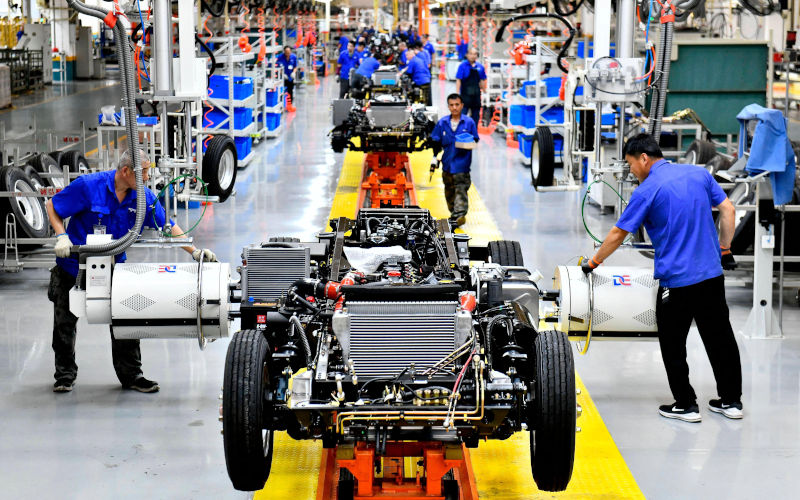
Surely, we need EVs more than ever, and China makes them cheaper and better using robots and AI.
China has been creating global markets for the whole range of clean tech for the past decade. Australia gets its solar, batteries and EVs from China because their technologies have been mass-produced for local consumption before exporting. They are the cheapest and they all work well.
So far, the only groups trying to stop this have been fossil fuel companies. Now it’s ABC’s Four Corners!
The era we are in is rapidly accelerating the removal of fossil fuels through the use of new, cheaper and better clean tech like solar, batteries and EVs. But all of them use software that can be hacked. Cyber security is endemic to all our new clean tech.
PVs on the roof can be hacked as well as EVs. We are now trying globally to control social media and AI, so let’s add to that pile the need to prevent hacking of EVs and all new cars in general.
Four Corners could have pushed this rather than simply fearing China. The threat of people who hack our internet is wider than nation-state espionage, so Australia needs protections against all malicious actors. We need to protect all insecure connected vehicles, and smart devices in general.
The next phase of clean tech from China will be electric trucks, agricultural and mining machinery. Devices that are web-connected and software-defined all need to be cyber-secure. It’s the potentially malicious side of electrons flowing through a cleaner power system.
The climate is rapidly changing, so we need to maintain our hope in achieving net zero. Australia needs to develop partnerships with any country that can mass-produce technologies to replace fossil fuels, especially oil.
The world needs to get together quickly to prevent hacking of all new clean technologies. The CEO of BHP, Brandon Craig, in Shanghai this week spoke of how “partnerships will matter more than ever”. We are important to China as we partner using our iron ore and critical minerals, as well as being a good market for their products.
Western commentary too often treats Chinese technological scale as evidence of threat, while treating reliance on volatile oil markets and legacy fossil-fuel systems as normal. The public-interest response is neither naïve trust nor blanket exclusion. It is universal standards, independent testing, data governance and strategic engagement.
The idea that China wants to spy on every movement of connected vehicles in Australia is as ludicrous as the idea of Vietnamese hiding under our beds in the 1970s. It is critical that we start sensibly working in partnership with every country in the world on preventing global warming, not fearing them with stupid conspiracies.

Peter Newman
Peter Newman is the Professor of Sustainability at Curtin University and works in CUSP which has 95 PhD students working on all aspects of the green economy. Peter has worked in local government as an elected councillor, an advisor to three WA State Premiers and was on the Board of Infrastructure Australia from 2010 to 2014. He was a Lead Author for Transport on the IPCC. He has written 17 books and 286 refereed articles.