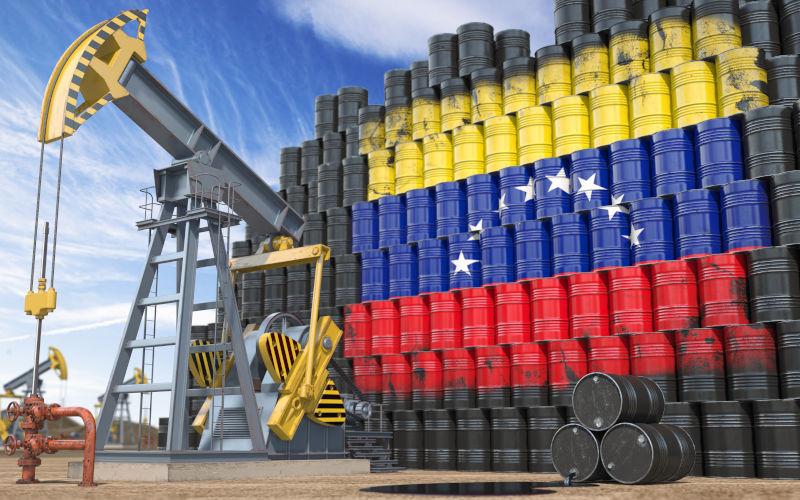
The abduction of Venezuela’s president signals a world where power is replacing law, and impunity is setting the pace.
The United States’ abduction of Venezuelan President Nicolás Maduro from his palace is not an isolated incident or the beginning of a passing chaos; it is an extension of unjust policies that have led and continue to lead to a single outcome: the disintegration of the world order established since the end of World War II.
Before that, and over the past two years, the world witnessed Israeli genocide in Gaza: the killing of civilians, starvation, displacement, and collective punishment. At first, these crimes were shocking and contrary to everything the world had known about human rights and ethics in conflicts, yet the leaders and soldiers of the occupation went unpunished. On the contrary, they received wide political, military, and material support and became capable of pressuring human rights institutions and the United Nations to prevent them from speaking out about these crimes.
The Gaza war was an opportunity for the world to uphold the system of values and ethics that had prevailed for decades. Yet Israel’s and global powers’ handling of the genocide, and the absence of accountability, served as an explicit announcement of the international system’s failure and the collapse of its moral framework. The abduction of Maduro is the first link in a global chain of violence that could affect everyone, without exception.
American and Israeli policies accelerate the occurrence of new wars and global disasters. Israel celebrated the United States’ abduction of the Venezuelan president, while the United States supported Israel’s agents in the Middle East. This coordination reflects the colonial mindset shared by both and gives the impression that they are a single entity operating in two different locations.
The US justification for attacking Maduro under the guise of combating drug trafficking lacks political logic, especially after Trump announced on his platform Truth Social the division of Venezuela’s wealth, as if the world were living in the era of the American Civil War.
The truth is clear: the goal is not to fight drugs but to control resources and demonstrate power.
This American approach reinforces the logic of strength and bullying, encouraging any state or leader to take what they want by force, without regard for ethics. The world is full of revolutionary leaders or strong and troubled personalities, and ideas may emerge that could trigger regional or international conflicts. History reminds us of this: World War I began with a single shot, World War II with Hitler’s ideology, the September 11 attacks were the product of one man’s radicalised mind in caves, and the October 7 operation was the idea of someone who spent more than 20 years in Israeli prisons. In a world full of such personalities, who knows what could happen next?
International laws and institutions, including the United Nations, have often served the interests of major powers. Their incapacity to act against American vetoes or political pressure renders them weak and ineffective.
The core of these crises is purely economic. The United States and Israel are attempting to redraw global maps: the Middle East, the African Sahel, Yemen, Ethiopia’s Renaissance Dam, and even regions like South America. These projects reflect a desire to control resources and trade routes without any ethical framework, as if the world has become a domino game driven by force and violence.
What is happening today is a new Sykes-Picot, but without ethical or contextual considerations. Societies that once represented historical, cultural, and religious stability are treated like movable pieces. These policies increase the likelihood of explosion, as pulling the rope without regard for history and societal structure will eventually cause it to snap.
The world no longer trusts international law or global institutions, after these bodies lost all real value due to US and Israeli transgressions. People no longer accept this moral and ethical void and may seek to build a completely new world order based on justice and accountability, not brute force.
The abduction of Maduro also marks the end of the American “soft power” myth as described by Joseph Nye: the ability to influence states’ policies without harsh intervention. Resorting to direct force and violating international law signals the failure of traditional US diplomacy and indicates that the world is heading toward a confrontation between power and violence on one side, and popular resistance on the other.
Breaking the idols of international law and UN courts at the hands of their makers will undermine the system from its roots. Today’s world, with its leaders and peoples, no longer believes in institutions that can be blocked by a single veto. This moral vacuum will not last long; societies cannot live in the jungle, and they will quickly move to replace this collapse with a new global order born from suffering.
In the end, major adventures do not always proceed as planned by the adventurers. Current international volatility makes any US or Israeli plans vulnerable to failure, especially given global awareness and the rejection of US guardianship and attacks on state sovereignty.
Events rarely follow the plan, and political logic suggests that outcomes will surprise everyone, because the world today is different from what it was decades ago. The world order as we know it is dying, and the coming phase may witness the birth of a new order, either more just or more chaotic, depending on the forces and events that lie ahead.

Refaat Ibrahim
Refaat Ibrahim is a Palestinian writer from Gaza and the founder of The Resistant Palestinian Pens ( https://resistantpens.org/ ). A graduate in English Language and Literature from the Islamic University, he writes about political, social, and cultural issues in Palestine. Through his work, he amplifies Palestinian voices under occupation, believing writing is a bridge between truth and people’s hearts and minds.