The Kumanjayi Little Baby review has again exposed systemic failure in the Northern Territory. The closure of an essential hostel facility in Darwin shows the crisis extends well beyond child protection.
In the 39 years that I have practised law in the NT, much of my work has involved representing Indigenous clients from all backgrounds; town and the bush. Much of it invariably involved cases that confronted and opposed racism and human rights abuse, some of them historical.
I represented ‘The Survivors’ from the hell hole that was the Retta Dixon Home (1942-82) for Stolen Generations mothers and children in the 2014 royal commission into their physical, mental and sexual abuse and its cover-up by the Australian Inland Mission Combine.
I have represented too many Indigenous families and communities in coronial inquests looking into the tragic and ever-increasing number of Indigenous deaths in custody in police vans, lock-ups and the Darwin Prison.
Throughout this period the ‘disproportionate’ Indigenous incarceration levels have continually increased and the conditions in which ‘the incarcerated’ are kept has deteriorated to inhumane and unlawful levels. The current NT adult imprisonment level is second in the world with 90 per cent Indigenous: 50 per cent of that rotting on remand. The figures of incarcerated Indigenous children are equally atrocious, with 100 per cent of children incarcerated in the NT being Indigenous and over 80 per cent languishing on remand. As with the adults, their numbers are accelerating exponentially.
Throughout I have witnessed, close up, a consistent and increasing decline in the human rights afforded to Indigenous Territorians in this jurisdiction. Their ‘treatment’ by the Australian polity and legal system is now disgraceful and culpable. Concomitant with that decline in their human rights has been the equally disturbing and accelerating rise in the level of racism that exists here in the NT.
I also bear witness to a legal system which 40 years ago was dynamic and functioned admirably. All Territorians then enjoyed living under the rule of law and our legal system maintained and asserted, with vigour, the separation of powers and due process. That is now ancient history.
In 2026, the NT criminal legal system has regressed into a dysfunctional catastrophe. The main criminal court, the NT Local Court, has now virtually no semblance of proper due process. Blink and you will miss another Indigenous defendant remanded or sentenced into the overcrowded and unlawful warehouse that is the Darwin Prison. It is now a ‘jailing machine’ rather than a court of law.
NT homelessness and YiSSA
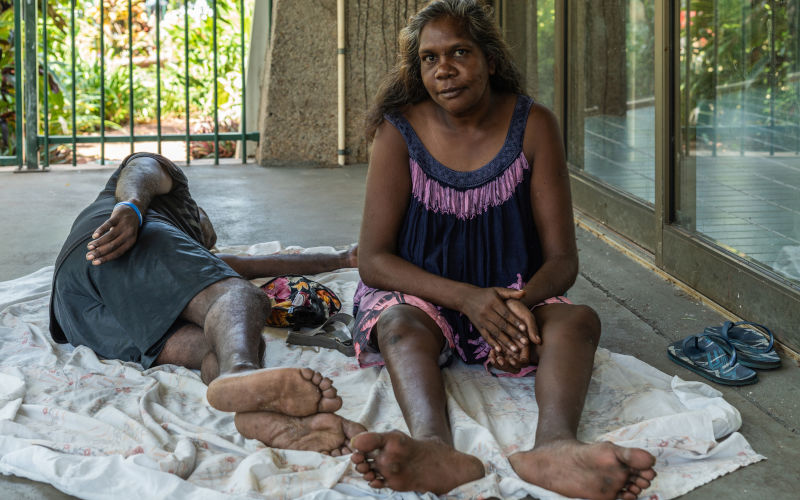
But a decision this week has taken human rights abuses and racism against Indigenous Territorians to another level. The CLP NT government is going to evict approximately 200 law-abiding, rent-paying Indigenous families, including 85 children, from the YiSSA hostel facility in Darwin.
Homelessness presents as an even larger problem in the NT than it does in the rest of Australia. Many of our homeless are Indigenous, many of whom come from the bush into Darwin in order to obtain their serious and urgent health needs not available to them out bush. One major example of this are the large number of Indigenous patients suffering from the blight of kidney failure who come into Darwin needing regular dialysis treatment unavailable in their communities.
There are many other similar examples like rheumatic heart disease and diabetes. Also, many Indigenous women come in with their children to escape the horrors of domestic violence, alcohol abuse and the ever-increasing social unrest occurring in many Indigenous communities in the Territory. These women and their children urgently need safe, secure and affordable accommodation to provide them the safety and services lacking in their communities.
Domestic violence is the most serious social issue in the NT. Many Indigenous women and children are vulnerable and in jeopardy. They need help. YiSSA succeeds in providing that help. The government decided to shut it down and evict these families.
YiSSA is a short-stay hostel accommodation located in the Darwin suburb of Marrara. It can accommodate up to 300 people. It caters mainly for out-of-town Indigenous individuals and families who cannot afford other Darwin accommodation and do not have other family in Darwin to stay with.
It is run by the local Indigenous community-controlled housing agency, Yilli Reung, which ensures it is a culturally appropriate place to stay, providing 24-hour security to ensure safety for all. It has been operating successfully like this for over six years and presents as best practice in this space. It could and should be replicated further in Darwin and in other Territory regional centres. It is a genuine Indigenous success story. Some tenants can stay on if necessary and appropriate; children enrol and attend Darwin schools with their parents receiving the medical treatment and care they need. Some of the tenants take up employment, one example being working as a teacher’s assistant at the nearby primary school assisting Indigenous children with bilingual needs. The cultural difficulties which exist in the interface of Indigenous peoples and white society are successfully navigated with the good assistance of the full-time Indigenous staff who work there. Most importantly, it provides safety for many women and other tenants; a safe haven from the dangers and hazards from whence they’ve fled. Many Indigenous families have benefited greatly thanks to YiSSA. It has assisted with social cohesion, thus benefiting the entire community. This is how it should be.
The inhumane and cruel decision to put an end to all of that, for no real or good reason, is what takes this to ‘another level’ of human rights abuse. A government action brought against innocent Indigenous families peacefully going about their lives, harming no one. On Monday, 12 October, they were evicted and bussed 100km south of Darwin to an incomplete camp of demountables situated on the edge of the township of Batchelor. This deliberate wrecking ball smashed up the lives of hundreds of blameless Indigenous men, women and their children. It now places some of them in real health jeopardy. Few, if any, have cars, so fulfilling their health appointments and treatments has effectively ended.
This is cold cruelty and sends a message to the Indigenous families telling them, or is it reminding them, that they do not belong; they have no value; they are worthless and have no future. It’s a message which replicates the mentality which relied on terra nullius to take this land from its original inhabitants in 1788. This action is what apartheid governments did in South Africa and what Israeli settlers have been doing in Palestine on the West Bank. It says; you do not count as citizens, even as human beings; you are merely ‘units’, ‘cargo’; you are ‘The Other’ who can be sent anywhere, anytime at the behest of ‘the government’.
Governments who act like this and get away with it shouldn’t exist in civilised countries, but it’s happening here in Australia. Are Australians watching, listening and reading about this outrage content for it to continue? The Commonwealth government doesn’t just fund 80 per cent of the NT government’s revenue. It has full legislative authority over all aspects of its governance. It could intervene and reverse this calumny by legislation.
Commonwealth parliamentarians of whatever hue could and should do the right thing here and demand intervention to allow these Indigenous families to return to their safe and peaceful living.

John Lawrence
John B. Lawrence SC has been practicing in the law in Darwin since 1987. He was appointed Senior Counsel in 2010. He was a Crown prosecutor in Darwin and later solicitor in charge of the Northern Australian Aboriginal Legal Aid Service. He is a past president of the Northern Territory Bar Association and of the Criminal Lawyers Association of the Northern Territory. He represented one of the Don Dale youth detainees during the Royal Commission.