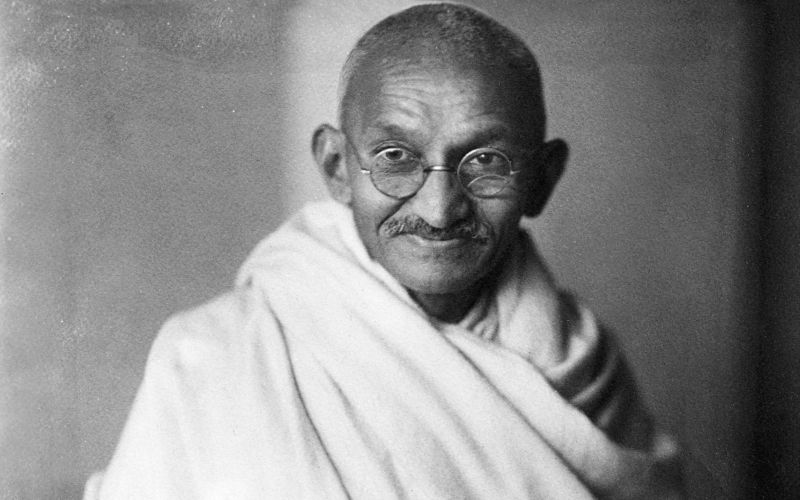
Today marks the 157th anniversary of Mahatma Gandhi’s birth. His vision of religious pluralism, cultural identity and belonging without assimilation finds a striking echo in Australian multiculturalism.
Gandhi was a trailblazer for multiculturalism long before it became a policy objective anywhere in the Anglosphere, Australia included.
His life, teachings, and legacy rest on one principle: acceptance of the Other. Not mere tolerance, but embrace regardless of faith, class, creed, caste, or colour.
Australian multiculturalism shares the same ideal. It welcomes migrants from every corner of the world and seeks to foster intercultural harmony in a diverse society, just over 50 years after the burial of the last remnants of the White Australia policy.
Three parallels stand out.
First, religious pluralism. Gandhi held that all faiths deserved equal respect and that every religion had something of value to offer. He championed interfaith dialogue and held prayer meetings, drawing on texts and hymns from Hinduism, Islam, Christianity, and Judaism, which were a remarkable social innovation for his times.
The cardinal point is that Gandhi preached more than passive acceptance of the Other. He advocated interfaith co-existence. Australian multiculturalism pursues the same goal – social cohesion across religious chasms – and encourages the contribution of each faith to the national mosaic.
Second, cultural identity. Gandhi firmly believed that the cultural identities people inherit deserve preservation and protection. His guiding principle was peaceful co-existence, not assimilation, a recipe for extinguishing a culture.
Multiculturalism in Australia likewise asks no one to shed the identity they were born with. That commitment was learned the hard way – through self-mortifying failure to force the First Nations peoples to “assimilate” into the Anglo-Celtic majority. More than 250 ancestries now coexist in Australia.
Third, practical action. Gandhi’s philosophy and Australia’s multicultural policy share a practical bent. Each sets out to achieve what is, in effect, a silent revolution: chiselling a new society from within the shell of the ossified old.
Gandhi was a ‘constructive multiculturalist’. He walked the talk. He rolled up his khadi dhoti (hand-spun waistcloth) and practised what he preached from the grassroots up. His satyagrahas (truth-force) united people of diverse faiths in a common cause. His ashrams brought people of different faiths to live side by side, deepening intercultural understanding.
Multiculturalism in Australia is likewise expressed through practical action. Beyond the statutory bodies across the country that protect and promote it, community centres, cultural and arts festivals, food fairs, and interfaith dialogues all serve its core purpose: fostering acceptance and understanding of different ways of life.
Unfortunately, though, the parallels do not end with shared ideals; they extend to shared challenges, too.
Gandhi confronted daunting obstacles – inevitable in a country as diverse as India. Australian multiculturalism faces its own. The scale is smaller; the substance is the same.
One, religious division: Gandhi grappled with it throughout his life. Australia faces it too. The old rifts between Protestants and Catholics, and the strains among Slavic communities, are now a faint memory. But other interfaith tensions are rising.
Two, national identity: Australia’s quest for a multiracial identity beyond its Anglo roots mirrors Gandhi’s efforts to forge a many-faceted Indian identity. Multiculturalism holds that national identity is not monocultural, but a fabric woven from many threads. In both countries, this remains a work in progress.
Three, inclusion of the marginalised: Australia’s efforts to empower the First Nations peoples parallel Gandhi’s campaign against untouchability. Both demand genuine inclusion. In both countries, the struggle continues.
But perhaps the most disturbing parallel is the backlash against cultural diversity. In India, a populist nationalism has turned against Gandhi’s philosophy itself. In Australia, multiculturalism has become a loaded political term, assailed by inter/intra faith feuds and resurgent politico-religious ideologies.
However, in a democracy, every social policy must answer periodically to changing times. But questioning a policy is one thing. Abandoning its foundational ideal is another.
Gandhi’s holistic vision of social justice and co-existence is, at heart, multicultural. It belongs as much to Australians as to Indians.

Rakesh Ahuja
Rakesh Ahuja, a former Australian diplomat, is a Cultural Intelligence (CQ) Consultant. Professional Background: RakeshAhuja.DownloadingMyMind.com