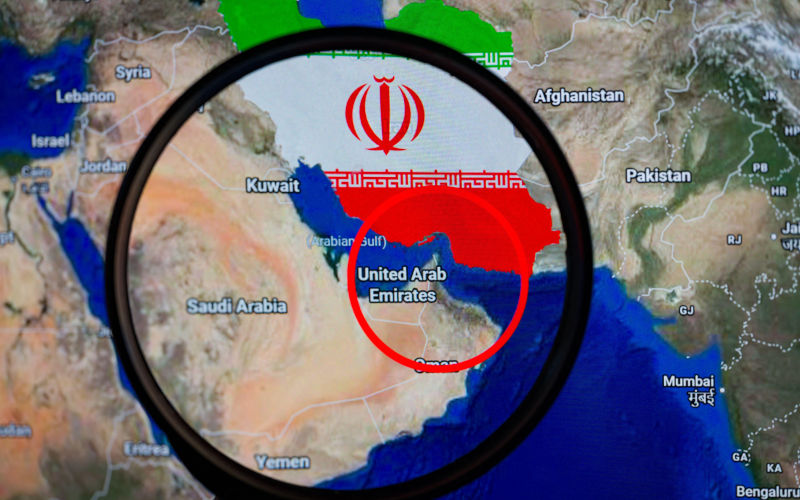
It is not the first time in history that a campaign to take the Strait of Hormuz has failed.
It is extremely unlikely that Donald Trump has even the slightest knowledge about history. But if he did, he might realise that the problems he is experiencing with the Strait of Hormuz are very similar to those experienced by other countries in the past 500 or so odd years.
In 1507, the Portuguese viceroy of India, Alfonso de Albuquerque, tried to blockade the Persian Gulf by subduing the Kingdom of Hormuz. According to John Aspinwall, writing in History Today (July 2026), the campaign was a failure.
In 1515 a naval armada – again led by Albuquerque – was more successful. Albuquerque’s nephew, Pero, justified the action, claiming “through the Kingdom of Hormuz a route opens up before us to the Holy Sepulchre of Jerusalem (the land in which the Saviour was born) so that it may be regained and taken from the hands of those infidels who tyrannically and unlawfully possess it, and into whose hearts a fear has entered that makes them dread the danger posed by their enemies”.
Not quite the Trump justification but if we substitute Jesus for oil there is a similarity in purpose.
It was nevertheless all to no avail because the Ottoman Sultan, Selim I, took over the whole area and then held Egypt and the Holy Land for another 400 years.
Nowadays Trump is experiencing similar problems – both with the rest of the world, and his voters.
The Economist (19/7) reports that, according to a Reuters/Ipsos poll, as the ceasefire unravels, four-fifths of Americans think the war will last for “an extended period”. And nearly half think it will grind on for a year or more, according to the Economist/YouGov polling. Net approval for Trump’s decision to attack Iran now stands at -30 per cent among Americans.
The war in Vietnam took six years to become as reviled as the Iran war has become in six months, The Economist said.

Noel Turnbull has had a 50-year-plus career in public relations, politics, journalism and academia. He blogs at http://noelturnbull.com/blog/