How we remember people does not fit easily into a therapeutic framework of suffering, confession and healing.
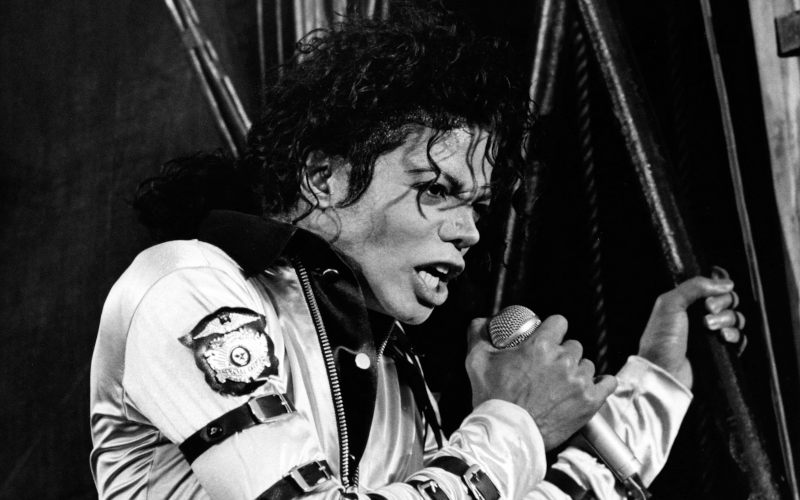
This week’s release of Netflix’s new documentary Michael Jackson: The Verdict and the extraordinary box-office success of the recent biopic Michael have reignited debates about how Jackson should be remembered. Yet watching the biopic shortly before attending the funeral of a close friend has led me to question whether a human life can ever be reduced to a single authentic self.
Critics were not enamoured with the biopic Michael. Its Rotten Tomatoes critic score currently sits at just 39 per cent, compared to 97 per cent from viewers, an extraordinary disparity. The reviews I read were scathing. The film was described as “deceitful”, “superficial”, “over-simplified” and “sanitised”. The controversies surrounding Jackson’s life and child molestation allegations clearly contribute to this reaction and will again return to public attention in Netflix’s documentary.
Yet I suspect some of the hostility toward the film reflects a broader cultural shift. Since the early 1980s, when Jackson rose to global fame, we have increasingly come to expect life stories to be narrated through therapeutic frameworks of suffering, confession and healing. The enormous influence of figures like Oprah Winfrey helped normalise a language in which personal identity is understood through trauma, emotional disclosure and psychological recovery. Public figures are expected to explain themselves, reveal their wounds and submit themselves to continual moral scrutiny. When they fail to do so, they are often regarded as inauthentic.
Canadian philosopher Charles Taylor described contemporary Western society as an “age of authenticity”. Michael Jackson never sat comfortably within this ideal. With his numerous reinventions and identity changes, he seemed to move from one impulse to another in an artistic and mercurial fashion. The film Michael keeps true to this reality and largely refuses to reinterpret him through the emotionally confessional language associated with authenticity expected by contemporary culture.
This does not mean the allegations surrounding Jackson should be ignored. But there is something reductive about the tendency to insist that a life must ultimately be one thing or another. Human beings rarely fit so neatly into a single moral narrative.
The title Michael, not Michael Jackson, is revealing in this respect. Like Elvis or Madonna, the use of a first name alone places him within the realm of mythic celebrity, where the individual begins to take on meanings that exceed the ordinary boundaries of a flesh-and-blood person.
This process is not confined to celebrities. A few days after seeing the film, I attended the funeral of a close friend who had died unexpectedly. The two eulogies captured something essential about the man I had known for years: his difficult personality and lifelong devotion to music, art, travel and writing. Yet the service itself was a traditional Catholic funeral centred on resurrection and eternal life. Sitting there, I became aware of a strange tension between these different ways of remembering the same person.
Afterward, some friends remarked that the funeral felt inauthentic. I understood what they meant. My friend had remained a committed atheist throughout his life. Yet another person standing nearby simply replied: “Funerals are for the family”.
The comment stayed with me because it highlighted a deeper truth. The people closest to us rarely survive in memory through a single coherent story. Different aspects of their lives persist in different ways and do not always comfortably alongside one another.
On the funeral program, my friend was described as three simple identities: lawyer, writer and art lover. Yet none of these descriptions adequately captured the force of his personality, his strange enthusiasms or the way he moved through the world.
As I drove home, one memory returned with unusual force. Many years earlier, after finishing school, we attended ConFest together – a hippie gathering on the Murray River. Despite enjoying being out in nature, we were not impressed with what we saw to be the faux primitivism around us: the earnest hippie workshops, the fire twirling and the self-conscious spirituality. At some point, partly out of boredom and partly out of frustration, I put Thriller into a boombox and turned the volume up loud.
People around us were horrified. In that setting, the disco rhythms and contrived mainstream glamour of Michael Jackson were beyond the pale. The music seemed to violate the festival’s entire ethos of authenticity. Without warning, my friend stood up and headed off down a dirt path, eager to distance himself from the attention the music was attracting. Having avoided exercise for most of his life, he quickly ran out of breath and I soon caught up with him. For a moment a look of irritation crossed his face, but then he burst into laughter at the sheer absurdity of the situation and the attention we were attracting.
This is the way I remember him. Not as a figure in a linear story with a neat conclusion, but as a spirit full of contradictions: intelligent, reckless, independent, lonely, short-tempered, warm and generous. I suspect this is how many human beings continue living after death: not as complete psychological profiles or inventories of authentic and inauthentic behaviour, but as moods, songs, gestures and memories that remain lodged within the consciousness of others.
In this sense, the recent film Michael and my friend’s funeral were both attempts to preserve the uncontainable spirit of a person, rather than present one definitive authentic life.
Adrian Rosenfeldt
Dr Adrian Rosenfeldt teaches at Melbourne University. He is a journalist, public speaker and the author of The God Debaters: New Atheist Identity-Making and the Religious Self in the New Millennium (2022).