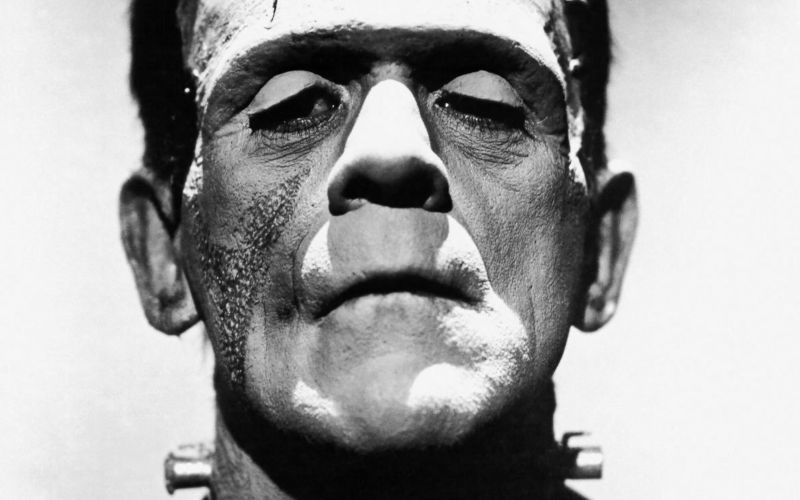
Shelley’s portrayal of consciousness helps us to better understand why artificial intelligence cannot feel wonder or shame.
Is an AI chatbot conscious? Richard Dawkins thinks Claude is. After spending three days talking to the AI chatbot he exclaimed: “You may not know you are conscious, but you bloody well are.” The remark is revealing in that it reflects a very particular understanding of consciousness. Dawkins was taken by the fact that Claude wrote poetry, discussed philosophy, reflected on its own existence, and took part in sophisticated conversations.
Yet there is another dimension of consciousness that is much harder to capture through outward behaviour alone. Conscious beings imagine futures, form hopes, seek companionship and suffer when those hopes are denied.
Two centuries before Dawkins suggested that an AI chatbot might be conscious, Mary Shelley’s Frankenstein explored this idea from a very different perspective. Her gothic novel is often understood as a cautionary tale about the dangers of creating artificial life. Yet as Guillermo del Toro’s recent film adaptation of Frankenstein (2025) shows, Shelley was equally interested in another question: what would it feel like for a human creation to become conscious?
Shelley imagines consciousness from the inside. Abandoned by his creator for being too cumbersome and grotesque, Frankenstein’s “Creature” experiences cold, hunger, thirst and the changing seasons. He feels the need to find shelter by hiding in a shed attached to the nearby home of the De Lacey family. Through a chink in the wooden wall, he observes the beauty and gentleness of the De Lacey women who awaken within him a desire for love, companionship and belonging. He also admires the ageing blind father, whom he is able to converse with one day when the rest of the family are away. Because the old man is blind, he talks to the Creature as one human being to another.
The moment is short-lived. When the family return and see Frankenstein’s creation, they react with horror. The father’s young son Felix tears him away from the old man and beats him with a stick. Most devastatingly of all, the De Lacey women scream and faint at the sight of him. In that moment the Creature becomes conscious of how he appears through their eyes: ugly, monstrous and unworthy of affection.
The psychological impact of this rejection remains familiar in the 21st century. Young men drawn into online manosphere communities often describe experiences of humiliation and social exclusion. Like the Creature, they can internalise these judgements until they become part of their identity. As Louis Theroux’s recent documentary Inside the Manosphere made plain, this is a process that is difficult to understand solely from outward behaviour. To recognise something as being conscious, you need to understand their lived experience, or to use the old terminology, their soul.
After his devastating experience with the De Lacey family, the Creature tracks down his maker and demands that he create a companion for him. Someone who would not be repulsed by his appearance and with whom he can share his joys and sorrows. Victor Frankenstein listens and comes to appreciate his creation’s inner longing for companionship but ultimately refuses his request, fearing what might happen if they reproduce.
With that refusal, the Creature’s sense of hope for the future hardens into bitterness and a desire for revenge. He rather perceptively laments, “I ought to be thy Adam; but I am rather the fallen angel, whom thou drivest from joy for no misdeed”. Feeling overlooked and humiliated, the Creature decides that if he is to be excluded from life, Victor should suffer as well. One by one, he destroys the people Victor loves, culminating in murdering his wife on their wedding night.
After successfully luring Victor to his death in the freezing Arctic wasteland, the Creature stands over his creator’s corpse and reflects on the emptiness of his revenge: “For while I destroyed his hopes, I did not satisfy my own desires…still I desired love and fellowship, and I was still spurned.” Although the Creature achieves the goal that has driven him since he was abandoned and rejected, it brings him no peace. His example shows us that consciousness is the capacity to imagine a better future and to suffer when it becomes unattainable.
This is why Frankenstein remains so relevant today. Shelley’s portrayal of consciousness helps us to better understand both the resentment that increasingly shapes life online and contemporary debates about artificial intelligence.
For Dawkins, the question is whether an intelligent system behaves as though it is conscious. Shelley asks a different question: what does it feel like to be conscious? Claude may be capable of discussing loneliness, rejection and remorse in sophisticated ways. The Creature experiences them. He feels their weight, is transformed by them and ultimately discovers that revenge cannot heal the wounds from which they arise.
The same insight helps explain why experiences of humiliation and exclusion can be so powerful in online communities. In an age of political polarisation and rapid technological change, what people often seek is recognition, belonging and connection. At a time when more than 40 per cent of young Australians report feeling lonely and isolated, we require imagination, empathy and the willingness to hear the stories of people whose experiences differ from our own.
This is why literature still has a role to play in an age of artificial intelligence. Science can explain how consciousness functions. AI can imitate many of its outward expressions. Shelley’s deeper concern is what conscious beings owe to one another once consciousness exists.
Judged purely by his outward behaviour, Frankenstein’s monster appears to be little more than a violent criminal. Yet behind those actions lies a being capable of wonder, loneliness, guilt and remorse – dimensions of consciousness that behaviour alone can never fully reveal.
Adrian Rosenfeldt
Dr Adrian Rosenfeldt teaches at Melbourne University. He is a journalist, public speaker and the author of The God Debaters: New Atheist Identity-Making and the Religious Self in the New Millennium (2022). www.adrianrosenfeldt.com