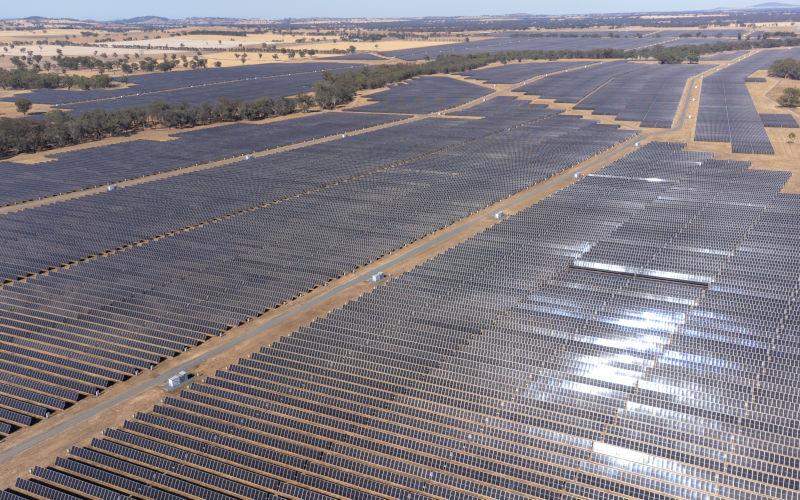
One Nation’s victory in Farrer places the party at the centre of major renewable energy and transmission projects in regional New South Wales, despite its strong opposition to the clean energy transition.
One Nation’s win in Farrer has put the right-wing populist party in control of a major part of New South Wales’ (NSW) green energy sector, taking in another of the state’s renewable energy zones and “control” over two of the country’s best wind and solar regions.
Over the weekend David Farley become the first One Nation candidate to win a lower house seat, with 57 per cent of the two-candidate preferred vote.
He now joins Barnaby Joyce, the former Nationals leader who defected to One Nation and who represents New England in the House of Representatives.
It presents a new political challenge for Labor, and other movements – the Greens and the Teals – who want to take climate change and the green energy transition seriously, and another potential hurdle for developers who are seeking community support for their projects.
Farley is now the federal MP for an area containing 156 proposed, under construction or commissioning renewable energy and storage projects, the entire South-West renewable energy zone (REZ), and key transmission projects VNI West and Project EnergyConnect, according to data from RenewMap.
Data from the company, which tracks energy projects, shows there are 822 wind, solar and battery projects in various stages of development in NSW, from thought-bubble proposals to actual operations.
Of this total, Farrer has 203 of these, in addition to the major transmission projects currently being built – the interconnector from South Australia, Project Energy Connect – and still being planned – VNI West into Victoria.
Some of the projects in his electorate have been forced to go through the Independent Planning Commission because of the number of objections, but nearly all of these have been long distant opponents, and few from the areas actually affected.
The residents of Farrer, however, are now represented by a party whose energy policy is a diatribe against net zero, and an attack on the way global temperate records are kept.
It also wants to scrap emissions targets, and promotes obvious lies such as the claim that ’30 minute cities’ will penalise people for travelling outside their 30-minute zone.
Joyce, whose electorate is in the heart of another major REZ, has described renewables as a scam and a “swindle”, and One Nation, whose funders include Australia’s richest person Gina Rinehart, wants to scrap all new solar, wind and transmission projects across the country.
Ironically, two of Rinehart’s major mining investments, Liontown Resources and Lynas Rare Earths, have achieved very high levels of renewable penetration at their off-grid mines and processing plants, which have protected them from the increased costs of fossil fuels.
One Nation specifically wants to ban any of these projects on agricultural land, that have any negative impact on native plants and animals or create an increased bushfire risk.
It would instead replace these with coal, gas, nuclear and new hydro plants.
Rooftop solar is apparently safe, but compulsory smart meter installations are out, even though these are needed to legally export rooftop solar generation into the grid.
One Nation MPs are fans of commercial, industrial and rooftop solar, with one candidate in Western Australia investing in a company supplying these.
The party is also vehemently opposed to the Renewable Energy Target (RET), the Safeguard Mechanism, the Capacity Investment Scheme (CIS) and the Clean Energy Investment Scheme and would scrap them if it could.
The other right wing parties, the Nationals and the Liberals, hold similar views.
Farley, a former head of Australian Agricultural Company, the country’s largest cattle company that is now partly owned by another iron ore billionaire and green energy evangelist Andrew Forrest, is keen to see more coal power plants built.

Rachel Williamson
Rachel Williamson is a science and business journalist, who focuses on climate change-related health and environmental issues.