Sixty days into the conflict, Iran has held its ground in the Strait of Hormuz, while US pressure has failed to force concessions – raising the risk of escalation, oil disruption and wider global instability.
Sixty days since the beginning of the war, Iran continues defending, successfully, its control over the Strait of Hormuz, by both military and diplomatic means, while insisting it is ‘open’ to shipping – albeit on its own terms. Uncertainty surrounds the likely effect of the US naval blockade on Iran, but if it proves successful in increasing US pressure it may cause Iran to escalate the conflict, hoping to increase economic and political pressure on the Trump administration.
Iran has not been willing so far to change its stance on any of its core positions. Iran insists ships using the Strait of Hormuz must obtain Iranian permission to pass through, and pay fees. The United States rejects these demands. Its naval blockade of Iranian oil exports aims to put enough financial pressure on Iran, and to pose a sufficient risk of damage to its oil fields (if Iranian oil production has to close down because it has nowhere left to store oil) to force the Iranians to abandon nuclear enrichment, and to hand over its stock of highly enriched uranium. On Iran’s part, there has been no indication that it will give the United States under Trump anymore than it had promised to do under the agreement negotiated with the Obama administration that Trump so foolishly abandoned.
The US has not been as active lately in pursuit of its demands regarding Iranian missile production, and an end to Iranian funding of proxy groups, specifically Hamas, Hezbollah, and the Houthis. Iran is refusing to discuss those demands anyway.
The two sides also disagree on how negotiations should proceed. Iran has proposed a phased approach, addressing Hormuz and a permanent end to the war first, then other issues. Since the sudden withdrawal by Trump of the US delegation from negotiations in Islamabad the Iranians have been inconsistent in public statements regarding whether the nuclear issue remains up for discussion at all. The United States rejects the Iranian proposal as a way to avoid addressing the nuclear issue.
The Iranian leadership regard the conflict, with justification, as an existential struggle. They have maintained tight internal control. Dominance within the political leadership has shifted to a more ideologically driven group – some of whom argued against accepting the US ceasefire – who do not feel they have been defeated. They are prepared to risk a renewal of the war and believe they can cope with the economic pressures ahead.
The Iranians probably assume, like most observers, that oil price pressure and midterm elections in the US will cause Trump eventually to modify or give up on key demands and declare victory. That would seem logical, so far as it might represent the least bad option available to the US president. Whether that course of action will be taken remains to be seen, however, depending as it does on the peculiar nature of US domestic politics, Congressional and other institutional factors, Israeli reactions, and Trump’s thinking about his image and legacy, all of which the Iranians may misread.
Not too much should be read, either, into speculation about Iran engaging in discussions with regional intermediaries. Those contacts are unlikely to produce results while neither Iran nor the United States is willing to compromise on core issues.
For deeply-held political, historical and ideological reasons, Iran will be determined not to make substantive concessions under US pressure. Its relations with China, Russia and Pakistan appear to be in reasonably good shape, making it less likely they might leave Iran isolated in the UN context. Most important of all, neither side trusts the other to deliver on its undertakings.
The fact there is a ceasefire in the Gulf does not mean, however, that the present situation is sustainable. If a deal is nowhere near, it makes sense for Iran to push oil prices higher and exacerbate economic distress in consumer countries sooner rather than later, aiming to raise the economic and political costs on Trump before the US blockade generates pressures on their own economy that become too severe.
The likelihood of an Iranian military escalation, probably aimed, at least initially, at preventing oil exports through the Red Sea, is a situation of grave risk for the Gulf Arab states. Until now, the Iranians have been careful not to apply too much pressure on Saudi Arabia, and vice versa, probably because they can see longer term strategic advantages in maintaining that relationship. Others probably recognise that it will be difficult to calibrate any mutual military escalation with Iran to avoid further damage to oil production and export facilities, and potentially key industrial and public infrastructure around the region.
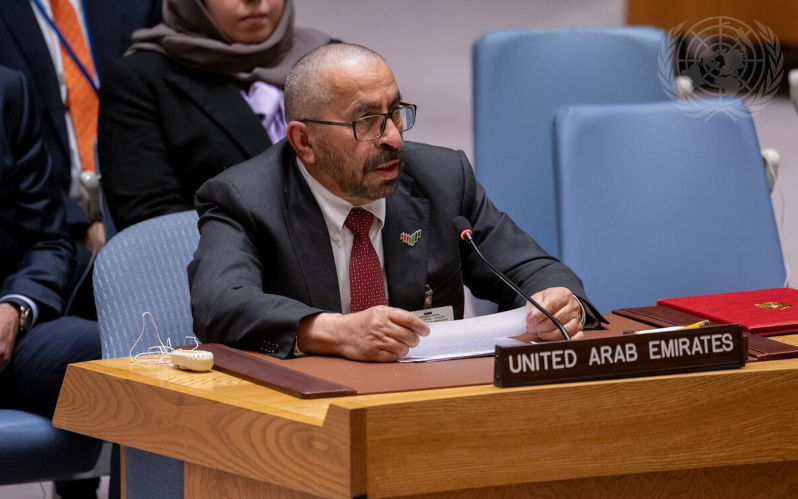
Only the UAE, which is increasingly at odds with Saudi Arabia over the role the Emirates is playing in the region as well as its stance regarding Iran, OPEC and other issues, has continued to urge the US to press for an outright military victory.
Trump insists, predictably, he is in no hurry to reach a deal. He has repeatedly called off attempts at publicised negotiations. But so long as the regime in Tehran remains intact, an American victory in a land war is highly improbable.
A renewed and expanded military campaign would be likely to mean a protracted conflict imposing additional costs on the international community, as well as on US voters, and on US defence preparedness elsewhere. It would drive further wedges between the US and European countries. US relations with China would be strained, for no clear benefit to America’s interests in both cases. And a costly American military campaign, especially one that was deemed a failure, would have wider strategic and political implications than simply a failure to achieve over-ambitious and ill-conceived US objectives in the Gulf context.
The logic of strategy and diplomacy does not always match the logic of politics, however. But even a major US military action, such as seizing the Iranian export facility at Kharg Island, or Larak Island and other islands in the Strait used by Iran to control shipping, would be pointless if the Strait remained closed, or if shippers and insurers were not attracted to arrangements for naval escorts through contested waters when a relatively secure (but more costly) Iranian-approved route were available.
It is difficult to predict for how long the United States, for its part, will pursue the naval blockade. Although it appears not to be having any significant impact yet on the Iranian position, we simply don’t know how the effects of the blockade will work out.
The Iranians may be willing to absorb more economic pain, including damage to their oilfields, than the US anticipates. Iran may find ways to store oil for longer than expected. The Iranians may calculate the damage to their oilfields may be less long-lasting than some antagonistic oil industry pundits predict. One recent analysis suggests that the US blockade of Iran’s oil exports will not cause catastrophic, or even very serious, damage to its upstream oil industry, and most of Iran’s prewar oil production capacity could be restored within a few months.
At the political level, it is very likely the Iranian Revolutionary Guards will remain impervious to the suffering of the Iranian population as they pursue their goals in what is, to them, a struggle for survival against external overlordship. Or the effect of the blockade could be more dramatic, both economically and politically, than the Iranians anticipate.
If, however, the effect of the blockade is to lead to the Iranians escalating the military conflict and restricting oil flows still further – which is the most likely result of the present trajectory of the conflict – or if there is instability among developing countries and rising unemployment in western countries as a result of rising oil costs and supply constraints across a range of industries, the open-ended US approach may not be as acceptable to major oil consumers, and US voters, as it is at present.
Against that background, the most likely outlook is for the Iranians to continue defending, successfully, their control over the Strait, by both military and diplomatic means, while insisting it is ‘open’ – on their terms.

Bob Bowker is an Honorary Professorial Fellow at the Centre for Arab and Islamic Studies at the Australian National University. He is a former Australian ambassador to several Arab countries.