Australia’s democratic problem is not simply poor civics knowledge among citizens, but a political class too willing to avoid scrutiny, resist transparency and govern behind closed doors.
In a recent interview the Governor-General, Sam Mostyn, reflected on the state of Australian democracy. She warned of a potential catastrophe resulting from poor understanding of the tenets of our democracy that make our country work, especially among the adult population.
I agree with the governor general. There is something amiss in the state of Australia’s democracy and it should concern all of us. However, I’d argue that the fault does not lie with the citizenry. Rather, it is the nation’s political leadership that must shoulder the blame. All too often, as soon as it proves inconvenient, the leadership of both political parties undermines or disregards the obligations needed to support a vibrant and spirited democracy.
As the saying goes, ‘a fish rots from the head down’.
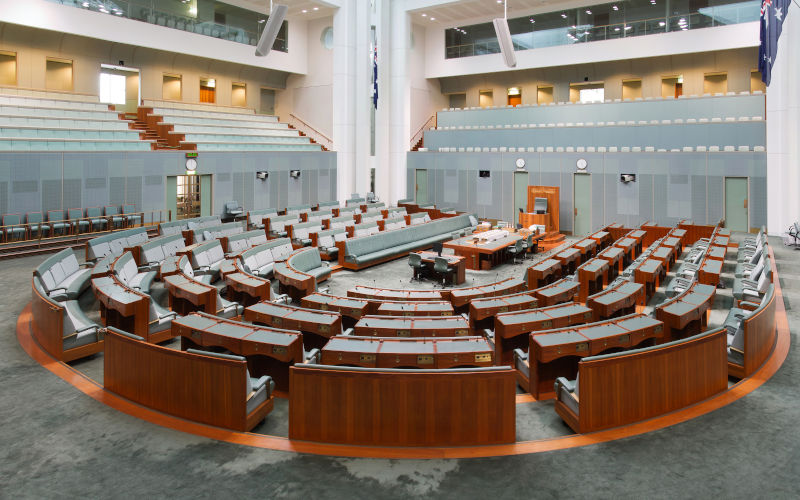
We have all witnessed the embarrassment that is question time, in which members use the sanctity of the Parliament to slag each other when they are not patting themselves on the back in response to a ‘Dorothy-Dixer’. In the upper chamber, Senate Estimates is a theatre of avoidance as questions are skilfully dodged or ignored, denying the opposition and, more importantly, the public any insight into the government’s decision-making.
Such absence of courtesy is a symptom of a much larger issue, one which poses a far greater threat to our democracy than voters who may not understand the constitutional roles of office holders.
The biggest problem facing our democracy is a political class that believes the people have no right to hold them to account.
A hallmark of a properly working democracy is the openness of the government to inquiry from the opposition, the media and, most importantly of all, the public. Rex Patrick, the former senator and transparency campaigner, provides a case study in governmental hostility to the notion of being challenged. Patrick frequently uses freedom of information (FOI) requests to gain access to documents the government would rather keep hidden. His most recent effort concerns the documents dealing with the location and cost of the nuclear waste dump that Australia must build to store for thousands of years the highly enriched radioactive materials that the AUKUS nuclear-powered submarines will produce. His struggle for this information, which is certainly of public interest, may see him on the hook for an estimated $150,000 to cover the government’s legal costs if he loses his court fight.
If the government wins this fight, it is not just Patrick who loses. We all do.
Imagine the chill that would flow through the media when the filing of an FOI request may come with a price tag running into the hundreds of thousands of dollars. For the average Australian the cost for the temerity of asking for information is the risk of bankruptcy.
Of course, some information warrants being kept secret, but this should be the rare exception and deal only with matters at the highest levels of national security.
While most Australians are kept in the dark, some receive privileged access. The prime minister has recently come under scrutiny for his attendance at a billionaire-hosted dinner. Other prominent business leaders were in attendance. When pressed by the ABC on the nature of the evening, Anthony Albanese quipped, “I attend a lot of dinners”, as well as “I don’t talk about private dinners”.
This is not good enough. When you are the prime minister of a country, the only dinners you attend that are ‘private’ are meals with your family. Otherwise, there is no such thing. People break bread with you because they want something. The public have a right to know what that something is, and if such dinners are a habit for a politician, then the list of attendees, the discussions held and any promises made should all be a part of the public record. Minutes should be taken and made publicly available.
Currently, the subject of greatest secrecy by the government is of course AUKUS. The agreement was born in secrecy and remains shrouded in it. The government is yet to provide a realistic strategic justification for the most expensive defence project in the nation’s history. Nor has it explained why it has been so relaxed about providing the United States military with ever more access to Australian territory. Despite the eye-watering cost of the submarine acquisition, and the absence of any guarantee on their delivery, the best we get is the anodyne reassurance that it’s ‘full steam ahead‘.
In a proper democracy the government must allow the people access. Democracy functions best as a two-way street. Both the leaders and the led have obligations. By acting behind a curtain of secrecy the government is not fulfilling its democratic duty.
The governor general rightly believes better civics education is a way to promote and support Australian democracy. This is a low-cost, high-payoff initiative, so it’s a no-brainer. However, if adult civics courses become a reality, our political leaders should be the first to sign up. For them, in fact, it should be mandatory.

Albert Palazzo is a research fellow in the School of History at the University of New South Wales at the Australian Defence Force Academy in Sydney, Australia.