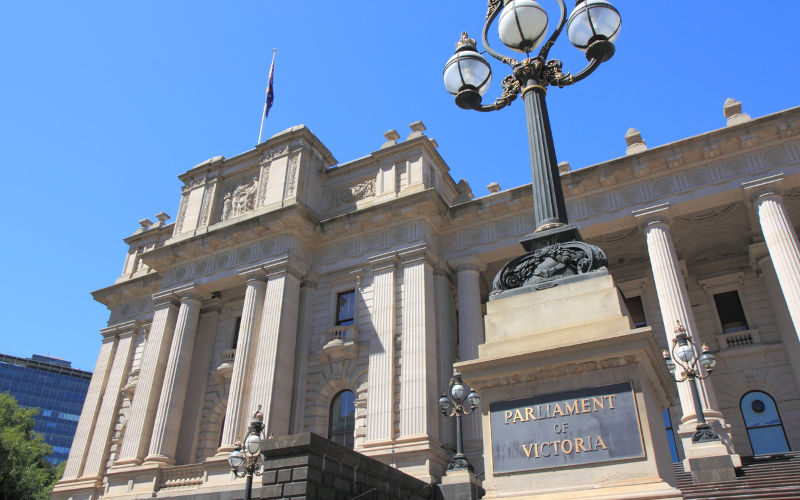
It’s easy to dismiss people who vote differently from us as selfish or brainwashed. But our own choices are shaped by self-interest, values and culture too. As Victorians prepare to vote, whose lives and interests are we willing to consider beyond our own?
This November, all Victorians will have to vote in a state election. Perhaps more than ever, voting is becoming increasingly difficult. I have talked to a lot of disgruntled Labor supporters who will not be voting in the way that they have done for all of their lives. So who are they going to vote for and how will they decide?
In sociology and economics, ‘rational fools’ and ‘cultural dopes’ are two caricatures used to illustrate how complex human beings can be reduced to one-dimensional types. Economist Amartya Sen portrays a rational fool as someone who always makes decisions based on self-interest and expected consequences. Sociologist Harold Garfinkel describes a cultural dope as someone who mindlessly follows social norms and rules.
I think that most of us use these caricatures when we describe people who vote differently from us. We reason that they either follow the narrow logic that best serves their own interests and that of their family – a rational fool – or are brainwashed by the media, religion or political ideology – a cultural dope.
Yet none of us think we can be pinned down to one of these caricatures.
Classical sociologist Max Weber offers a sophisticated way of understanding why we might be perceived as ‘rational fools’. He distinguishes between different forms of rational action. Purposeful rationality is concerned with achieving a particular end. Its logic is pragmatic, calculable and largely unemotional. A lot of us would subscribe to this kind of reasoning.
Value rationality is different. This occurs when we act according to an intrinsic value, regardless of its success or practical consequences. Someone may vote for a party because they believe acting on climate change is morally more important than their own economic interests.
Weber also distinguished between formal and substantive rationality at an institutional level. Formal rationality is concerned with rules, procedures and consistency, while substantive rationality reflects the underlying values those rules are meant to serve. Weber pointed to modern bureaucracy as the preeminent example of these forms of rationality in practice.
Most of us probably draw on elements of all of these forms of rationality. There are times when we think instrumentally about consequences and self-interest; and there are times when we act following values, loyalties and moral commitments.
But these different forms of rationality become harder to distinguish when we look at particular cases.
Take abortion.
In December 2024, Tierra Walker was 37 and around 20 weeks pregnant when she developed severe pre-eclampsia. Her family alleges that her doctors in Texas refused to perform an abortion because of the state’s strict abortion law, despite what they say was a medical emergency. Walker later died. Her family filed a lawsuit arguing that the ban prevented doctors from providing the treatment she needed.
This case shows what can happen when different forms of rationality combine. A law may be based on value rationality – all life is sacred – while formal rationality demands that the law be applied consistently. Yet in particular circumstances, this consistency may produce an outcome that even supporters of the law would never wish to see.
The same difficulty can be seen in debates about asylum seekers.
In Australia in 2010, a boat carrying asylum seekers reached Christmas Island during severe weather and was smashed against the cliffs. Fifty people, including children, died as residents watched helplessly from the shore. The tragedy became part of a much larger argument about Australian humanitarian policy. Could a policy that gave people an incentive to make dangerous sea journeys produce terrible consequences?
From the perspective of value rationality, the moral obligation to protect people seeking refuge is of the utmost importance. Formal rationality focuses instead on the rules and policies needed to discourage dangerous journeys and manage limited resources. Either approach can produce morally troubling outcomes when pushed too far.
Both examples show that even when we act rationally, outcomes can occur that we would never condone. Rational processes cannot necessarily tell us which values should take priority, which consequences should matter most or whose interests should enter our calculations in the first place.
This brings us back to the cultural dope caricature. When we go to vote, most of us think that we are following rational processes rather than spiritual notions, superstitious beliefs or emotional hunches. We treat the cultural dope as someone who is irrational and whose judgement has been contaminated by culture in an entirely negative sense.
But what if culture is not just a form of irrational brainwashing, but something that contains important traditions, values and ways of understanding the self, without which we are rudderless.
Weber famously said that “The fate of our times is characterised by rationalisation and intellectualisation and, above all, by the disenchantment of the world.” He argued that the more modern societies become, the more we rely on rational ways of understanding the world and the less room there is for religion, culture and tradition.
The South African culture of Ubuntu emerged in written form as early as 1846 but became a formal philosophy in the 1980s and 1990s. This was a time when immense political shifts were occurring in South Africa. Ubuntu is best captured in the Zulu proverb umuntu ngumuntu ngabantu: a person is a person through other people. It is based on the idea that all human beings are intimately connected and that when an individual harms you, commits a crime or acts in a way that is deviant, they remain part of the community rather than being banished. This has helped shape restorative approaches to justice that emphasise reconciliation and forgiveness rather than punishment and isolation.
Barack Obama used Nelson Mandela as a concrete example of this practice and philosophy. At Mandela’s memorial service, he argued that Mandela embodied Ubuntu through acts such as inviting his former jailers to his inauguration and embracing the Springbok rugby team, symbols of a society in which people remained bound to one another despite profound conflict. In this way, Ubuntu begins from the premise that we become who we are through our relationships with other people, rather than through rational calculation and fixed values.
Yet even within modern rationalist Western culture, Christianity also offers a practice similar to Ubuntu. Jesus taught that we should love the stranger in the same way that we love those near and dear to us.
In the Parable of the Good Samaritan, Jesus tells the story of a traveller who has been beaten and left for dead by the side of the road. Two religious figures ignore him before he is helped by a Samaritan, an outsider whom Jesus’ Jewish audience would have regarded with hostility and suspicion. Jesus makes the despised outsider the person who acts with compassion.
In this sense, Jesus’ teachings align closely with Ubuntu, in that we need to try and better understand the stranger. Not only in the case of those less fortunate than ourselves, but with those whom we dislike and whose beliefs we fundamentally disagree with. It is easy to forget that Jesus was known for engaging with tax collectors and Roman centurions.
Yet if we are genuinely obliged to welcome the stranger, how far does that obligation extend? What about refugees who follow the formal process and wait for years for one of a limited number of places? Why should the stranger who manages to reach Australia by boat have a stronger claim upon us than the stranger who waits?
The rise of the far-right Alternative for Germany (AfD) shows us why rational processes cannot simply be pushed aside. Chancellor Merkel’s decision to admit large numbers of asylum seekers during the 2015 refugee crisis was widely presented as a humanitarian response. Yet immigration contributed to the AfD’s historic win of 44 per cent of the vote in recent elections in Saxony-Anhalt. There were unforeseen consequences.
This creates uncomfortable complexity. Culture can give us moral practices such as welcoming the stranger, but rationality forces us to think about limits, consequences and competing claims. At the same time, rational calculation can become so detached from the people affected by it that the stranger becomes nothing more than a number or a problem to be managed.
So when you walk into the voting booth this November, it may be worth asking what is influencing the way that you vote. Most of us do not vote using formal or purposeful rational calculation alone, nor do we adhere solely to the moral ideals of value rationality. We draw on different forms of rationality at the same time. This does not make us, or people who vote differently from us, rational fools.
But the deeper question is: how do we decide whose interests deserve our consideration?
Ubuntu and Christianity remind us that culture and tradition should not be banished from the voting booth. We are not cultural dopes if before we calculate which party will serve our interests best, we reflect seriously upon the stranger.

Adrian Rosenfeldt
Dr Adrian Rosenfeldt teaches at Melbourne University. He is a journalist, public speaker and the author of The God Debaters: New Atheist Identity-Making and the Religious Self in the New Millennium (2022).