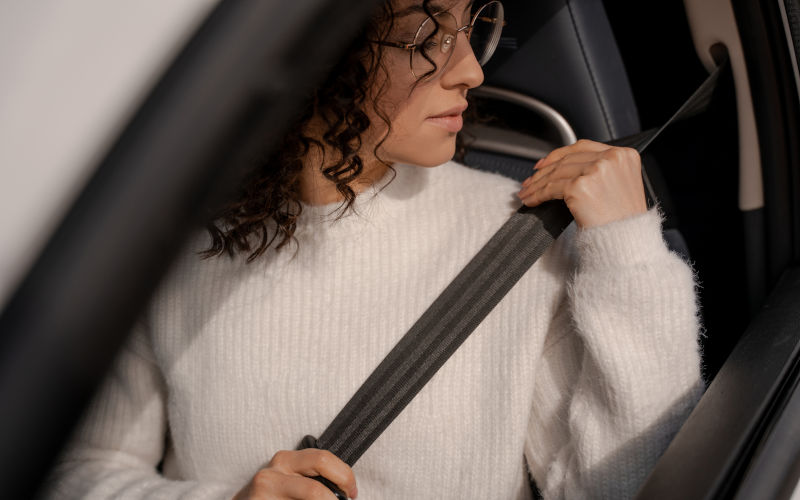
Queensland’s high-value seatbelt camera fines are being challenged over evidence quality, driver responsibility and fairness, raising questions about whether government revenue is being protected ahead of justice.
Like the Morrison government with Robodebt, the Queensland government – despite a change of political colour – still appears to have an appetite for gouging cash from citizens using penalty fines, despite doubts about the legitimacy of those fines.
As pressure mounted for an end to Robodebt (a program designed to claw back alleged welfare overpayments) the Morrison government continued chasing repayments despite growing evidence that the claims of debt were wrong in fact and law.
With Robodebt, the government prevented efforts to have the courts make a determination on the legality of the scheme by simply settling cases in the plaintiffs’ favour “on the court steps”. The tactic removed the possibility of court sanction and allowed the Robodebt scheme to roll on, spilling millions into government coffers by ripping off many of the most vulnerable members of society.
It seems the Queensland government may be adopting the same tactic – deflect, deny, keep billing – with its equally egregious seatbelt camera fine scheme.
Law in all Australian states is that the driver and all passengers must wear seat belts at all times – and correctly (ie, not under the arm). Queensland is an outlier in its application of the law, with fines more than double or triple most other states and loss of more penalty points ($1295 and four demerit points compared with $407 and three points in Victoria). Hence a possible extra incentive to keep the fine revenue rolling in.
One aspect of the penalty that has attracted criticism is the requirement for the driver – at all times – to be responsible for passengers wearing their seatbelts correctly. As this is at odds with the requirement for the driver to be attentive to road conditions at all times, some Queensland magistrates have started to baulk at finding against offenders in such cases. The Crisafulli Government has responded to this by introducing legislation to allow drivers to nominate an offending adult passenger detected not wearing their seatbelt correctly.
No doubt the government hopes that this action should reduce criticism of the scheme without impacting on the cashflow it produces.
However, making something less unfair does not make it fair. The main criticism of the scheme is that fines are issued when drivers and/or passengers are wearing their seat belts correctly. The photos produced as evidence are often of such poor quality that little detail can be seen, but the government insists in these instances “Computer says no” – seatbelt being worn incorrectly.
The “Contest Qld Seatbelt Fines” Facebook account gives a good sample of these cases. Contesting the fines beyond registering an initial objection is difficult, time-consuming and expensive, so most people suck it up and pay up. To rub salt into the wounds, the Queensland government then uses this “compliance” as evidence that people have accepted their guilt – a similar scenario to the Robodebt operation.
Recently in Court Seven, Southport Courthouse (on Monday 6 July 2026) two cases came before a Magistrate, both for front seat passengers “failing to wear their seatbelts correctly”. The evidence as usual was extremely blurry photos taken by infra-red cameras provided to the Queensland Department of Transport and Main Roads (TMR).
While the defendants in both cases maintained their passengers were wearing their seatbelts correctly, they adopted differing defence strategies: the first defendant chose to take issue with the poor quality of the images; the second claimed it was unreasonable (and certainly unsafe) to expect a driver to be constantly taking eyes off the road (especially a road like the Gold Coast Highway at peak hour) to monitor whether a passenger was wearing a seatbelt correctly.
Both defendants represented themselves and had sacrificed a great deal of time, money and energy to make their cases, having to take time off work for at least two court appearances, travel from Brisbane to the Gold Coast and do the research and secure witnesses to support their evidence. They also risked the possibility of the penalties being increased if found guilty, especially in the case of the driver who was challenging the quality of the evidence photos. In these cases, the prosecution advises the defendant that, if found guilty, they may have to cover the additional costs of expert witnesses appearing to support the government case. These costs at various times have been represented as from $6000 to $12,000.
Both lines of defence proposed (quality of photos and driver responsibility) have been listed as having merit in a recent article that is critical of the Queensland approach to enforcing seatbelt legislation, published in the Griffith Journal of Law and Human Dignity. The Queensland Council for Civil Liberties has also been extremely critical of the Queensland government for its application of the law.
So what happened in Court Seven on that Monday? As each case was called, the Prosecutor simply rose and said: “DMR is offering no evidence”. The magistrate appeared surprised, but had no option except to say that the cases were dismissed. In effect, the prosecution cases were dropped at the last minute, with no opportunity for the defendants to claim reimbursement for their time or costs in relation to the hearings. There was no opportunity for the Court to hear the complaints about the camera operated seatbelt detection system, and fine notices with poor quality images continue to be issued.
Perhaps pollsters like Redbridge could include a question about the impact on voters’ attitudes and intentions in relation to programs like Robodebt and seatbelt fines. One striking issue appears to be the difficulties faced by fine recipients to push back against the penalty imposed – especially if they believe the fine is unjust. Review procedures are not fully explained on the fine notice, which, in Queensland at least, effectively says ‘pay the fine or elect to go to Court’.
Former Victorian Premier Steve Bracks was considered to be a smart politician, winning government against an apparently unassailable opponent and building his majority in successive elections before retiring on top of his game. An example of these smarts is that when confronted in 2004 with evidence that newly installed Victorian speed cameras were wrongly fining motorists, he immediately stopped the program, repaid fines, had others disadvantaged by cancelled licences compensated, and threw the company that installed the cameras under the bus. By contrast, the Morrison Government allowed the Robodebt bus to roll over them. Are there any lessons here for other governments?

Currently a consultant to Sunlands Co, an energy storage project. Previous roles have included: Chief of Staff and adviser to Federal Ministers and Shadow Ministers, senior executive roles in the Australian Public Service, private and not-for-profit industry and as a TAFE and technical secondary teacher in Victoria.