Australia should be able to scrutinise China without turning a government, a civilisation and a people into a single threatening enemy.
I have always been confused by Australia’s attitude towards China. Perhaps that confusion began with my father.
I grew up in an almost entirely Anglo-Saxon neighbourhood where Chinese people were largely absent but remained objects of casual mockery. What I knew of them came less from experience than from the prejudices of the time. The exception was my father.
Both my parents had left school at about 12. Dad later bought a truck and drove from Wollongong to the Sydney markets, buying fruit for his run. He dealt regularly with Chinese market gardeners and agents. His judgement was simple: their word could be trusted. If you behaved honourably towards them, the relationship rested on trust.
Years after leaving the fruit run, he took my mother back to the markets. She remembered his welcome, almost like a long-lost son. There was humour too. Dad once asked his Chinese friends how to say something like “How are you?” He later discovered they had taught him to announce, in effect, that he was a fool. He delighted in the joke. When I visited China in 2025, I recognised that same playfulness.
Yet another China was being constructed around me. During my youth, maps showed great red arrows sweeping down from Asia. We were warned of communist hordes and the ‘red peril’. During the Vietnam War, when I could have been conscripted, fear of China helped justify a war. As the truth about that war emerged, the arrows disappeared, but the habit of fear survived.
Gough Whitlam’s opening to China therefore mattered deeply to me. I was a young Labor Party member, returning to night school and later university, and questioning the certainties I had inherited. I did not become an apologist for communism. Stalin’s terror and Mao’s cruelty were real. Nor do I deny today’s serious concerns about repression, censorship, Xinjiang, Hong Kong or pressure on Taiwan. A defence of China that requires silence about these matters deserves little respect.
But criticism is not the same as demonisation. Too much public discussion moves from criticising decisions of the Chinese government to treating China itself, its civilisation, its people and even Australians of Chinese heritage as a single threatening force. That is where legitimate scrutiny becomes propaganda.
My sister, a respected potter, travelled to China with fellow artists and took our mother. Mum, the girl from a poor mining family who had never travelled overseas, became ill and was taken to hospital. Unable to communicate, she was frightened. She returned with two enduring memories: the wonder of standing on the Great Wall and the kindness with which she had been treated in that hospital.
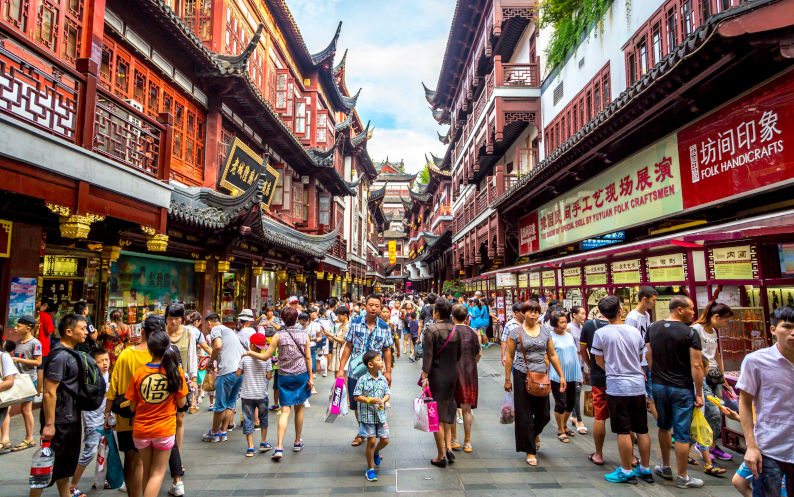
By the time I went to China in 2025, I carried two incompatible inheritances. Every personal encounter spoke of decent, humorous and honourable people. The political story described a cruel, expansionist power preparing to displace the west. Travel cannot settle every geopolitical question or reveal the whole of a country. But it can expose the poverty of a story that leaves no room for ordinary humanity.
I did not feel threatened in China. I met people who were welcoming, energetic and proud of their country’s achievements. I also sensed a greater readiness to place community, family and national purpose ahead of the individual. Collective discipline can become conformity and firm government can become repression. But western individualism has costs too: loneliness, inequality and the elevation of private wealth above public good. We rarely examine our own assumptions under the same unforgiving light.
The measurable record also deserves honesty. Since reform began in 1978, close to 800 million people have been lifted from extreme poverty, almost three-quarters of the global reduction over that period, according to the World Bank. Improvements in health, education and material security on such a scale should command recognition even from those who reject China’s political system.
Nor should military power be discussed selectively. China’s spending is large, rising and properly watched. Its conduct in the South China Sea and around Taiwan can be coercive and dangerous. But Australians are rarely asked to examine every great power by the same standard, or to consider how China sees the expanding military architecture of the United States and its allies along its perimeter. Each side calls its own preparations defensive and the other’s aggressive.
That fear is deeply embedded. In the 2026 Lowy Institute Poll, 62 per cent of Australians considered China a likely military threat within 20 years, yet 61 per cent saw it more as an economic partner than a security threat. China can be powerful, difficult and indispensable simultaneously. Two-way trade reached $326 billion in 2025, a quarter of Australia’s total. We cannot build prosperity with China while constantly rehearsing the language of approaching war.
My greatest concern is not that China possesses a unique appetite to rule the world, but that success can intoxicate any nation. Its growing strength may encourage over-confidence. The same has long been true of the United States, whose power we treat as natural even when it carries war across the globe. There is no virtue in replacing one unquestioned empire with another. Great-power arrogance must be restrained wherever it appears.
What I defend, then, is not every act of the Chinese state. I defend proportion, curiosity and the humanity of Chinese people against a narrative that needs an enemy. We should be able to acknowledge achievement without being accused of naivety, and to criticise without slipping into contempt.
My father reached that position without university, foreign-policy expertise or a journey to China. He discovered it through honest dealings at a fruit market: trust offered, trust returned, friendship built over time. Decades later, after the red arrows, war rhetoric, classrooms, families and finally the journey, I return to his lesson.
Nations must be judged carefully. Governments must be challenged when they cause harm. But people should be met as people. If Australia forgets that distinction, the greatest danger may not be what China becomes. It may be what fear persuades us to become.

John Frew worked in public education, including as foundation principal at a secondary school for students with Conduct Disorder and Oppositional Disturbance. John has authored numerous books the latest being ‘Neuroscience and Teaching Very Difficult Kids’. Since retiring, he has continued to comment on social issues.