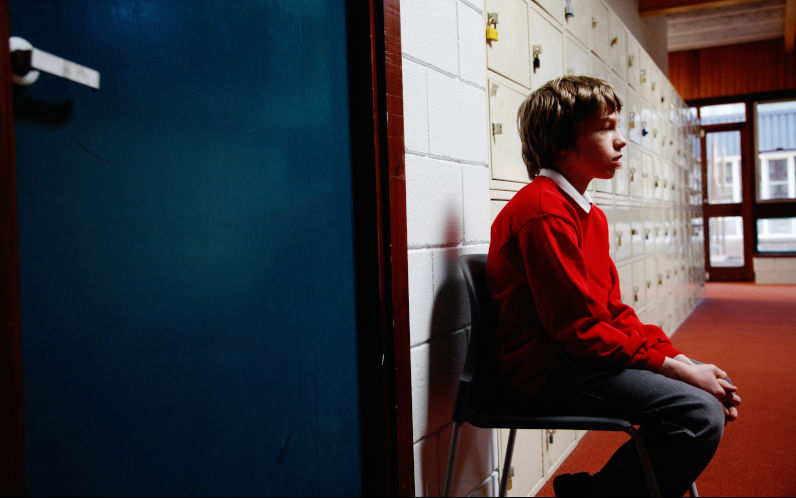
Adolescents with severe behavioural needs are too often treated as beyond help. As suspensions rise and specialist provision narrows, Australia’s public education system risks abandoning them when support matters most.
For most of a 40-year career working with adolescents with severe behavioural disability, I kept asking the same question: why was so much more specialist provision directed towards children in primary school than those in secondary school? The answer was delivered as though it settled the matter. Early intervention is more effective. By adolescence, it is too late, too hard or too expensive to make the difference that counts.
I concede that early intervention is preferable. It can prevent suffering before failure becomes an identity. What I reject is the conclusion that adolescents whose needs persist, or whose dysfunction first becomes visible with puberty, are somehow a poorer investment. That is not a clinical conclusion. It is a budget choice disguised as inevitability.
Adolescence is not simply late childhood. Puberty changes the body, brain and social world. Peer acceptance assumes enormous importance, while earlier trauma can re-emerge. Some young people who managed primary school begin to unravel only then. Others reach secondary school with serious needs already identified but lose the small, structured setting that allowed them to function. Their disability has not disappeared. The provision has.
For years I watched the frequency and severity of violence in secondary schools climb, only to see the claim dismissed as anecdote. The department has now supplied the evidence itself.
Its 2025 dataset records 81,094 suspensions involving 42,015 students. Secondary students were suspended at a rate of 10.4 per cent, more than four times the primary rate of 2.3 per cent. Among Aboriginal secondary students the rate was 24.2 per cent; among secondary students receiving significant disability adjustments, 23.1 per cent.
Most tellingly, 28,515 suspensions – 35.2 per cent of the total – were for seriously threatening or physically violent behaviour. These are not children talking out of turn. They are young people capable of serious harm to teachers, classmates and, often, themselves.
Suspension is sometimes necessary. Principals must protect their school communities. But suspension is also being made to do work it was never designed for. It becomes the emergency valve when specialist intervention is unavailable: remove the child, restore order, return the child, repeat. The concentration among students with disability shows mainstream schools carrying needs for which many have not been properly staffed, trained or designed.
Now place those figures beside the department’s August specialist-support-class dataset. It lists 1,159 classes in primary and infants schools, against 883 in secondary schools – 276 fewer, or about 24 per cent. Another 203 in central or community schools and schools for specific purposes cannot be allocated neatly by age.
The totals alone do not prove deliberate bias. Enrolments differ, and the dataset counts operating classes rather than available places. But they demand an answer: why does specialist provision contract at precisely the stage when the department’s suspension figures show behaviour becoming much more serious and common?
More disturbing is what remains unpublished. We cannot readily discover how many children approved for a Tier 4 placement are waiting; how many applications are rejected or deferred; how long students remain on reduced attendance; how many placements break down; or how regional demand compares with staffed capacity. Government counts suspensions after failure, but not the missing support that might have prevented them.
I have seen the consequences at transition. A child supported in a small primary class reaches Year 7 and finds no equivalent place. They enter a large mainstream class with multiple teachers, constant movement, greater social demands and fewer secure relationships. This is called inclusion.
It is not inclusion when the environment is not adapted and support is absent. The department’s own definition requires reasonable adjustments and teaching tailored to individual need. Placing a distressed young person in a room with 25 or 30 others is location, not inclusion.
Nor is it equity. Equity means receiving according to need, not being offered the same desk. A young person with severe behavioural disability may need a small class, predictable structure, specialist teachers, crisis-capable staff, therapeutic support and a planned path towards broader participation. Providing less, then punishing the predictable failure, is abandonment dressed in administrative language.
The work health and safety failure is equally plain. SafeWork NSW defines work-related violence as abuse, threats or assault arising from work and requires the risk to be eliminated or minimised so far as reasonably practicable. Teachers do not surrender that protection at the school gate. Other students do not surrender their right to learn without fear because the system failed to provide an appropriate setting for a classmate in crisis.
These rights are not in competition. The troubled child, the frightened classmate and the injured teacher are victims of the same failure. Proper specialist provision protects all three.
Underneath this sits the funding failure. NSW public schools still do not receive the full Schooling Resource Standard. The Commonwealth share rises from 20 per cent in 2025 to 25 per cent only in 2034 – a postponement spanning the remaining school life of every child currently enrolled. The shortfall appears as the specialist class that does not exist, the student cycling through suspension, the teacher absorbing another assault and classmates whose learning is repeatedly disrupted.
Unmet behavioural need at 14 does not dissolve at 18. It resurfaces, more expensively, in justice, health and welfare systems. Today’s education saving becomes tomorrow’s larger public bill, merely charged to another department and another minister.
This is not bureaucratic failure alone. Budgets express what society is willing to pay for, not merely what it claims to value. Yet it would be wrong to say Australians are simply unwilling to spend more on education. Many families prove the opposite by paying private-school fees, sometimes at real strain to the household budget. What we have lost is the same willingness to invest collectively so that a good education does not depend on what an individual family can purchase.
A six-year-old struggling to read draws sympathy. A 15-year-old who has assaulted a teacher draws exasperation and demands for removal rather than repair. Governments can under-resource adolescent behavioural need without defying public sentiment. But public education is meant to express something better than the limits of our sympathy.
I have never accepted that some children are more precious than others. Every child is special and unique, but that belief has meaning only when we provide what each child needs. Early intervention must never become an excuse for early abandonment. Adolescents are not too late, too hard or too expensive. Most can be helped when the response is skilled, structured and properly resourced.
When government knows that serious behaviour rises sharply in secondary school, that students with disability are suspended at extraordinary rates and that specialist provision narrows across the transition, yet still fails to measure or meet the need, it makes a moral judgment as well as a financial one.
Its actions say these damaged young people, and the public-school communities left to carry the consequences, are not worth the cost.
They are. A decent public education system would act as though it believed it.

John Frew worked in public education, including as foundation principal at a secondary school for students with Conduct Disorder and Oppositional Disturbance. John has authored numerous books the latest being ‘Neuroscience and Teaching Very Difficult Kids’. Since retiring, he has continued to comment on social issues.