
In the second of a two-part series, Connie Peck explains why Trump’s Board of Peace is struggling to turn its Gaza plan into reality as implementation stalls and critical institutions remain undeployed.
The Board of Peace (BoP) was established to implement Trump’s ‘Comprehensive plan to end the Gaza conflict‘, a 20-point plan drawn up by Jared Kushner and Steve Witkoff and subsequently negotiated with Israel and Hamas with input from a number of Arab and Muslim countries. The agreement was signed on 9 October and came into force the next day. It was endorsed by UN Security Council Resolution 2803 of 17 November 2025, with 13 members of the council in favour and Russia and China abstaining.
The first phase of the plan began before the BoP was formed and involved the initial withdrawal of Israeli troops to agreed-upon deployment lines (although this did not hold and almost daily ceasefire violations ensued). It also involved the return to Israel by Hamas of all living hostages, as well as the remains of those deceased. This was followed by Israel’s release of a large number of Palestinian prisoners, including remains of those deceased.
Humanitarian aid was gradually reintroduced by UN agencies and their partners, although needs continue to be extensive and restoration of basic services is far from complete. The Rafah border crossing was also reopened, although sporadically closed again.
On 15 January 2026, Trump announced the formation of his Board of Peace, whose charter (drawn up by his administration) named Trump as its chairman for life and gave him extensive unilateral powers over the board. In his usual self-congratulatory style, he wrote on Truth Social: “I can say with certainty that it is the Greatest and Most Prestigious Board ever assembled at any time, any place.”
Trump invited some 60 countries to join his BoP, including Israel, although no sub-Saharan African country was invited. Netanyahu initially refused because invitations had not been coordinated with him and he disapproved of invitations to Türkiye and Qatar. After further discussion with Trump, Israel agreed to join – along with 27 other countries. More than half of those invited, including Australia, declined, concerned that the board’s charter was an attempt to establish a ‘Trump-dominated alternative to the United Nations’ that could undermine the role of the UN and other multilateral organisations. Countries that agreed were appointed for a three-year term, with those wanting lifetime membership required to contribute $1 billion.
It was also announced that Bulgarian Nikolay Mladenov, the former UN special coordinator for the Middle East peace process, would become director-general of the board and high representative for Gaza. As well, US General Jasper Jeffers was appointed commander of the planned International Stabilization Force.
A nine-member executive board was formed with seven who have close ties to Trump. The eighth member, Indian-born Ajay Banga, president of the World Bank Group, is also a US citizen. Tony Blair is the only non-American.
Amid much fanfare, the BoP was officially launched on 22 January at the 56th World Economic Forum in Davos, with Trump signing its charter in the presence of 19 new members.
After the signing, Jared Kushner made a presentation of plans for a ‘New Gaza’, using AI-generated slides showing gleaming skyscrapers, deluxe hotels and luxury villas lining Gaza’s Mediterranean shoreline, “reserved for coastal tourism”. Entirely new cities with multistorey apartment buildings for Palestinians were also shown, as well as schools and hospitals, with sports facilities and parks breaking up industrial complexes, data centres and advanced manufacturing facilities, as well as a new airport and port.
Kushner’s presentation was in stark contrast to the current reality of Gaza, where two million Palestinians live in tents and bombed-out buildings, amid 90,000 tons of rubble, with vastly insufficient food, water, electricity, fuel, healthcare and medicine. The plans, which seemed more suited for wealthy tourists than for poor Palestinians, apparently had no Palestinian input and were coordinated with an Israeli real estate billionaire (later invited by Kushner to be on the BoP’s Gaza executive committee). They also seemed totally out of touch with the current or past crowded demographic situation in Gaza and appeared designed to enrich opportunistic developers.
The first and only meeting of the BoP was held on 19 February at the newly named ‘Donald J. Trump Institute of Peace’, designated as the seat of the board. There have been no further meetings – presumably because Trump has been consumed by his war with Iran, which he initiated nine days later.
At this meeting, nine members (Kazakhstan, Azerbaijan, the UAE, Morocco, Bahrain, Qatar, Saudi Arabia, Uzbekistan and Kuwait) pledged $7 billion for the reconstruction of Gaza, and Trump announced a $10 billion pledge, without consulting Congress. FIFA, which also attended, pledged $50 million for football facilities. It is estimated that $70 billion is required to rebuild the territory.
Five members (Indonesia, Morocco, Kazakhstan, Kosovo and Albania) agreed to provide troops for the temporary International Stabilization Force (ISF), which the Security Council authorised the BoP to create. It is intended to work with a newly trained and vetted Palestinian police force to oversee the ceasefire; monitor the security environment and borders; decommission weapons; destroy terrorist infrastructure; and protect civilians and humanitarian operations.
Also at this meeting, Egypt and Jordan committed to training the police force. The plan is to deploy 20,000 ISF troops and 12,000 police. However, to date, neither the ISF nor the police force has deployed.
A National Committee for the Administration of Gaza (NCAG) was also formed of Palestinian technocrats under BoP supervision, led by Dr Ali Shaath, a civil engineer from Gaza who held senior roles in the Ramallah-based Palestinian Authority. But the NCAG has not been able to enter Gaza because the ISF meant to disarm Hamas and secure parts of Gaza has not materialised – so it remains in Cairo, unable to exercise any authority in Gaza.
More recently, on 30 July, a 15-point ‘Roadmap for completing the implementation of President Trump’s comprehensive peace plan in Gaza‘ was published. Hamas agreed to the roadmap and announced that it would dissolve its government in Gaza and disarm, appealing to the international community to push Israel to allow the NCAG to enter Gaza and take over.
Until now, Israel has refused to agree to the roadmap, arguing, in contradiction to the roadmap’s prescription for a phased IDF withdrawal from the parts of Gaza where Hamas disarmament has been completed and verified, that it won’t withdraw its troops at all until Hamas has totally disarmed everywhere.
There is, of course, always the possibility that things will change, if Trump can persuade Netanyahu to comply, or if the upcoming Israeli elections change the situation. But for the moment, things appear deadlocked.
There are also questions about BoP finances. When Marco Rubio recently requested that Congress transfer $50 million to the BoP from the State Department budget for international organisations (from which it has not yet paid its 2026 UN dues), Jamie Raskin (D-Md), ranking member of the House Committee on the Judiciary, and Gregory Meeks (D-NY), ranking member of the House Committee on Foreign Affairs, called for Rubio to “answer basic questions about the board’s structure, funding and oversight, nine months after its creation”. In a confronting letter they write:
“We thus have a profusion of questions about this mysterious operation: What is the Board of Peace? Is it a public or private entity? International or domestic? Is it registered as a corporation in the United States or abroad? What kind of corporation is it – for-profit or not-for-profit? Who controls the funds in its J.P. Morgan bank account? In what countries are those accounts located? Who will audit those funds and conduct oversight of the Board? What does President Trump intend to do with this vast slush fund while he is in office – or after he leaves? Can anyone assure Congress that billions of dollars from US taxpayers and foreign governments will not be flowing into the pockets of President Trump, members of his family, corrupt or incompetent contractors or business partners, or political allies and foot soldiers of the President?”
The bottom line is that realising the aspirations of the comprehensive plan with BoP oversight is an exceedingly tall order, given the utter devastation of Gaza, its infrastructure and its people – and the extremely fraught political difficulties of getting Israel and Hamas to adhere to what they have agreed. Implementation of this process has been incremental and slow, and is at a virtual standstill. Although members of the NCAG have begun work in Egypt, they have not been able to deploy to Gaza. Although some funds have been pledged, most have not materialised. The same is true for pledges of ISF troops.
It will be extremely difficult for a new organisation without full-fledged international support and clout, and without sufficiently experienced staff to know what approaches are most effective in peacebuilding, creating new governance structures and carrying out disarmament. At the moment, the whole endeavour looks more like a slow-motion train wreck than the effective implementation of a viable peace process.
As Mladenov warned at a 26 August meeting of the Security Council, called to discuss the obstacles – if the ceasefire is allowed to collapse, “there will be no roadmap to return to, there will be no administration to deploy, and there will be nothing left on the ground to rebuild… It would be a point of no return for everyone.”
The lesson from these two tragedies – the demise of the US Institute of Peace and the likely failure of the Board of Peace – is that voters must, in the future, avoid electing someone to a position of great power who doesn’t know what he doesn’t know and who has the hubris to create his own half-baked, cobbled-together international Board of Peace to try to resolve one of the world’s most intractable conflicts, allegedly in the hope of being awarded a Nobel Peace Prize – just like Barack Obama.
Trump has even implied that somehow the BoP could replace the UN, saying, “Well, it might.” But what he doesn’t understand is that the legal foundations of the two are totally different. “The Security Council derives its authority from the UN Charter, a treaty ratified by UN Member States that explicitly assigned it primary responsibility for the maintenance of international peace and security. That mandate was conferred collectively by the international community and cannot be replicated.” Also, there is the question of binding authority: “UN Member States are obliged to carry out decisions of the Security Council. The Board of Peace has no comparable mechanism.”
Thus, in the future, the pursuit of international peace and security must be left to the United Nations, which represents the entire world, is backed by the force of international law and has extensive experience in preventive diplomacy, peacemaking, peacekeeping and post-conflict peacebuilding.
In the case of Israel, however, the UN has been effectively sidelined, since the Israeli administration, and even much of the Israeli public, harbour a deep antipathy for the UN because of its past condemnation of Israeli behaviour, which is nearly always vetoed by the US in the UN Security Council.
This means that the comprehensive plan and the BoP are “the only game in town”. Given that winter is on its way and two million Palestinians, who are already in grave danger, will once again be exposed to its ravages, it leaves one hoping against hope, in spite of major concerns about the BoP, that there is some way to salvage the comprehensive plan, so that the tremendous suffering by the people of Gaza can finally be lessened.
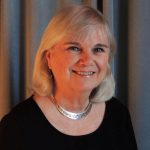
Connie Peck
Dr. Connie Peck, AO, is the Founder/Former Principal Coordinator of the UNITAR Programme in Peacemaking and Conflict Prevention – the first-ever training programme in negotiation and mediation in the United Nations (now in its 33rd year). When lecturing at La Trobe University in the 1980s, she also founded Psychologists for the Prevention of War (now called Psychologists for Peace) during the height of the Cold War and acted as its first Convenor. She is the author of several books and numerous articles on conflict resolution and the nuclear threat.See also: www.linkedin.com/in/connie-peck-b92a403a0