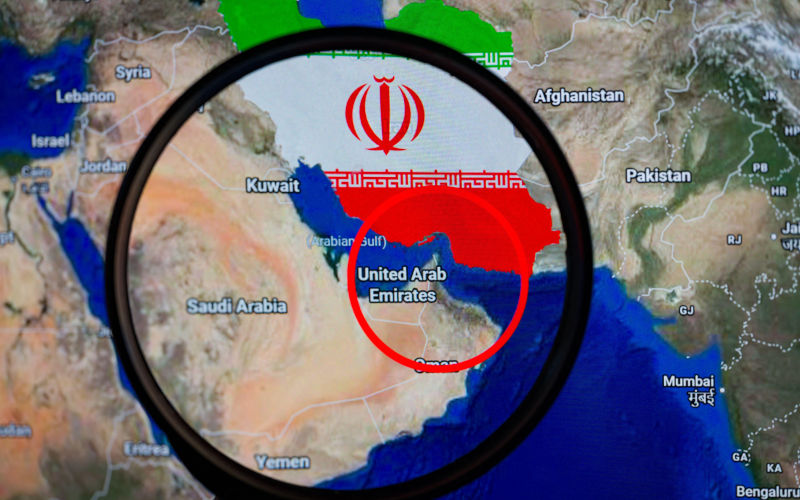
The Hormuz crisis shows that food security now depends not only on harvests and markets, but on whether governments have the fiscal, industrial and administrative capacity to secure fertiliser supplies.
When fighting resumed around the Strait of Hormuz in late June, another major oil shock seemed inevitable. Brent crude briefly returned to its pre-crisis level in early July before climbing back above $100 per barrel as the conflict dragged on. Yet when the United States and Iran paused fighting, prices quickly retreated, showing that much of the earlier surge reflected fears of a prolonged disruption rather than an actual loss of supply.
The Strait of Hormuz has not become any less important. Higher oil prices still inflict immediate strain across economies worldwide. But diversified supply, strategic reserves and deep futures markets have created multiple adjustment mechanisms that reduce the impact of any single choke point.
In the first five months of 2026 alone, additional crude exports from the United States and South America increased by roughly 267 million barrels from a year earlier, while softer demand growth, particularly in China, further eased pressure. These buffers do not eliminate disruption, but they give markets and governments more time and more options to respond. By contrast, fertiliser markets offer far fewer ways to adjust.
Fertiliser production is much more geographically concentrated than oil production. Morocco and China together hold around three quarters of the world’s phosphate rock reserves, while potash and natural gas are likewise concentrated among a handful of countries. The Gulf sits at the centre of this system. It accounts for nearly half of global urea exports and supplies much of the ammonia and sulphur used throughout the fertiliser industry. A disruption at Hormuz therefore constrains both trade and production, with little spare capacity elsewhere to compensate.
As supplies tightened, a second wave of constraints followed when major resource exporters moved to protect domestic markets. Russia tightened export controls on fertilisers and sulphur. China maintained restrictions on phosphate products and other key inputs. Kazakhstan, one of the world’s largest sulphur exporters, suspended sulphur exports.
Even the industry’s largest producers had to reshape what they produced in response to these input constraints. Morocco’s state-owned OCP, the world’s largest phosphate fertiliser exporter, brought forward maintenance affecting roughly 30 per cent of its capacity and pivoted from diammonium phosphate (DAP) towards triple superphosphate (TSP), which needs no ammonia and far less sulphur.
Within months, TSP’s share of OCP’s sales mix surged from about one-third to nearly two-thirds. For major buyers like Brazil preparing for soybean planting, there was little choice but to adapt. The shift kept phosphorus flowing, but forced separate nitrogen applications that drove up production costs.
For farmers, however, the challenge was not only cost, but time. Unlike oil cargoes, crops cannot wait offshore while markets adjust. Fertiliser follows the agricultural calendar, not the ticker. July and August are the critical loading months for autumn sowing across the Northern Hemisphere and spring planting in South America. A shipment delayed by only a few weeks can miss the entire planting window, turning a supply disruption into a lost season. The effects are already visible across Asia. In Thailand and other rice-producing countries, farmers have cut fertiliser use, reduced planted areas or even left fields uncultivated as rising input costs and tighter fertiliser supplies force difficult planting decisions.
By this point, market adjustment had reached its limits. The question was no longer whether supply chains could adapt, but whether states had the capacity to compensate.
Governments with sufficient resources responded through different strategies. The European Union leaned on institutional readiness, swiftly unlocking 540 million euros from its Agricultural Reserve in early July to cushion farmers against rising costs. Australia drew on its fiscal strength, activating its Fuel and Fertiliser Security Facility to underwrite some 340,000 metric tonnes of urea imports and push domestic prices down 27 per cent within weeks.
India’s response reflected years of efforts to reduce dependence on imported fertilisers. Through fertiliser subsidies, long-term procurement and sustained investment in domestic production, New Delhi has steadily strengthened the country’s supply base. More recently, the state-owned Solar Energy Corporation of India has signed purchase agreements for 724,000 metric tonnes of annual green ammonia deliveries to the fertiliser sector under the National Green Hydrogen Mission. What began as part of India’s energy transition has now become a source of resilience against geopolitical shocks.
The same disruption produced very different outcomes. Governments with the fiscal, institutional or industrial capacity to intervene could soften the shock before it reached farmers. Yet this kind of intervention is an option many poorer importing countries cannot afford.
Africa exports far more fertiliser than many assume. Morocco, Egypt and Nigeria generate a trade surplus of roughly $5.8 billion. Yet fragmented transport networks and limited access to agricultural finance mean fertiliser often moves more easily across oceans than across the continent itself. Transporting fertiliser from the port of Mombasa to inland Rwanda, for example, can add as much as 45 per cent to the delivered cost. As a result, farmers across much of Sub-Saharan Africa apply an average of only 22.3 kilograms of fertiliser per hectare, less than one-sixth of the global average, leaving the region with a persistent yield gap and continuing dependence on food imports.
For some countries, the constraints run deeper. In South Asia, Bangladesh and Pakistan face a double bind: neither has sufficient domestic production nor the fiscal space to rely on imports. Gas shortages in Bangladesh have shut five of its six major urea plants, leaving the country more exposed to import disruptions. The impact has already spilled out of national budgets and into the soil. The United States Department of Agriculture now forecasts Bangladesh’s 2026–27 rice harvest at 37.4 million metric tonnes, with output of the key boro rice crop expected to fall as fertiliser shortages and irrigation limits weigh on production. In Pakistan, phosphatic fertiliser use fell to a seven-year low, while DAP stocks were projected to decline to just 9,000 metric tonnes by the end of the 2026 Kharif planting season.
These vulnerabilities are compounding at a dangerous moment. Fertiliser prices remain well above their pre-pandemic average even as demand recovers, leaving little slack in the system. Energy shocks are usually felt first as price increases; fertiliser shocks can become production shocks. Any further disruption to the Strait of Hormuz would mean more than higher costs. It could translate directly into missed planting windows, lower yields and deeper food insecurity for countries without the fiscal and administrative machinery to protect themselves.
The Hormuz crisis points to a broader shift. Food security is no longer just about harvests or global markets, but about steady access to the inputs that make those harvests possible. As supply chains grow more exposed to geopolitical shocks, food security will depend less on what markets alone can deliver than on the capacity of states to secure what markets cannot.

Jianbo Wu
Jianbo Wu is Secretary General of the Green and Smart Energy Organisation (GSEO), an international non-profit focused on green industrial cooperation and sustainable infrastructure. He has worked on cross-border cooperation in hydrogen, industrial development and connectivity. He writes on geoeconomics, industrial policy and global supply chains.