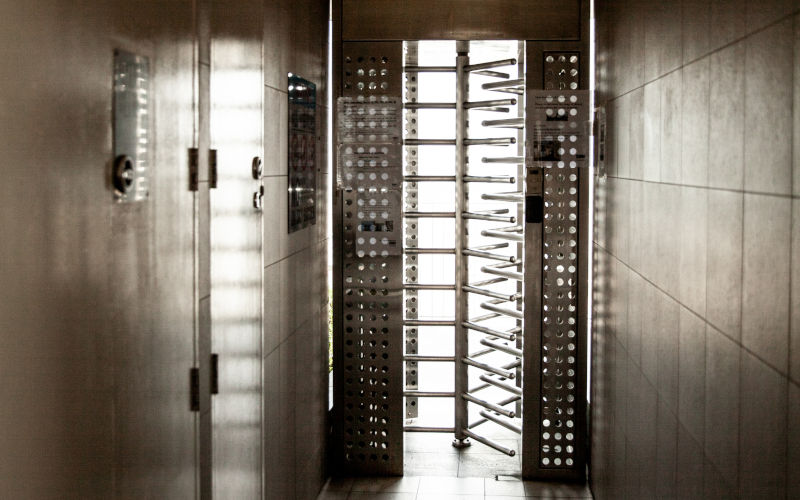
For people caught in the revolving door of prison, the risk of suicide often extends beyond custody, exposing the failure of justice, health and housing systems to support life after release.
“They just can’t do prison anymore.”
That was how one person explained suicides occurring after release and before return to prison.
Suicide associated with imprisonment is commonly thought of as something that happens behind prison walls. But for people trapped in the “revolving door” of the justice system, the greatest danger lies in the exhausted space between getting out and going back.
Although their sentence has ended, prison often continues through supervision orders, police reporting requirements, curfews and the ever-present possibility of return.
Yet the consequences extend far beyond ongoing justice involvement. Repeated imprisonment erodes stability, relationships, coping capacity and hope. It separates people from the ordinary foundations of life: family, community, housing, employment and healthcare networks.
Over time, the boundary between prison and community begins to blur, and imprisonment becomes part of life’s structure rather than an interruption to it, leaving many caught between two worlds. It is within this vulnerable zone that risks of suicide, overdose, violence and injury become most acute.
Professor Stuart Kinner observed that deaths within a year of release are approximately ten times more numerous than deaths occurring in custody.
The issue affects Aboriginal and non-Aboriginal people alike, but because Aboriginal people are vastly over-represented among those entering, leaving and returning to prison, they bear a disproportionate share of its burden. Their experience reveals the problem most clearly.
One Aboriginal man, Kelvin, described a life shaped by incarceration:
“I was sent to Juvenile at the age of 11 years old. In and out all my life. I just thought that was normal because I was Aboriginal.”
Kelvin died by suicide at 37.
Research shows repeated imprisonment is one of the strongest predictors of suicide in custody’s afterlife. Those imprisoned five or more times faced suicide risks three times higher than those imprisoned once.
What emerges is not simply psychological distress, but cumulative carceral exhaustion.
The weight of uncertainty
During his last imprisonment, Kelvin served 27 months on remand. Prisoners call remand “dead time” – a period of uncertainty and restricted access to programs, work and meaningful activity. In overcrowded prisons, months and sometimes years pass in limbo.
For many, uncertainty does not end on release. Some, like Kelvin, leave prison only to await sentencing, face appeals, or remain subject to conditions that make another cycle of imprisonment feel almost inevitable.
Kelvin’s Uncle, Matthew, repeatedly encountered this dilemma. Each release required him to start again, rebuilding relationships, navigating uncertainty and confronting the possibility of return. For many, freedom brings not relief but the exhausting task of beginning over and over again.
After Matthew’s suicide, a relative reflected:
“The hurdles he had to jump were getting higher and higher, and he couldn’t reach them anymore.”
Kelvin’s cousin described how difficult it is to escape the justice system:
“If you fuck up, you go back to jail; you can’t shake them off.”
Continuous monitoring is intended to support reintegration. Yet when it focuses primarily on surveillance and compliance, it can deepen the disconnection it seeks to prevent.
For Aboriginal people, monitoring demands may restrict participation in family gatherings, funerals, cultural obligations and connection to Country.
Systems designed to reduce risk can end up undermining the relationships most likely to sustain recovery.
Relationships that save us
Family connection is recognised as one of the strongest protective factors against suicide.
Nonetheless, prison damages the very relationships people need to survive after release.
Kelvin put it simply: “Family moves on with their lives while I’m in prison.”
In that simple observation lies a paradox: the relationships most likely to protect people from suicide are often those most damaged by repeated imprisonment.
The family afterlife
While the justice system treats imprisonment as an episodic event, families experience it as a continuous condition stretching across years and sometimes generations.
Kelvin’s father described prison as “embedded in our DNA” – socially, not biologically. Kelvin’s sister added: “Suicide has been like genocide for Aboriginal people. There have been nine in my family alone.”
Children grow up watching family members move between prison and community while suicide casts a shadow across generations.
Kelvin’s father also likened the aftermath of his son’s suicide to a “human tsunami”. It did not stop with Kelvin. Three family members experienced suicidal ideation. Two suffered serious medical events. Two quit their jobs to support relatives in crisis.
One brother, engulfed by grief after Kelvin’s funeral, breached his curfew. He was returned to prison and placed on suicide watch.
Systems treat suicide in custody’s afterlife as an individual death. Families experience it as relational aftershock.
Beyond custody
Current policy is poorly configured to respond to suicide in custody’s afterlife.
Governments rightly investigate deaths in custody. But once a person is released, they largely stop recognising them as a justice responsibility. Some of the most at risk people disappear into a mortal gap between criminal justice, health, housing and community services.
Governments should recognise suicide in custody’s afterlife as a distinct policy concern. Prevention must extend beyond prison gates through reduced justice system delays, stable housing, mental health and alcohol and drug treatment, peer support, Aboriginal-led healing services, and supervision that strengthens connection rather than compliance.
Families carry much of the burden of reintegration and should be recognised and resourced as partners in prevention.
Most importantly, we must reduce the endless cycling between prison and community that leaves people exhausted, excluded and without hope.
Because the warning signs have already been spoken: “We need to stop this revolving door. We are all sick of coming in here.”
And perhaps most hauntingly, as Matthew said shortly before he died: “I’m never coming back again.”
When people begin to see death as the only escape from the revolving door of prison, it exposes a profound gap between what they and their families need and what the justice system provides. We should listen when people say they cannot do prison anymore. For some, those words are not a complaint. They are a warning.

Jane Anderson is a social anthropologist and Adjunct Research Fellow, University of Western Australia. She works with marginal Noongar peoples of the South West to implement preventative and interventionist strategies needed for reducing individuals and families who are vulnerable to engagement in the criminal justice system.

Kelvin Quartermaine
Kelvin Quartermaine is a Wardandi man, living on Wardandi Boodja. Kelvin has lived experience of many of his family members across the generations being caught up in the criminal justice system. His life’s mission is to overcome its tragic suicidal impacts.