As part of the Foreign Policy Rethink series, Geoff Raby sets out how middle powers can navigate a world of competing orders – and why a more independent, cooperative strategy is needed.
Some countries such as Australia, Canada, Britain and the Scandinavians put middle power diplomacy at the centre of their foreign policy settings. Their collective activities have contributed to some significant outcomes such as internationally agreed disciplines on land mines, small arms controls, and chemical weapons. Australia and Indonesia together drove the Cambodian peace settlement to a successful conclusion. Australia initiated and led a group of mainly developing countries to have agriculture included in global trade rules. And there are many more examples where great powers have been happy to yield leadership to middle powers temporarily.
But it has also been the case that middle powers have oversold their achievements and claimed to be architects of the international system when, in reality, their role has been mainly procedural: ‘drafting language, hosting meetings, or executing decisions already shaped by great-power bargains’.
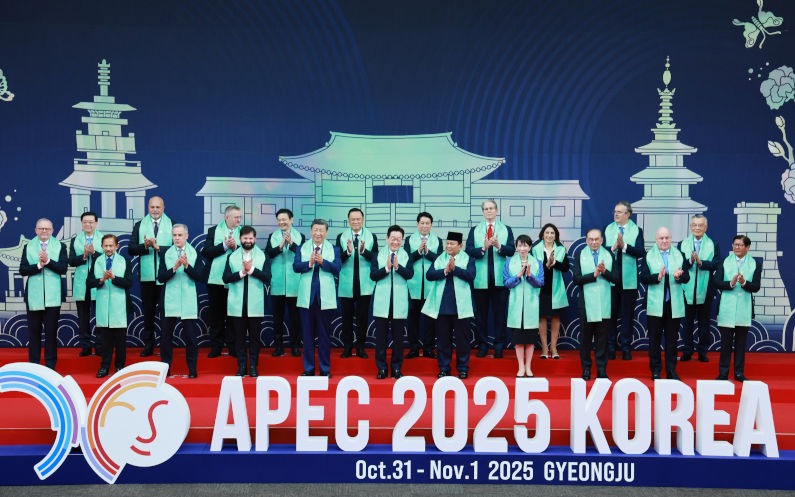
Rather than create new institutional arrangements, middle powers tend to legitimise them which provides leverage to gain benefits and to help shape institutions led by great powers. One exception to this was APEC, which was created by Australia and South Korea and which major powers eventually joined on the terms established by its middle power creators.
Great powers look to middle powers to lend depth and legitimacy to institutions that have been shaped to reflect great power interests. The benefit for middle powers being early movers is to secure a place in the emerging institutional architecture and access to channels to shape outcomes that may advance their national interests, where they cannot achieve such outcomes by acting alone.
With the new multipolar order forming into competing parallel orders, the question for middle powers is whether to become ‘early legitimisers’ of emerging new institutional arrangements and be able to shape their development. The choice can be particularly difficult for countries like South Korea which has been deeply embedded in the US-led ecosystem. If, for example, the BRICS agenda around finance, currency and digital develops significantly, the decision by South Korea not to join could eventually entail significant costs.
A similar conundrum faces Europe: whether to join and participate in shaping and securing benefits from new institutional arrangements led by China. The Belt and Road (BRI) was an early test with some member states like Hungary joining and today achieving considerable benefits in terms of FDI from China. Italy also was an early mover with BRI, but under considerable pressure from the US, the new Italian Government withdrew from BRI.
Europe can be seen to be in a similar position as South Korea. Having been so deeply enmeshed in the US ecosystem, participating in Chinese-led institutions will serve to significantly legitimise them in competition to those of the US-led order. Although such participation need not, nor should it be, an either/or proposition, the prestige of European states participation would add further to the bandwagon effect. Were some major European states to sign on to the one or more of the many memoranda of understanding that comprise the BRI, this would send a powerful message to Washington that China’s order was in the ascendency.
Europe, perhaps uniquely, therefore, has considerable strategic leverage over both bounded orders. Should Europe, on the one hand, align reflexively with US containment strategies, China’s bounded order will consolidate further and with fewer constraints. If, on the other hand, Europe engages from a position of strategic selectivity, it possesses substantial capacity to shape the norms within and, most importantly, between these orders.
With Trump 2.0, however, the issues of early mover and which order to become actively involved in may be a less onerous political problem for middle powers than previously. Trump does not seem to understand or care about US exceptionalism. As clearly articulated in the NSS, it is America First, not US primacy that matters. Washington above all wants to get its way. Geopolitical competition between the great powers will remain, but the actions of middle powers may not be seen and judged exclusively within this framework. Trump’s transactional approach may have opened up a much bigger space for middle powers to exercise agency according to their own independent foreign policy.
A policy agenda for middle powers
Judging each issue in terms of a state’s own national interests the following would comprise an activist middle power agenda over which states could come together, cooperate and seek to shape global outcomes: countering deglobalisation; reforming multilateral institutions; resisting climate change; and strengthening global action on inequality. These can be thought of as the Core Principles of an Activist Agenda.
For European states and countries like Australia and Canada, the major policy change required for effective middle power diplomacy will be to reset relations with China onto a cooperative and constructive basis. To do that, they need to develop a realist foreign policy that recognises that China, like all great powers, will use its assets to advance its own interests. And that it will at times behave badly. Middle powers can cooperate to impose costs on bad behaviour.
The basic principles of independent middle power diplomacy should include:
- to encourage US continued engagement in all hemispheres;
- to view China as a strategic partner, not competitor;
- to deepen engagement with China, not containment;
- to identify a wide range of areas for mutual cooperation; and
- to hone a statecraft in dealing with China which draws together elements of diplomacy, military cooperation, emergency relief, disaster management, cooperation on health and pandemics, third-country technical assistance programs, business, arts and culture, and technical and scientific cooperation.
In practice, this would require recognising the legitimacy of China’s dominant role in the East Asian region; recognising the legitimacy of its need for security and maintaining territorial integrity; acknowledging the legitimacy of different forms of political and social organisation in different countries; participating in institutions of China’s order according to respective national interests; and reaffirming principles of non-interference, unless authorised by the UN Security Council.
Middle powers should also seek to re-energise multilateralism, leveraging off the great powers’ need for some multilateral arrangements to advance their respective interests. At both the rhetorical and substantive levels, it is helpful for middle powers that China continues to stress the importance, if not the primacy, of the legacy multilateral institutions.
It falls not only to national governments to cooperate to sustain a viable multilateral system, but also to other actors devoted to bridge-building between orders and states with the aim defending practical multilateralism. At a time of great-power gridlock, organisations like Global Neighbours can sustain essential habits of cooperation through 1.5-2 track diplomacy upon which any future effective multilateralism must be built. APEC grew out of just such activities led by PECC (Pacific Economic Cooperation Council).
The world order has been recast not only by China’s inexorable economic rise and institutional, technological, military and diplomatic ascendency, but by a deep structural shift in US domestic politics which has drawn politicians away from traditional liberal internationalism. This is also occurring across Europe. Middle powers now have to navigate a world of bounded orders, where their greatest influence comes mainly from conferring legitimacy on different orders and their institutions. In doing so, they should seek to work in concert to advance the Core Principles of an Activist Agenda. This will involve adopting a realist approach to international relations, not casting the world in Manichaean terms of democracy versus autocracy, and recognising the primacy of national self-interest.
This 4-Part series is republished from Global Neighbours.org, 13 February, 2026
Read the first 3 articles in the series.

Geoff Raby: Ambassador to China, 2007-11; 2nd edn. of China’s Grand Strategy and Australia’s Future in the New Global Order was published in May 2025 and Great Game On, November 2024, both by Melbourne UP.