A little-known proposal to settle Jewish refugees in Western Australia highlights how different history might have been – and the role of racism in shaping Australia’s decisions.
“I do not like the phrase: ‘It might have been!’ It lacks force, and life’s best truths perverts.”
Setting aside the just sentiments of American poet Ella Wheeler Wilcox (1850–1919), it’s worth wondering how different our world would be today if Israel were not in the Middle East, but in northern Western Australia.
Why bother to ask this question? Because it almost happened.
At the end of the 19th century, the hunt for a homeland for Jews persecuted in the Russian Empire, Eastern Europe, and elsewhere was getting serious. Initially, the colonialists focused on farmland in the Americas, particularly in Argentina.
When that idea fizzled, the Freeland League for Jewish Territorial Colonisation, founded in London in 1935 by Russian left-wing lawyer Dr Isaac Nachman Steinberg, picked up the quest.
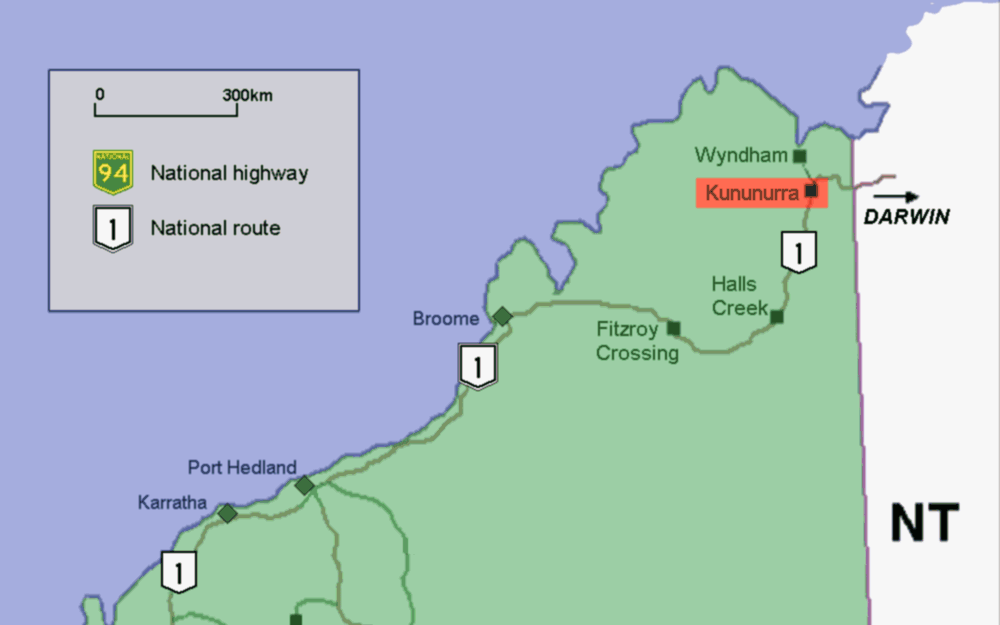
They focused on the Kimberley in WA.
The Yivo Encyclopedia of Jews claims the Fraylandists, “aimed to build a secure foundation for the continuity of their socioeconomic life and culture (including the Yiddish language).
“For them, compact, mass colonisation was the only effective means to avoid the pressures of assimilation and dispersion associated with individual immigration – regardless of its scale.
“Differing with Zionism also on the necessity of national sovereignty, the territorialists were willing to accept a parallel and separate coexistence with citizens of a friendly nation, thus avoiding the potentially inflammatory role of competitors or usurpers.”
The need was getting urgent because persecution had intensified in Nazi Germany. Families that could afford to flee were packing their possessions for passages to the UK, the US, and elsewhere.
Palestine – then governed by the UK under a League of Nations mandate – was preferred for historic religious reasons, but seemed impossible because it was dominated by Arabs.
Uganda and fertile British colonies in East Africa were considered before interest turned Down Under.
Some had heard that Australia was vast and empty, big enough for 75,000 refugees, and ample space in the Kimberley. The well-watered region was more than 2,200 km north of the Western Australian capital Perth, then only an isolated city of less than half a million, far from the East Coast power centres.
Steinberg came to Australia and pushed the State government to “open your gates to the persecuted Jewish people of Europe, and let them help transform the landscape into a productive agricultural hub … writing Jewish poetry about kangaroos and laughing kookaburras.”
The Durack family of pastoralists offered Steinberg’s organisation more than 27,000 square kilometres of leasehold land. Whether they had the legal right is another matter.
WA Labor Premier John Willcock was enthusiastic, and it seemed the scheme had legs, though the land’s original owners were not consulted.
They too were being persecuted; the last known massacre was around Forrest River a century ago this year, when “law enforcement personnel” killed at least 16 Indigenous people and burned their bodies.
Lawyer Dominique Reeves was quoted by the ABC as saying, “the anti-Semitism that was in Europe at the time would have been reflective of some of the anti-Aboriginal thought processes that were going on in Australia.”
Despite sustained support for the Kimberley Scheme from powerful sectors of the Australian community, including business and the churches, it was eventually speared by the Menzies Government in 1950.
It argued that the creation of “distinctive alien communities” would not be in the national interest.
“The Commonwealth does not favour the settlement of any one area by a group of migrants as the establishment of an isolated community of migrants is contrary to the Government’s assimilation aims.”
There was a higher principle at stake, and the Menzies quote needs to be decoded: Not all Jews looked like Caucasians, and the White Australia Policy was paramount.
Had the Cabinet given the scheme the tick and the Kimberly become a magnet, it would have been nigh on impossible to stop the newcomers moving to the cities. Not all wanted to sweat in the Outback making a Garden of Eden.
Although the original plan was for 75,000 refugees, there were suggestions that numbers could eventually reach a million. Before the Holocaust, there were about 16.6 million Jews worldwide, with 9.5 million in Europe.
Because of racism in Australia, millions could not flee south and escape the gas chambers.
There are probably fewer than 16 million Jews in the world, roughly 0.2 per cent of the global population. They mainly live in two countries: the US (approximately 6–7 million), and the rest in Israel.
The Kimberley, covering an area twice the size of Victoria, remains largely empty with 40,000 residents.
Today, there are only 120,000 Jews in Australia, with more than 90 per cent in Sydney and Melbourne. If there are any in the Kimberley, they lie low.

Duncan Graham has been a journalist for more than 40 years in print, radio and TV. He is the author of People Next Door (UWA Press). He is now writing for the English language media in Indonesia from within Indonesia.
Duncan Graham has an MPhil degree, a Walkley Award, two Human Rights Commission awards and other prizes for his radio, TV and print journalism in Australia. He lives in East Java.