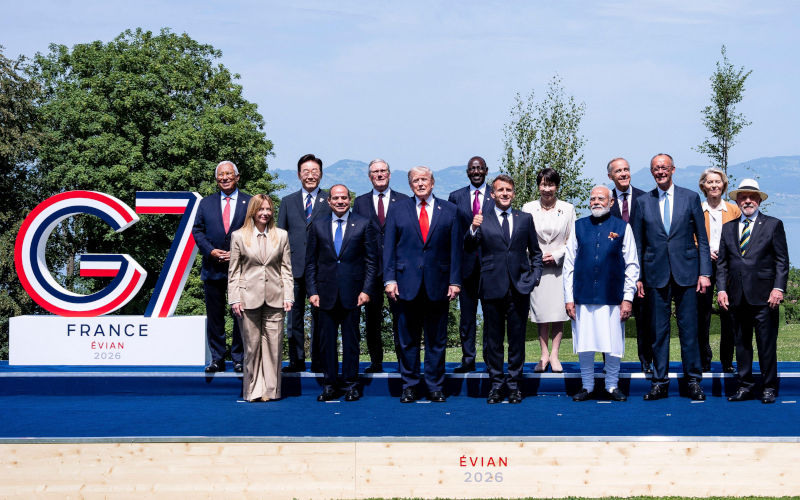
Politics and institutions are increasingly governed by risk management, not leadership. But real leadership requires imagination, courage and the willingness to challenge false stories.
Of course there are Trump, Netanyahu, Putin, Xi, Kim, and the Ayatollahs, who run their worlds according to their own story line, but none in any meaningful way serve democracies. But are they leaders? Leaders act and think transformationally. These guys, especially Trump, are interested only in transactions that further their storyline.
Sadly, while our world needs leaders, it demands managers, folk who engage in transactions which mitigate risk and follow ideological, often partisan, predetermined, paths. Such has become the climate of grievance and perceived fault that the industry of risk management has taken over politics, institutions and the Church.
Leadership is no longer treasured, either at a national or local level. Indeed, real leadership is perceived as risk. Paradoxically, amid frustration about the lack of leadership, we get people like those mentioned above who masquerade as leaders.
The life of every nation, community and family is shaped by the story it tells itself. The role of a leader is to exemplify, in word and action, the best version of that story, which can nourish the nation or group, and the world. The US, Israel, Russia, China, North Korea and Iran, have become the stories their leaders insist to be true. That they are not good stories is apparent, because of the consequences these stories inflict on others, both within their own nations and beyond.
The lives of individuals, families, communities and nations go through cycles. I understand the universal cycle to be an oscillation between order, disorder and reorder. The role of a leader is to discern the community/nation’s place in that cycle and, with courage, to forge a sustainable just, harmonious and productive path.
Order is clearly the desirable state. However, nothing in life remains static. A long-established pattern can be suddenly disrupted, or a pattern that had served well will eventually cease to be life giving and become life diminishing. Leaders will guide and direct a community through change, at times embracing or encouraging disruption or disorder so that a new and life-giving reordering might arise. We must be encouraged to embrace the price of disorder for a reorder to emerge. From my world, this is emblematically the cross and resurrection.
We are travelling through a major period of disruption. It is now commonly accepted the world community faces three existential threats: global warming, nuclear catastrophe and AI. In a scramble for economic dominance, none receive the attention they should.
The agrarian revolution was a great disrupter, but out of it a civilisation independent of hunter gathering was born. The industrial revolution was a great disrupter, but out of it a dominant middle class was born. Now we are in a digital revolution with AI at its apex, from which an outcome of creative and life-giving order is far from guaranteed. Courageous, wise and insightful leadership is needed.
But, because of a leadership void, politics and politicians lack respect. Those engaged in the political process are managers of internal factional ideologies and expectations. They develop the skill to wedge before being wedged. It appears politics is a game played in a bubble not in the real world of environmental threats, housing and health pressures, war.
Energy and how it is sourced lie at the heart of economic and environmental life. The industrial revolution was made possible using fossilised solar energy. The economic and environmental appropriateness of this source has passed. Transitioning to current abundantly available solar energy in all its forms is what we must do. That transitioning is expensive should not be apologised for. Economically and environmentally, it is the destiny we must embrace and look forward to. There can be no plan B.
It has been clear for some time the housing market and regulations surrounding it had spun away from a healthy equilibrium. Instead of being on the front foot in addressing the issue, the government has been forced to the back foot. It has allowed self-interested voices to speak of ‘liars and broken promises’. Regardless of what might have been said in the past, action in Australia’s and the world’s best interest is paramount. A promise that is not in the country’s best interest was a mistake and should be admitted as such.
The same managerial mindset prevails in our health and educational practice. Visiting health and aged care facilities, this truth is painfully obvious. Significant skilled staff time is expended behind computers filling online digital requests in submission to risk management requirements. Time spent with patients, clients or students is much reduced. No wonder staff are full of frustration. The same to be true for the medical profession, so much so that some practitioners opt out. Initiative is frowned upon. Prescribed steps must be followed.
In the Middle East we continue to support the idea of a two-state solution. It is nonsense. It is too late. It will not happen. It simply provides space for Israel to continue its genocidal policies. Leadership requires truth to be spoken. Pressure must be applied on Israel to enable all who live ‘between the river and the sea’, to enjoy the same rights, the same freedoms, the same dignity. This will not happen while the west refuses to sanction Israel, boycott trade and cease military cooperation.
In like manner, institutional Christianity has become all about management, not leadership. Strategies such as exist are overseen by insurance companies and risk managers. Bishops outsource their leadership to risk managers. There is little evidence that the injustices of the world are thought about, let alone addressed. Where are the voices that cry out in the wilderness? In the Anglican Church, where are the William Temples or Desmond Tutus let alone a Martin Luther King?
Where are the prophets?
Prophets are those who challenge false stories. Christian Zionism that has undergirded atrocities against Palestinians is a false story. Christianity that gives space to unrestricted capitalism is a false story. Christianity that permits the demonisation of others based upon their gender, sexuality, ethnicity or religious belief is a false story.
Where are the critics of capitalist excesses and the growth of inequity? Where is generosity in the face of difference, preparedness to recognise that others have seen what you have not? Why is popular Christianity so dualistic, so devoted to binaries?
We cannot attain what has not been first imagined. Leadership is about imagining a different outcome and generating sufficient trust and respect that community or nation will accept the cost of making such a vision a reality.

George Browning was Anglican Bishop of Canberra Goulburn 1993 – 2008. He was President of the Australia Palestine Advocacy Network 2013 – 2022. He is now its Patron. He is also Patron of Palestinian Christians in Australia, and of the Palestinian ecumenical liberation theology centre -Sabeel.