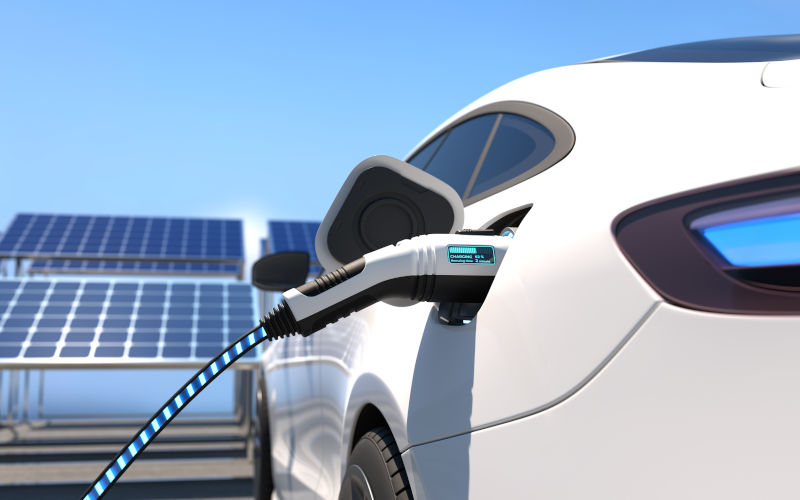
Electric vehicles are now cost-competitive and critical to reducing exposure to global fuel shocks, making faster adoption a matter of economic and national security.
Five years ago, I chaired a Senate Select Committee that outlined a roadmap for Australia’s automotive future. The conclusion of our inquiry into Electric Vehicles (EVs) was clear: a rapid transition was a critical pillar for economic and national security, not just an environmental choice.
At the time, our recommendations were met with political inertia. Today, as Australians feel the painful squeeze of global fuel volatility – compounded by the conflict in the Middle East and our frail “just-in-time” supply chains – the cost of our inaction is measured in every litre of petrol we buy. Had the government embraced our 2019 roadmap, thousands more households and businesses would today be shielded from the whims of international oil markets.
One of the most striking shifts since 2019 is the economics. During the inquiry, we heard testimony that price parity for EVs would be reached by 2026. To be honest, even I was sceptical then. Yet, today, that parity is a reality.
In 2019, a budget ICE car was significantly cheaper than any EV. Today, the gap has evaporated. Look at a popular, entry-level hatchback like the MG3, which now retails for roughly $25,000–$30,000 drive-away. You can now purchase the BYD Atto 1 for approximately $26,000, or the MG4 Urban for $31,000. When you factor in that these EVs cost about $4 for a “full tank” equivalent versus $80 at the petrol station, the ICE engine isn’t just a legacy technology – it’s a financial liability.
To be fair, the current government has finally begun to move the needle. The introduction of the New Vehicle Efficiency Standard (NVES) and the FBT exemptions for electric vehicles are to be applauded. These levers have been instrumental in making the switch financially viable for working Australians. The typical EV purchaser is a teacher or a nurse on modest income in an outer suburb of one of our major cities.
However, there are worrying flags that the government may seek to reduce or remove the FBT exemptions. This would be a catastrophic mistake. We must pull every lever available to increase uptake, not prematurely kick the ladder away just as we gain momentum.
Furthermore, we are missing a massive opportunity to integrate our transport with our grid. The government’s new policy of offering three hours of free electricity in the middle of the day is a brilliant way to use our surplus solar energy. But most people’s cars are parked at work during those hours, not at home. We need urgent support for businesses to install workplace charging infrastructure. This would allow us to soak up that “free” energy, lowering costs for workers and stabilising the national grid.
Finally, we must look at our national priorities. Last week, the government announced a record peacetime increase in defence spending – an extra $50 billion over the next decade. We are told this is necessary to prepare for future conflict.
But where is the new multi billion dollar announcement for electrifying our transport sector?
Donald Trump can choke our access to liquid fuels; he cannot turn off our sun or our wind.
Transitioning our fleet to run on Australian sunshine and wind – rather than imported oil – is the single most effective way to insulate our economy from global conflict. Investing in a sovereign, electrified transport system is not just ‘car policy’; it is a far more effective and immediate investment in our national security than many of the hardware projects currently being funded.
Anthony Albanese did not cause this crisis, but the community expects him to fix it.
In 2019, the committee I chaired shone a light on the path ahead, but the Coalition government failed to take it. In 2026, we are out of excuses. The government has made a start, but it’s time to double down. Let’s not wait for the next global crisis to wonder why we didn’t act sooner.

Tim Storer
Tim Storer is a former Independent Senator for South Australia in the 45th Federal Parliament of Australia and chaired the Senate Select Committee on Electric Vehicles.He has experience spanning Boards, Councils, and committees across the private, public and federal government sectors. Before and after his time in the Senate, Tim worked in small, medium and large enterprises as well as institutional agencies across Australia and Asia, giving him firsthand insight into business development and international markets.