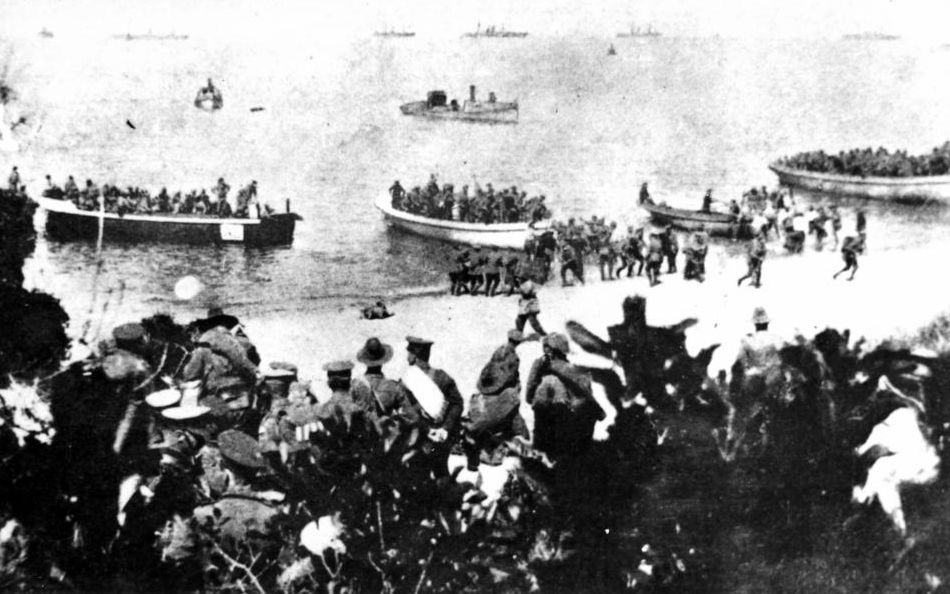
The Anzac tradition honours sacrifice, but the broader, global contribution to the war effort remains under-recognised in Australia’s national memory.
Each year on ANZAC Day, we honour Australians who served and died in war, remembering their courage, sacrifice, and the legacy forged in the Gallipoli campaign. It is one of the most important and emotional days in the national calendar, deeply tied to how Australians understand themselves.
Yet the way we remember ANZAC still tells only part of the story. Alongside Australian and New Zealand soldiers stood thousands of others from the Indian subcontinent, Africa, and First Nations Australia, whose contribution was essential but remains largely absent from public remembrance.
For more than a century, the ANZAC narrative has largely centred on Australian and New Zealand soldiers. What is often missing is the fact that they did not fight alone. They were part of a much larger global force that included soldiers and workers from across the world, many of whom played critical roles in sustaining the war effort.
At Gallipoli alone, around 15,000 to 16,000 troops from the Indian subcontinent served under the British Indian Army, with about 1,500 killed. These soldiers were drawn from across British India, including regions that are now India, Pakistan, and Bangladesh, as well as Gurkha soldiers from Nepal.
These men represented extraordinary diversity in language, culture, and faith, including large numbers of Muslim soldiers from Bengal and Punjab, alongside Hindu and Sikh communities across British India. Their service reflected the complex realities of colonial recruitment, where men from what is today India, Pakistan, and Bangladesh were drawn into a global conflict far from home.
At Gallipoli and in other First World War campaigns, one of the most critical but least recognised support systems was mule transport. The mules themselves were supplied through British Army procurement networks, often purchased from commercial markets in Egypt, particularly Cairo and Alexandria, with additional animals sourced from India and other parts of the British Empire where pack animals were widely used.
These animals were operated and managed by mule transport units within the wider British Indian Army logistics system, staffed largely by soldiers and handlers recruited from the Indian subcontinent, including regions that are now Bangladesh, India, and Pakistan. They worked alongside Gurkha soldiers from Nepal, who were renowned for their endurance in difficult terrain.
Together, they formed the backbone of battlefield supply lines in areas where vehicles could not operate. These mule teams carried food, water, ammunition, medical supplies, and communications equipment across steep and dangerous ground, often under fire. Without them, frontline positions, including those held by ANZAC troops, could not have been sustained for long periods.
The scale of their contribution extended far beyond Gallipoli. More than 1.3 million soldiers and labourers were recruited from the subcontinent during the First World War, with over 1.09 million deployed overseas. Around 74,000 were killed and more than 140,000 became casualties. These men were recorded under a single colonial category, yet they came from many different regions and communities, including what is now India, Pakistan, and Bangladesh. Their identities were grouped under one label, and their individual stories have often been overlooked in broader historical memory.
African contributions were also significant in scale, yet remain far less visible in public remembrance. More than two million Africans were mobilised during the war. Between 500,000 and 600,000 served as soldiers, while over 1.5 million worked as labourers and carriers.
In several campaigns, particularly in East Africa, entire military operations depended on this workforce. Many died not in combat but from disease, exhaustion, and the extreme conditions of war, with estimates exceeding 100,000 deaths.
The First World War also had profound consequences for Muslim-majority regions more broadly. The collapse of the Ottoman Empire in the aftermath of the war marked a major political and emotional turning point for many Muslim communities worldwide, reshaping societies across the Middle East, South Asia, and beyond. While this was not part of the ANZAC campaign itself, it forms part of the wider global context in which millions of soldiers, including Muslims from British India and regions such as present-day Bangladesh, experienced the war.
Within Australia itself, Aboriginal and Torres Strait Islander peoples also served, despite facing discrimination at home. Around 1,000 to 1,300 Aboriginal men enlisted in the First World War, and more than 3,000 served in the Second World War. On the battlefield, many experienced a level of equality that was not afforded to them in civilian life. Yet after returning home, many were excluded from veterans’ benefits and broader recognition.
When these histories are viewed together, a clear pattern emerges. The war effort that supported ANZAC operations was global and diverse, but the way it has been remembered in Australia has often been narrower. The dominant narrative has tended to focus on a particular image of national identity while leaving out many who were essential to the same war.
This is not about diminishing the sacrifice of Australian and New Zealand soldiers. It is about expanding the story of belonging in our national memory. They did not stand alone. Their efforts were supported by men from British India, including present-day India, Pakistan, and Bangladesh, by African soldiers and labourers, by Muslim communities drawn into the First World War experience under colonial systems, and by First Nations Australians who served with courage even when they were not fully recognised at home.
Australia today is a multicultural nation built on many journeys, many sacrifices, and many stories, alongside the enduring history and presence of its First Nations peoples. A more inclusive ANZAC memory does not weaken the tradition. It strengthens it by making it more accurate, more honest, and more complete.
To honour ANZAC fully is to give credit where it is due and to remember all who wore the uniform, carried the loads, and paid the price. That is the fair go history calls for.
Only then will “Lest We Forget” truly ring true for all of us.

Mainul Haque
Mainul Haque OAM is an economist and former senior Australian public servant with nearly 30 years’ experience shaping and analysing policy across government, academia, and the not-for-profit sector. He is a community leader, board member and non-executive director, and former ACT Multicultural Ambassador. He writes on social cohesion, migration, and public policy, grounding his analysis in practical experience.Mainul has held numerous board and advisory roles across Canberra’s community, education and multicultural sectors, and was awarded the Order of Australia Medal for his significant contribution to the ACT community.