Urban fire risk, failing carbon markets, rising energy demand and accelerating polar change highlight the growing scale and complexity of environmental pressures.
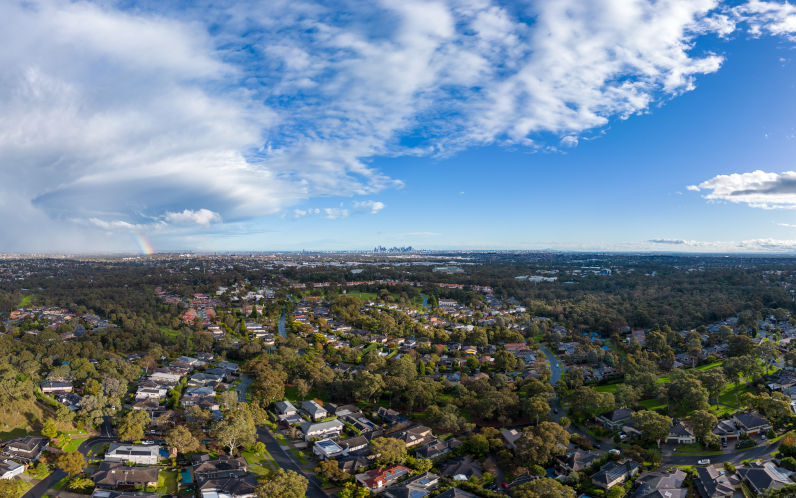
Australian city fringes at high risk of LA-style bushfires
In the wake of the dramatic and devastating fires that destroyed many Los Angeles neighbourhoods in 2025, including many affluent areas, the Climate Council and the Emergency Leaders for Climate Action co-produced When cities burn: Could the Los Angeles fires happen here?. The very clear answer is that yes, they definitely could and every capital city is at risk. They all display the dangerous characteristics that made the LA fires so destructive and our own worst bushfires have exhibited similar unstoppable fire behaviour.
There were multiple climate change-related reasons why the LA fires were so destructive: hotter, drier conditions causing droughts, longer fire seasons and more dangerous fire-weather days; sudden swings from very wet to very hot and dry conditions (climate whiplash); dry brush and grass in hilly peri-urban terrain; strong winds; and more fuel following periods of above average rainfall. In addition, climate-fuelled fires are increasingly exceeding the limits of modern firefighting.
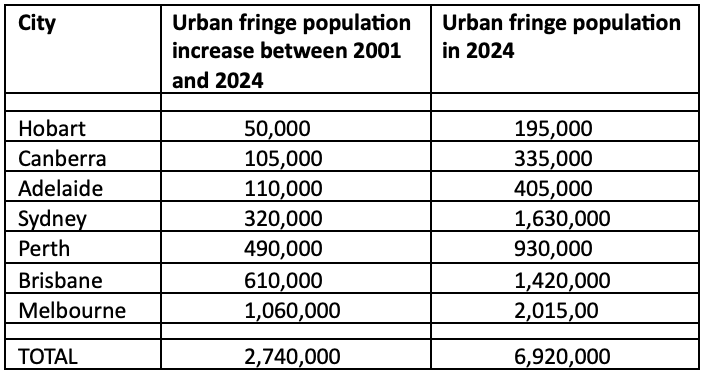
In Australia there is an increasing number of people at risk as more houses are built in fire-prone suburbs on the fringes of cities. Between 2001 and 2024, the populations of the urban fringe areas of our capital cities increased by between 24 per cent (Sydney) and 111 per cent (Melbourne and Perth). But it’s the actual numbers that matter. In round terms, the increases during this period and the actual numbers in 2024 were:
The authors make three recommendations:
- Swift and deep cuts to greenhouse gas emissions (what they call climate pollution) in Australia and worldwide.
- Large investments by all levels of government in disaster preparation and community resilience (eg, hazard reduction, local disaster planning, education, higher building standards for new constructions, retrofitting older homes, evacuation centres) for all capital cities and regional centres.
- Build emergency service and land management capacity at the interface of the bush and urban centres.
Protecting local communities from carbon market predators
A few weeks ago I railed against carbon markets, particularly the almost complete failure of carbon offset projects, most of which are in the Global South, to produce any meaningful reduction of the level of CO2 in the atmosphere. The reasons were appropriately summarised in the title of a report I highlighted: “Built to fail”.
ActionAid has provided suggestions for national governments and local communities considering hosting a carbon market project:
- Ensure land tenures are preserved. Communities should not agree under any circumstances to give up land tenure to outside parties. Notwithstanding the financial incentives offered, the risks to food security and economic livelihoods are too great.
- Ensure transparency in negotiations and real community consultation from the outset. Many of the worst deals have occurred without widespread consultations. Sometimes communities have been totally unaware of the deal.
- Do not accept liability for failed projects that result in the promised credits being declared worthless.
- Avoid “middle men” and their fees and keep the financial benefits from the project as close to the community as possible.
- Have accessible and effective grievance procedures. History suggests that community harm is common and there must be a fair redress system.
- Do not allow credits to be used as offsets. Ensure that any carbon credits sold are bought as contributions to climate action and not used as offsets to allow polluters to keep polluting while claiming “carbon neutrality”.
These look like solid principles for Indigenous Peoples, local communities and governments in the developing world to consider before getting involved with any externally driven project involving land.
Arctic sea ice steadily disappearing
I’ve reported several times that the Arctic is warming 3-4 times faster than the global average, so readers won’t be surprised to see that the extent of sea ice in the Arctic this northern winter is around its lowest recorded level. More importantly, however, the graph below demonstrates very clearly that this year is not an outlier; it is the continuation of a long term trend.
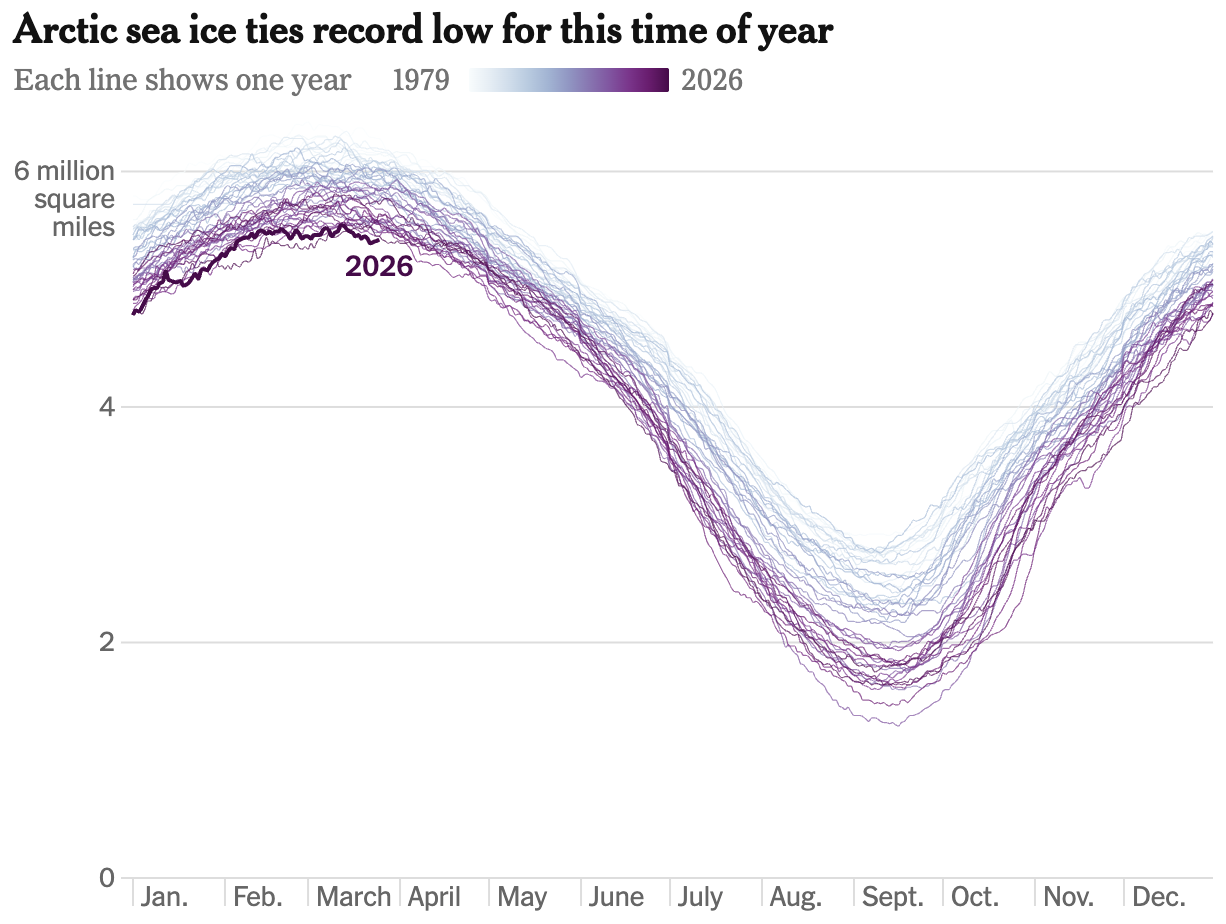
Notwithstanding some natural year-to-year variation, the amount of sea ice in both summer and winter has been steadily decreasing over the last 50 years. In summer, the extent of the sea ice has roughly halved, with about 3.9 million square kilometres having been lost (equivalent to the size of WA and NT combined). The winter loss is proportionally much less (around 15 per cent) at around 2.5 million square kilometres (just WA).
Summer sea ice in the Antarctic this year is at its 16th lowest level in the 48 years of monitoring.
Data centres driving electricity demand growth
After several years of steady or declining demand for electricity in industrialised nations, demand is on the increase again. This has resulted from the transition to renewable energy and the increasing electrification of society, the transfer of some industries to developing countries, modest increases in energy efficiency and even population decline, for example.
In the US, demand was flat at the beginning of the century, increased by 1 per cent between 2014 and 2019 and by 9 per cent between 2020 and 2025, and may increase by a further 30 per cent by 2030. The big driver of demand over the next five years is expected to be data centres. By 2030 they may be consuming 9-17 per cent of all US electricity.
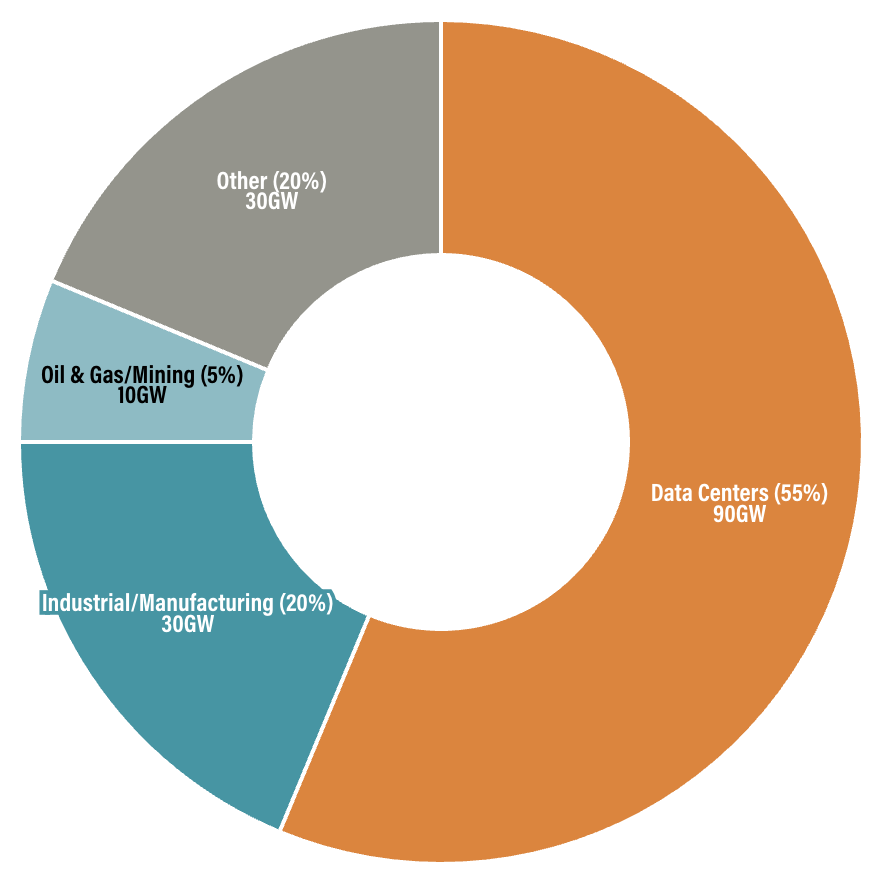
Because of the enormous demands that data centres make on sources of electricity, companies such as Amazon, Google, Alibaba and Microsoft that provide energy-hungry cloud services are now both opting for, and being required by governments to enter into, power purchasing agreements, sometimes involving on-site power generation. Of the publicly disclosed on-site energy generation plans available at the moment, gas is planned to provide three-quarters of data centres’ electricity needs and nuclear a fifth.
(Just in passing, I came across a new word in reading about this. Hyperscalers are large-scale cloud service providers that have the infrastructure and capacity to rapidly expand their already massive computing resources to respond to demands for more computing power by companies and governments.)
Closer to home, Ed Husic, Federal MP for a Western Sydney electorate, has highlighted the problems associated with the planned expansion of data centres in Western Sydney – particularly their demands for power and water and their generation of greenhouse gases, heat and noise. There is also growing community resistance to data centres being sited next door. The (claimed) attraction of a data centre in your neighbourhood is the investment in the local economy and the jobs generated. Who benefits from the investment and whether the jobs are stable and well-paid remains to be seen.
Husic wants standards for data centres to be set by governments and argues, “I am not anti-data centre; I’m anti-hype. I am for solid regulation that serves the interests of everyday Australians. I’m not arguing that we should abandon the development of data centres or AI capability in Australia. I’m arguing for a shift in our approach, where we’re sure the benefits are skewed very clearly to us, that the construction of these centres can be managed properly and that communities are not left footing the bill while the gains flow to a distant shore”.
Visualising global warming
Zeke Hausfather loves finding new ways of visualising data, particularly regarding climate change. He’s created an animated video of the average global daily temperature anomaly (compared with the average for 1850-1900) for each day of every year between 1940 and 2024. Displayed below are snapshots of 1940, 1982 (the half way point) and 2024.
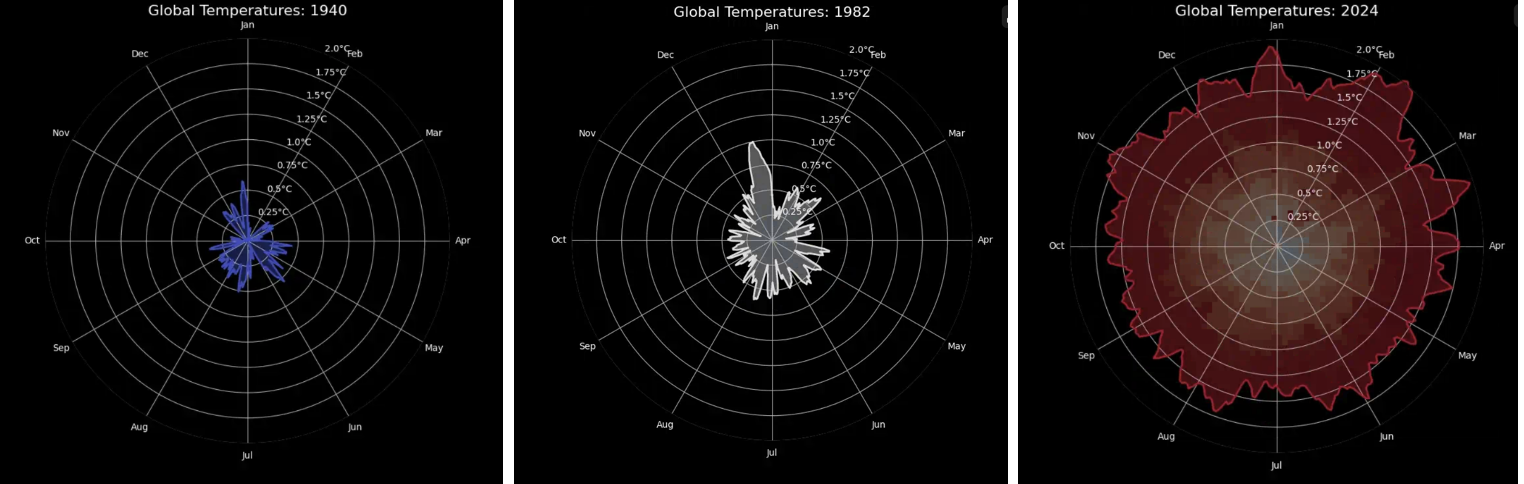
As a very crude summary, the average daily temperature anomalies in 1940 were nearly all in the +0.1-0.5oC range. In 1982, the average daily anomalies were nearly all in the +0.25-0.75oC range (with a remarkably warm December), and in 2024 the averages were mostly in the +1.50-1.75oC range (with quite a few exceeding +1.75oC). Again crudely, the warming in the second 42 years (about 1oC) was approximately double that in the first 42.
Does Hausfather’s creativity make it easier to understand global warming? I don’t know but it is a bit of fun, particularly if you watch the animation. There’s more of his work in a similar vein, if you’re interested.
Some like it hot but not Emperors
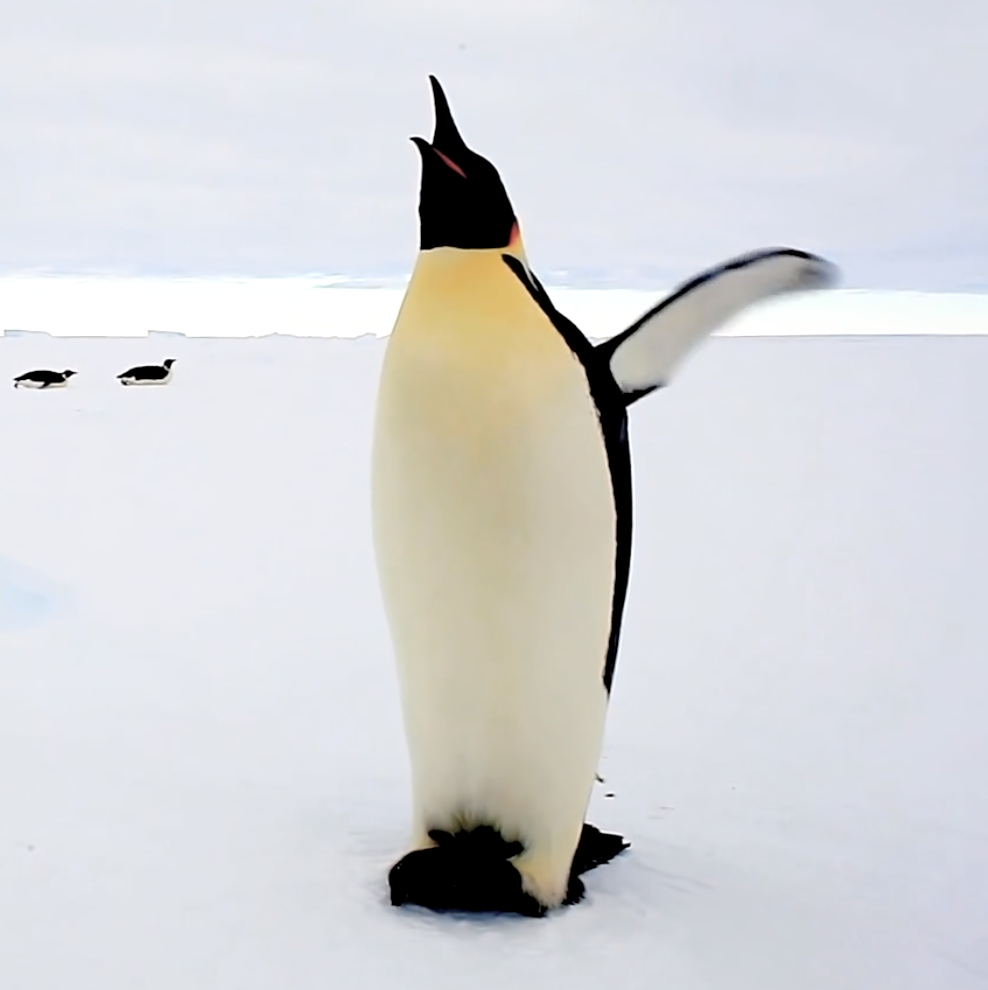
Emperor penguins, the world’s largest penguin, have been added to the official list of wildlife endangered by global warming. The loss of sea ice impairs the penguins’ ability to breed and avoid cold water during their annual moult. It also reduces the availability of squid, fish and krill.

Peter Sainsbury is a retired public health worker with a long interest in social policy, particularly social justice, and now focusing on climate change and environmental sustainability. He is extremely pessimistic about the world avoiding catastrophic global warming.