Court rulings have struck down NSW protest laws as unconstitutional, reaffirming that peaceful protest is a vital component of democratic life and cannot be curtailed by government overreach.
The right to protest in Australia is a core civic freedom, not a privilege controlled by an individual or at the discretion of a government. That freedom is implied in our constitution long ruled on by the High Court of Australia. Not as a personal right, but rather, as a limit on laws and government decisions that unreasonably restrict political communication that includes peaceful protest.
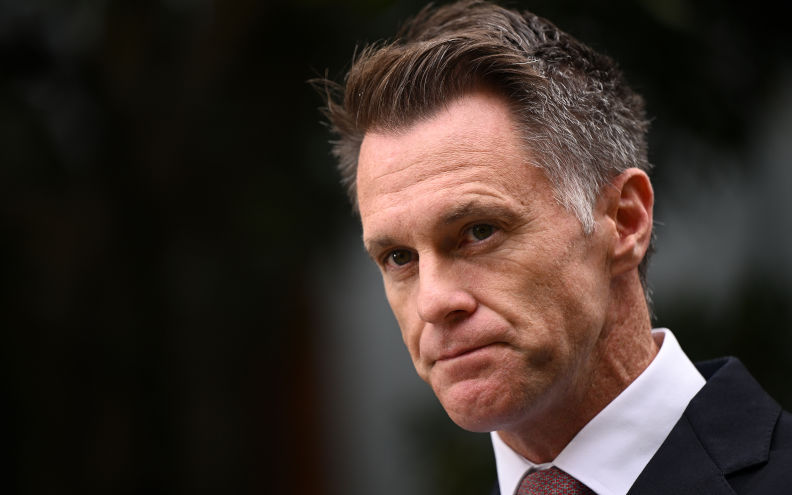
The New South Wales Court of Appeal has reinforced that right that Premier Minns must now accept and move on. His hardheaded persistence in refusing to accept the Court’s ruling will only bring harm to the people of NSW.
The core constitutional findings of the NSW Court of Appeal/ Supreme Court (April 2026) have been to strike down the Premier’s protest laws as having cumulatively “undermined constitutional rights”, burdened “freedom of political communication” and suppressed protest under the justification of “social cohesion”.
In its decision, the Court of Appeal has reinforced the principle that protest is a “vital component of democracy,” a principle critical to dissenters in and outside of parliament but not so, it appears, to Premier Minns.
As one MP told me, “I wonder what Chris will come up with next?” given that the Premier had suffered two constitutional defeats over his protest laws, one in October 2025 where the Supreme Court of NSW struck down his legislation to restrict protests near places of worship and then the 16 April 2026, Court of Appeal decision to strike down the post- Bondi legislative controls as unconstitutional.
In both cases the courts were unambiguous in finding that the Minns anti protest laws impermissibly burdened the implied freedom of political communication.
In simple terms, the people have a right to legitimate public protest to peaceful assembly and association to express their grievance as did hundreds of thousands of Sydneysiders in their 3 August, 2025, Sydney harbour bridge March.
The Premier wanted to expand police authority and then use the anti-protest legislation to give the police the powers to make protests “unlawful.” This is the core intent of the Premier’s policy drive.
The net effect is to grant the Police Commissioner sweeping powers to restrict public assemblies in parts of greater Sydney, thus generating tension between NSW Police and the people of NSW.
This policy objective has had the effect of discrediting NSW Police as police protestors clashes, with images of early morning police raids smashing through homes to arrest peaceful protestors, beamed around the globe. This has tarnished Australia’s reputation and damaged police community relations.
Minns’ anti protest legislation sadly pitted NSW Police against peaceful demonstrators and left many with lifelong scars. It also exposed NSW police to formal investigations by the law Conduct Commission and those behind the decisions that formulated the anti-protest proposal including those that authorised the physical policing that turned a peaceful demonstration into a violent confrontation.
By pursuing aggressive restrictions, the Premier has placed law enforcement in an untenable position – tasked with enforcing contested decisions in emotionally charged environments.
While Australians were grieving the loss of life from the Bondi terror attacks, Premier Minns was busy preparing his “biggest assault on democracy in Australia’s history,” “rushing” in his anti-protest Bill, “bypassing scrutiny” and with little consultation rammed the Bill through parliament.
Since October 2023, Premier Minns has been relentless of his pursuit of ways to block or constrain pro-Palestinian demonstrations. While framed as necessary for ‘public order’ and ‘social cohesion’. The cumulative effect has been the tightening of democratic space and the strangling of citizens’ rights to demonstrate.
Lebanese Australians wanting to organise a city protest against Israel’s invasion of Lebanon told me that they were met with police bureaucratic firewalls and delays.
Minns’ anti protest approach has, in effect, created the very polarisation he claims to prevent, the ‘us-versus-them’ dynamic. If the goal is genuine social cohesion, then the current Minns strategy is not just ineffective, it is counterproductive.
The Premier would do well to heed the courts, listen carefully to the communities affected and move on to a process of genuine reassessment of public order balanced with democratic rights and protection of civil liberties.
Republished from AMUST, 26 April 2026

The Hon Shaoquett Moselmane has been involved with ALP since 1982. A lawyer, he is a former Assistant President Legislative Council NSW Parliament. He is a Federal electorate Council delegate to State Conference.