
Child protection and research systems rely on the presence of a functioning parent, leaving many of the most vulnerable children unseen and unsupported.
I grew up with a PTSD-impacted father who was often violent, and a depressed and alcoholic mother who very rarely intervened in the beatings my siblings and I received. By the time I was 11, Dad had left and us kids lived full-time with mum. When I was 16, my mum moved away to go into rehab. I stayed behind to finish year 12.
I did the whole of Year 12 without parents – cooking, shopping, washing my clothes, and working to pay bills, while I studied. I rode my bicycle to musical practice and sport and made up stories if anyone asked about my mum.
There was no extended family stepping in. No neighbour who noticed. No teacher who asked the right question. There was also no system of support wrapped around us.
I didn’t enter the child protection system. I wasn’t counted in any dataset. Like a lot of children growing up in homes like mine, I learned very early that drawing attention to myself was dangerous, so I hid. But I always hoped someone would find me. Nobody did.
In large part this seems to be because the systems designed to find me were not built to look. Most programs to support children exposed to adverse childhood experiences assume either conspicuous signs of distress or neglect in a child, or that at least one functional parent will be present to act as bridge between child and support. I had neither.
This assumption of a functional parent is present throughout much of the child welfare sector. In part, this stems from the research into at-risk children. The very way research is conducted is part of the issue.
For a child to be included in a university study on children in high-adversity homes, at least one parent needs to be together enough to recognise the problem exists and that it affects their children. This parent must also be willing to let their child participate, knowing it may paint them in a damning light, or end with their child taken away from them.
This process naturally selects for a certain type of dynamic that many of the most at-risk children do not have. Support services operate on the same assumption: that there is at least one parent functioning as protector, advocate, and access point, engaged enough to be actively concerned about their children’s welfare. This is simply not the case for many of us. It means the children at greatest risk often have no awareness that support even exists. And if they do know, they are too young to access it themselves.
Research systematically misses families like mine. In homes where both parents are struggling, there is no functioning caregiver to report what is going on, so no agencies are notified. Because we don’t “look” abused or neglected, we don’t raise red flags, so no outsider raises the alarm on our behalf. This means many children like me facing the severe end of childhood adversity fall through the net.
After Dad left I learned to forge my mum’s signature. I wasn’t skiving off school or hiding bad reports. I was signing my own permission slips so I could attend sports carnivals or go to school camp because there were few times when Mum wasn’t drunk or unconscious. I did what I could to never bother her with anything because I could see she was drowning and I did not want to add weight to her struggle.
The idea that my mum, who left school in year nine, and who was too ashamed to reach out for help herself, would somehow find a university study, think that we might have anything worth contributing, and that I, in turn, would speak about the impact her and my dad’s behaviour had on me, in front of her, so she would feel even worse about herself, is so far out of the realm of the imaginable to be ridiculous.
When a house is in crisis mode, and parents are struggling just to make it through the next minute, relying on the capacity of caregivers is not a sound strategy for children’s wellbeing.
There is rightly a strong ethical framework around researching children. But it bewilders me that researchers seem to think speaking to a child is the only way to capture the child perspective. A person’s capacity to speak from the child’s perspective does not end when they turn 18. I am well recovered. And yet the rage and bewilderment and confusion of my younger self is always with me. It drives much of the work I now do. Just because my experience wasn’t counted when I was young, doesn’t mean it can’t be counted now.
Adult survivors of childhood trauma are so often missing from the research that drives the creation of support programs, and yet many of us have very specific insights into how systems can be improved and what is actually needed. If government and researchers and systems of support want to stop kids like me falling through the net, the only way to access us is retrospectively, once we are adults and can speak for ourselves.
If anyone wants to know what it was like to be that child, all they have to do is ask us now.
What needs to change is simple, even if it isn’t easy. Stop building intervention programs on the assumption of a functioning parent. Start treating adult survivors as a primary research population, not an afterthought. And ask us – directly, seriously, with the same rigour applied to every other gap in the evidence base – what it was like, what we needed, and what would have helped.
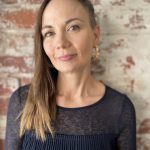
Ruth Clare
Ruth Clare is an award-winning author, TEDx speaker, lived experience consultant and intergenerational trauma educator who sits on a Monash University and ANROWS steering committee examining domestic violence in military families. Ruth holds a degree in biochemistry and brings a science-informed lens to her work, including Parenting After Trauma, a program she developed to support veteran and first responder parents.