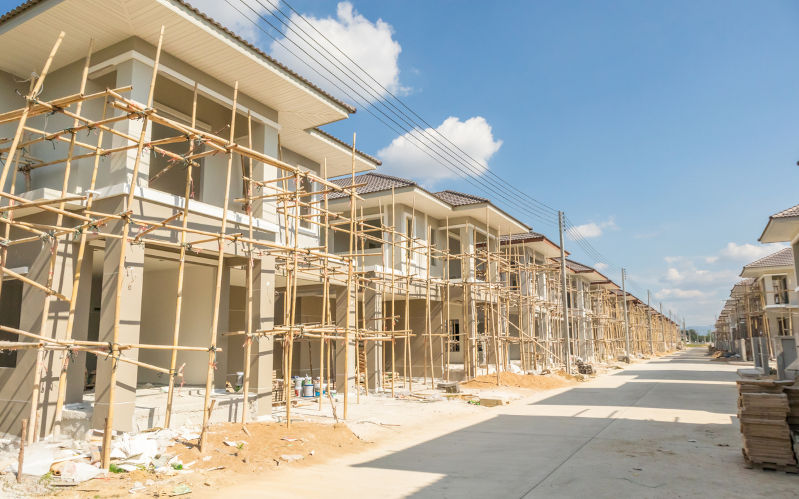
Australia’s housing crisis reflects not just a shortage of homes but the structural limits of a system that relies overwhelmingly on private developers and speculative market incentives to deliver essential social infrastructure.
For more than a decade Australian governments of different political colours have approached the housing crisis with an almost theological faith in private incentives. Set targets. Announce targets above targets. Streamline approvals. Remove regulations. Offer subsidies. Fast-track land release. Create tax concessions. Pressure councils. Nudge planning systems. Promise certainty. Push demand. Pull supply.
The theory is straightforward: governments create the conditions and private developers will build the homes the country needs.
Yet we have reached a strange and revealing point. Governments are doing more than ever to feed the housing system, while housing outcomes continue to disappoint. We continue to hear the same refrain from the private development industry: construction costs are too high; labour shortages are severe; materials remain expensive; finance costs are difficult; projects no longer stack up.
So despite the deregulation, despite the subsidies, despite the accelerated approvals and despite the political urgency, many projects still do not proceed because the profits are deemed insufficient.
This is where the contradiction becomes impossible to ignore.
Australia increasingly treats housing not primarily as shelter, public infrastructure or a social good, but as an investment vehicle. Governments have become dependent upon private developers to solve a national problem while those developers operate according to a very different logic. Their responsibility is not to maximise social outcomes. It is to maximise returns.
That is not a moral criticism. It is simply how the system functions.
But it creates an extraordinary situation. We continually reshape planning systems, tax settings and public policy around what private developers require for profitability, while rarely asking whether the model itself is capable of delivering what society requires.
Every additional concession becomes another attempt to make projects financially attractive. Every reform bends the broader economy further toward land values, property accumulation and construction cycles. More subsidies. More pressure. More acceleration.
And still the crisis deepens.
Australia increasingly resembles an economy feeding a machine that continually demands more fuel but never quite reaches the promised destination.
At some point the question must be asked: perhaps the problem is not that we have not fed the model enough. Perhaps the model itself has structural limits.
Housing crises are ultimately capability crises.
Countries that have successfully delivered large volumes of housing historically did not simply rely upon market signals and developer incentives. They built institutional capability. They built skills. They developed construction industries. They created public agencies with delivery powers. They treated housing as national infrastructure.
Australia once understood this.
Following the Second World War, governments directly built housing at scale. Public agencies trained workers. Migration programs aligned with nation-building priorities. Construction became part of industrial strategy.
Today we often discuss migration and housing as though they are entirely separate debates. But they are deeply connected. If Australia genuinely wishes to expand housing supply, migration should be strategically aligned toward skills shortages in construction, engineering, prefabrication, architecture, and sustainable building systems.
At the same time, a serious national training effort is required among existing residents. Apprenticeships, technical education and workforce pathways need expansion on a scale far larger than current efforts.
The challenge is not simply finding more workers. It is building a larger national capability.
And capability in the twenty-first century cannot merely recreate twentieth-century construction practices.
Australia has fallen behind in adopting industrialised and sustainable building systems. Modular construction, engineered timber, low-carbon materials, prefabrication technologies, circular design methods and advanced manufacturing approaches remain fragmented and underdeveloped.
Meanwhile countries elsewhere increasingly integrate housing construction with climate goals, productivity goals and industrial policy.
Housing should not simply be a by-product of speculative land markets. It can become a national project that simultaneously trains workers, accelerates decarbonisation, strengthens advanced manufacturing and builds sovereign capability.
The irony is that Australia already possesses much of what is needed: universities, TAFEs, migrants, engineers, industrial land and public investment capacity.
What is missing is not money. Nor land. Nor ideas.
What is missing is the willingness to admit that continuing to push, pull, subsidise and deregulate a model that repeatedly stalls may not be a strategy at all.
It may simply be a refusal to learn.
Because eventually every society reaches a point where it must decide whether housing exists primarily to generate wealth accumulation or whether it exists to house people.
And if Australia wants the low-rise and medium-rise neighbourhoods, sustainable communities and affordable homes it says it wants, it may need to stop endlessly feeding an exhausted model and begin rebuilding the national capability to deliver them.

Stewart Sweeney
Stewart Sweeney is a writer and public policy advocate with a longstanding interest in the evolution and future of capitalism. He migrated from Scotland to Adelaide in 1975 to work with Premier Don Dunstan on industrial democracy. A former academic and trade unionist, he continues to contribute to public debate on economic justice, democratic reform, and sustainable development. His work reflects a deep commitment to the common good and the role of public purpose in shaping Australia’s future.