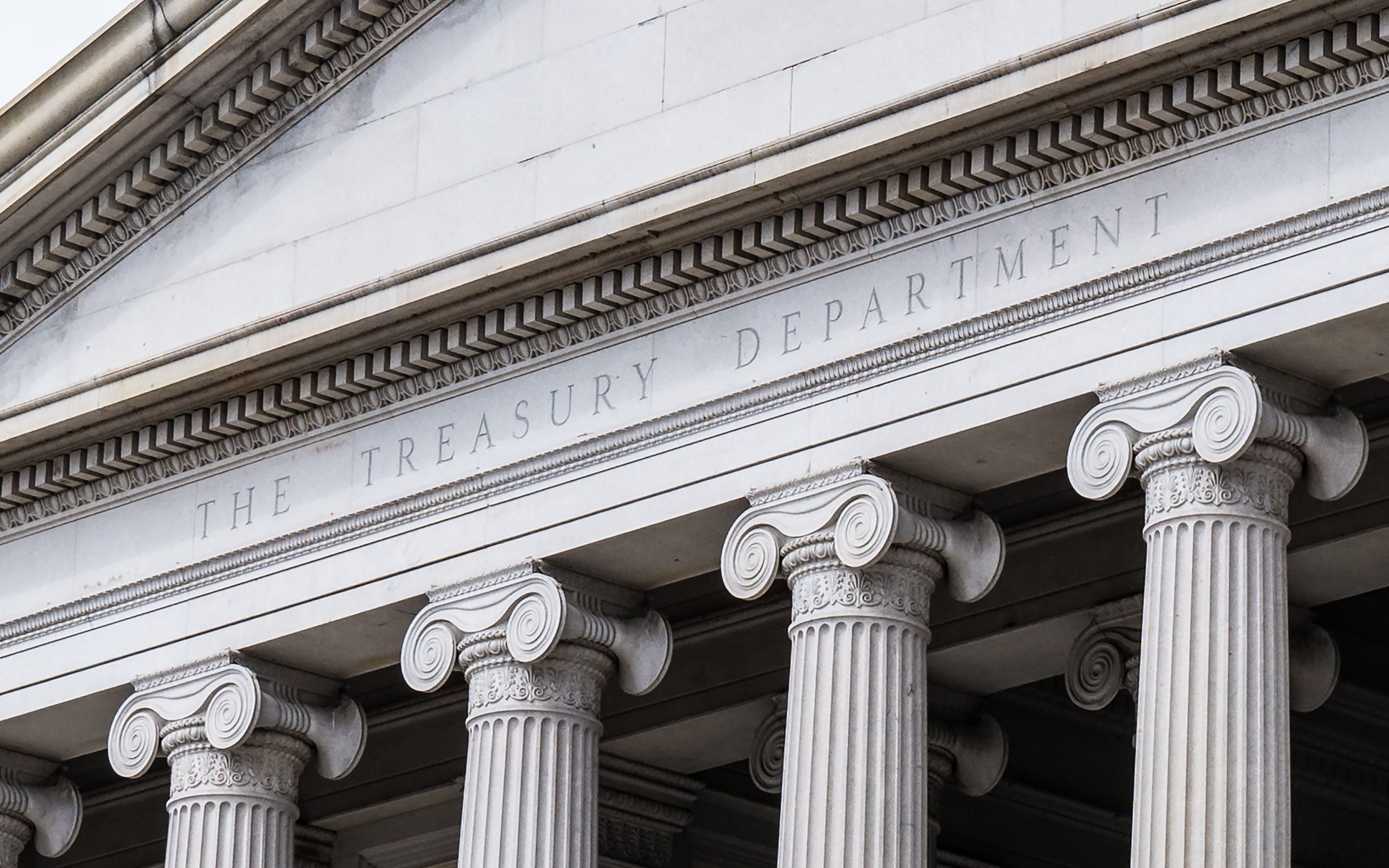
The US debt debate often focuses on foreign creditors, but the real issue lies within America’s own political and economic system.
The standard story about America’s debt is that foreigners are financing a declining empire. China, Japan, oil exporters: these are the usual suspects in the popular imagination. The implication is melodramatic but clear. The United States has overreached and now lives at the mercy of others.
But that is not what the numbers show.
Of America’s roughly $39 trillion gross federal debt, the largest share is not held by Beijing or Tokyo. It is held domestically by mutual funds, pension funds, banks, households, trust funds, and the Federal Reserve. Domestic investors hold about $17.7 trillion, foreign holders about $9.3 trillion, and another $7.6 trillion sits in intragovernmental accounts such as Social Security and other trust funds. The Federal Reserve alone holds around $4.4 trillion in Treasuries, more than Japan, the United Kingdom, and China combined.
So the real story is not that America is owned by foreigners. The real story is that America is financed by its own system and that its own system has become addicted to debt.
That should shift the argument immediately. The US debt problem is not fundamentally one of external dependence. It is a problem of internal political economy. It reflects a state that spends lavishly on military power, tolerates chronic tax weakness, protects entrenched wealth, and repeatedly postpones structural reform. Debt is not an accident within this order. It is one of the ways the order survives.
Treasuries are the foundation stones of the system. Pension funds want them. Mutual funds want them. Banks want them. Foreign central banks want them. The Federal Reserve buys and sells them as part of monetary policy. US government debt is not merely a burden. It is also the premier “safe asset” of global capitalism. That is why America can carry debt on a scale that would crush most other countries.
That is also why moralistic talk about “living beyond our means” often misses the point. The United States is not a household. It is the issuer of the world’s dominant reserve currency, sitting atop the deepest bond market in history. It can borrow in its own currency, from its own institutions, under conditions that no ordinary country enjoys. Debt at the centre of the world-system means something very different from debt on the periphery.
But that does not make it harmless.
The comforting phrase that the government “owes the money to itself” is true only in the narrowest accounting sense. Intragovernmental debt includes Social Security and other trust funds. These are not trivial ledger entries. They are claims embedded in the social contract. They represent obligations to retirees, workers, and citizens. To dismiss them as mere bookkeeping is to pretend that public promises are unreal until they become politically inconvenient.
The Federal Reserve category is also too easily misunderstood. The Fed is not just another investor choosing between assets. When it holds trillions in Treasuries, this is part of the machinery through which the state stabilises markets, influences rates, and manages crises. The line between public finance and monetary power becomes blurred. What looks like ordinary debt ownership is in part the state shoring up its own financial architecture.
So what is the danger?
Not imminent bankruptcy. Not a sudden Chinese takeover. Not some cinematic moment when creditors slam the door.
The deeper danger is slower, duller, and more corrosive. As debt rises and interest costs climb, more of the federal budget is swallowed by servicing old obligations. The Congressional Budget Office projects net interest costs at 3.3 per cent of GDP in 2026, rising further over the coming decade. That means more public money flowing to bondholders and less room for investment in transport, health, housing, education, research, or climate transition.
This is the real crowding out: not simply economics, but politics. A society that can always find money for interest payments, weapons systems, and tax concessions for the affluent, but struggles to build trains, schools, clinics, or homes, is not running out of resources. It is revealing its priorities.
That is why the debt question is finally a question of class power. Who benefits from a system in which public liabilities are indispensable to private wealth? Who gains when the safest asset in the world is a claim on a state that cannot or will not tax wealth adequately, restrain militarism, or undertake long-term democratic reconstruction? The answer is not “the nation” in any simple sense. It is the institutions and classes most deeply embedded in financialised American capitalism.
In that sense, the debt is both a sign of American strength and a symptom of American decline.
Strength, because only a hegemonic power can finance itself so extensively through its own markets while the rest of the world still queues up to buy its obligations.
Decline, because this extraordinary privilege has become a substitute for renewal. Debt allows the US to defer choices it would rather not make: about empire, inequality, healthcare, taxation, infrastructure, ageing, climate, and industrial decay. It keeps the show on the road while the foundations weaken.
So yes, America owes much of its debt to itself. But that should not reassure us. It should sharpen the critique.
It means the contradiction is homegrown. The crisis, if and when it comes, will not mainly be imposed from outside. It will arise from within a political economy that can endlessly finance itself, yet seems increasingly incapable of reforming itself.
That is the sharper truth behind the debt mountain. America is not being brought down by foreign creditors. It is being carried, for now, by a system that profits from its own unsolved contradictions.

Stewart Sweeney
Stewart Sweeney is a writer and public policy advocate with a longstanding interest in the evolution and future of capitalism. He migrated from Scotland to Adelaide in 1975 to work with Premier Don Dunstan on industrial democracy. A former academic and trade unionist, he continues to contribute to public debate on economic justice, democratic reform, and sustainable development. His work reflects a deep commitment to the common good and the role of public purpose in shaping Australia’s future.