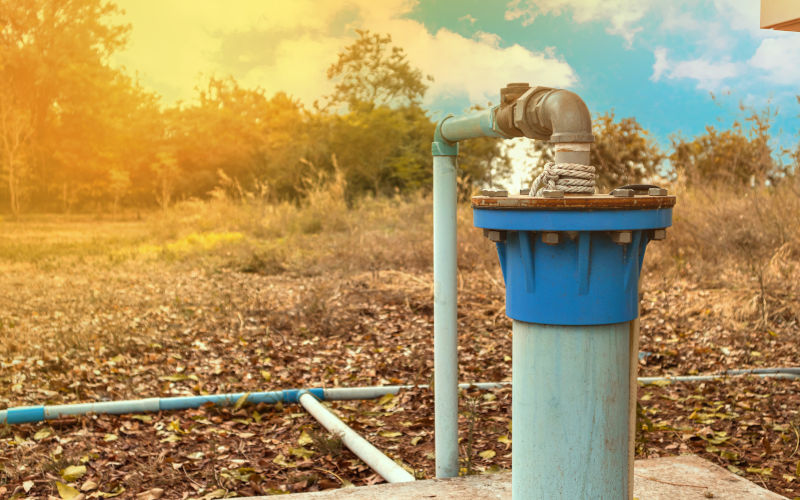
Beneath our very feet, a silent crisis is unfolding. Unseen, unheeded, the Earth is running out of freshwater.
The global groundwater scarcity already affects 6 billion people worldwide, chiefly farmers and the careless inhabitants of megacities.
Groundwater supplies 99% of all the liquid freshwater used by humanity, primarily for drinking, food production, energy production and industry. Many rivers and lakes would be empty without it.
Groundwater is being depleted at an alarming rate, scientists warn. This unsustainable practice is leading to a decline in water levels in aquifers worldwide, particularly in drier regions where reliance on pumped groundwater is high.
“Climate, wars, pandemics and recessions all threaten our society’s future – but the most immediate threat is disappearing fresh water,” says eminent Canadian hydrologist, John Cherry. “Groundwater supplies nearly half the global population with drinking water and supports 70% of irrigation agriculture. Eight of the 17 UN Sustainability Goals are dependent on groundwater. With drought, groundwater is the only water for food production in many countries – and many drinking water wells go dry.”
The main threats to groundwater are:
Over-extraction: Excessive pumping of groundwater for irrigation and city use has caused major depletion of aquifers. In many regions, groundwater is being extracted much faster than it naturally replenishes, resulting in a decline in total freshwater availability both to the landscapes and for human food, drink and other uses.
Climate Change: Changes in climate and global drying lead to higher evaporation rates and spreading deserts. Lower rainfall in drying regions means reduced recharge of groundwater. As temperatures rise, demand for irrigation increases, leading to even greater extraction.
Population Growth: The growing global population intensifies the demand for water, particularly in farming areas and megacities, leading to growing conflict between the human needs to eat and drink.
Pollution: Contamination of groundwater with industrial chemicals, oil spills, fertilisers, pesticides, salinity, urban runoff, leaky fuel tanks, septic systems, toxic mining discharges and tailings etc. often renders it unfit for use.
Weak regulation: oversight of groundwater stocks, recharge and extraction rates is weak to non-existent in most countries and aquifers. Of all of Earth’s resources groundwater is one of the most poorly regulated, badly and corruptly managed – mainly because it is ‘out of sight/out of mind’.
Decaying infrastructure: worldwide water infrastructure is decaying and collapsing. Compared to transport and IT infrastructure water is almost a century behind. This increases wastage of a scarce resource and drives up water prices.
All of these have consequence, some of them extremely serious. These include:
1. Water scarcity: wells and aquifers may run dry, and primary water is no longer available to users on human time frames. Deserts spread.
2. Food shortages: food systems fail in areas reliant on groundwater (or rivers sustained by groundwater) for irrigated farming. Food prices rise globally, reflecting market scarcity. Food nutrient quality declines.
3. Environmental decline: lower water tables reduce stream and lake flows, kill trees and landscapes over wide areas, increase rates of local extinction and drive saltwater intrusion into coastal drinking water and farm supplies. Groundwater draining into the oceans now exceeds the melting of the Greenland and Antarctic ice sheets in causing sea levels to rise.
4. Heavy costs: higher water prices for farmers, city consumers and industry are inevitable as the resource runs down. Property values fall in affected areas and people are forced to move away, usually into overcrowded cities with overstressed water systems, compounding the threat.
5. More wars. Water has been a cause of war for over 5000 years. Growing water scarcity in the C21st is expected to ignite fresh border and resource disputes leading to conflicts which can then escalate into wider wars.
Satellite studies of the Earth show there has been an unprecedented decline in the Earth’s water storage and a drying-out of the landmass since 2002.
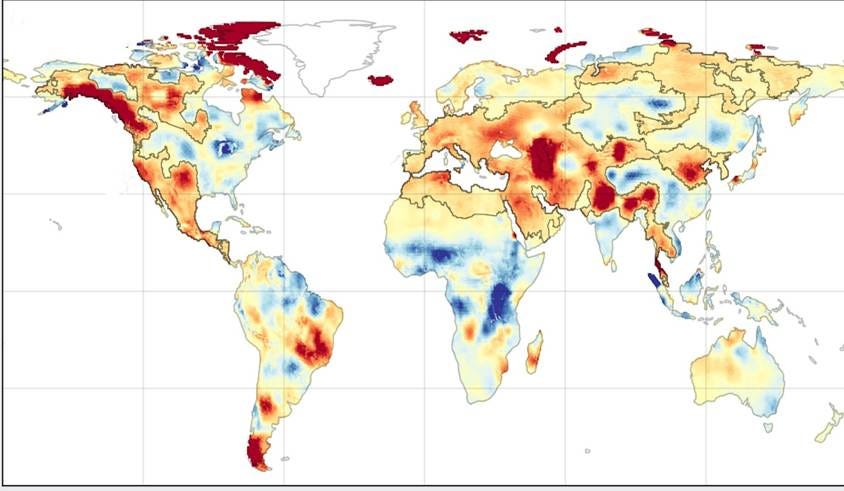
“Continental drying is having profound global impacts,” warn the study’s authors. “Since 2002, 75 per cent of the world population lives in 101 countries that have been losing freshwater.
“Areas experiencing drying increased by twice the size of California every year, creating ‘mega-drying’ regions across the Northern Hemisphere. The increase in extreme drying, and the implications for shrinking freshwater availability and sea level rise should be of paramount concern to the general public, to resource managers, and to decision-makers around the world.”
The world’s most populous country, India, is facing a major water crisis due to its great reliance on groundwater and the rate this is being extracted by increasingly powerful pumps. India, with 1.43 billion people, has 18 per cent of the world’s population but only 4 per cent of its fresh water – and the latter is shrinking while the former grows. Many Indian cities are now sinking due to the withdrawal of the water beneath their feet. This means many aquifers, once emptied, may never refill.
The US also is using up its groundwater “like there’s no tomorrow”, the New York Times reported. The wealth of underground water that created the nation’s vibrant cities and thriving farmlands is depleted and water scarcity is being magnified by climate change (which the current Trump Government pretends is a hoax). 90 per cent of US aquifers are in decline and water scarcity is now biting into the ‘breadbasket’ States. As cities sink, roads crack, homes crumble and bridges fall. It’s no hoax.
The Middle East, rated the most water stressed region on Earth, has lots of oil and very little groundwater left. Naturally hot and arid, its water scarcity has been amplified by unrestrained urban growth, mindless development, growing populations and climate change. An overstressed agriculture is collapsing, forcing the region to rely more and more on food imports, which are increasingly unreliable.
These three regions highlight a building global groundwater crisis driven by population, economic growth and global heating. A crisis than can rapidly mutate into a world food crisis, sending out vast waves of refugees fleeing waterless regions.
Current extraction of groundwater worldwide is around 1000 cubic kilometres a year, and is mostly concentrated in areas of dense population or farming. Here the water is being mined at rates far exceeding its ability to recharge naturally.
Solutions to the global groundwater crisis exist aplenty – better monitoring, stricter extraction rules, reduction of wastage, better catchment management, more deliberate recharge of aquifers. But these are rarely implemented, even in the most advanced countries. International water co-operation is poor to non-existent. As a result, the issue remains a living threat to every person on the Planet, whether directly, from water scarcity, or indirectly via food prices.
But most people, and their governments, turn a blind eye, content to let their children handle the crisis. As a result, all will suffer.

Julian Cribb AM is an Australian science writer and author of six books on the human existential emergency. His latest book is “How to Fix a Broken Planet” (Cambridge University Press, 2023)