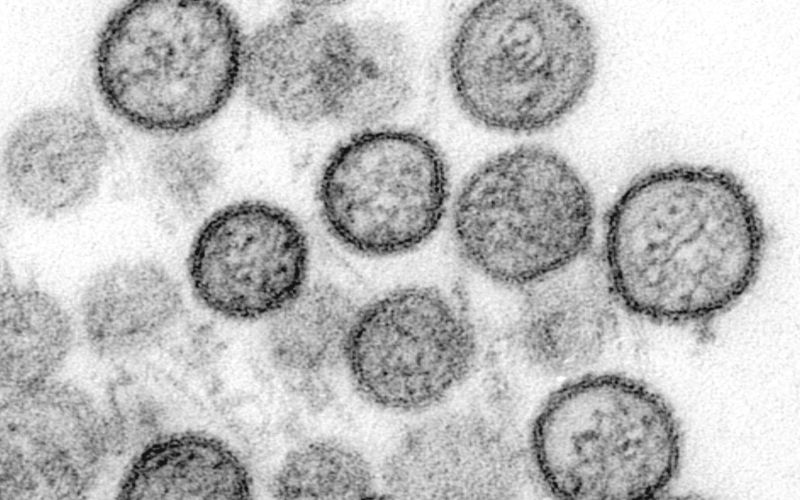
The next pandemic may emerge from wildlife trade, intensive farming, land clearing, laboratories, global travel or antibiotic resistance, as human behaviour continues to multiply the risks of another major disease outbreak.
Who will unleash the next pandemic? Will it be farmers, loggers, wildlife traders, scientists, land developers, or tourists? Or, maybe, all of the above?
The next pandemic is already here, quietly incubating in some ravaged rainforest, melting tundra, intensive livestock farm, laboratory or pet shop. Getting ready to board an airliner, a cruise ship, invade a shopping mall or child-minding centre on its way to your front door.
Fresh warnings about the dangers of a new global disease outbreak have been sounded by the Alliance against Health Risks in Wildlife (AHRW) and the Global Preparedness Monitoring Board (GPMB).
The GPMB, set up in 2018 to head off future pandemics, has concluded that, despite the lessons of Covid, “health, economic, social and political impacts of health emergencies have not diminished, and in important areas are growing. In short, reforms have not kept pace with rising pandemic risk.”
While the AHRW warned of rising threats to both human and animal health resulting from a growing world trade, and markets, in wildlife. “Zoonotic outbreaks and pandemics have far-reaching consequences beyond public health. They affect global economies, increase poverty, affect ecosystems and biodiversity, and compromise the health and welfare of wild and domestic animals,” the Alliance says.
There have been seven pandemics since 2000: SARS, Swine Flu, MERS, Covid, Ebola, Zika and Monkeypox, Meanwhile, an eighth, HIV-AIDS, is ongoing since the 1970s. Together these have claimed from 51 to 90 million lives – more, indeed, than World War II.
At the same time old plagues such as measles, polio, dengue fever and chikungunya are exploding anew as vaccination, antibiotics and other public health measures fail, cities and travel expand, public misinformation proliferates and the climate heats.
The growing world infectious disease hazard is highlighted in fresh outbreaks of ebola fever, hantavirus, and parasitic invasions like screw-worm fly.
A sleeping giant among these threats may be the rise in antibiotic resistance, estimated by WHO to be growing by 5-15 per cent a year. Around one human bacterial disease in six is now resistant to antibiotics, notably tuberculosis, gonorrhea (infecting more than 80 million people a year), golden staph and multi-drug resistant urinary tract infections.
Antibiotic resistances is due primarily to their overuse in modern healthcare and especially in the intensive livestock industry, which consumes 70 per cent of all antibiotics, and routinely misuses most of them as animal growth promotants.
No new antibiotics have been developed for over 30 years, mainly because the big pharmaceutical companies are reluctant to develop new ones. The reason, simply put, is greed. Antibiotics actually cure diseases, whereas industry prefers to make the more profitable ‘lifestyle drugs’ designed to extend the treatment at greater cost to the patient.
Already, five million people are dying each year from conditions made worse by antibiotic resistance. Public understanding of the threat is low: potentially, many forms of surgery, including for cancers, lung, limb and abdominal conditions, could become too risky to perform because of the risk of medical infection.
The globetrotting capacity of human disease has been well-known since the Black Death arrived in Europe from China in 1346 – and syphilis first appeared in China in 1505, probably travelling from either Italy or Portugal via trading ship. It is thought to have first reached Europe in 1495, carried by Columbus’s sailors from the New World.
Nowadays with 1,520,000,000 global travellers a year, the scope for diseases, new and old, to spread universally is unbounded.
To take just one segment of the market seen as an emerging global disease risk, cruise ships have been found to carry more than 40 different human pathogens, notably flu, covid, norovirus, legionnaires’ and now, hantavirus. These floating cities carry thousands of passengers, packed together, exchanging diseases via air, water, sex and other forms of contact such as handrails and buffets. Their elderly clientele is also more susceptible.
The food system is a primary generator of pandemic potential. The greatest reservoir of human pandemic disease is the modern livestock industry, comprising 25-30 billion birds and animals often densely housed in unhygienic conditions. Domestic livestock now make up 96 per cent of all mammalian life on land and are thus the largest incubator for new strains of viruses and bacterial pathogens, such as flu, bird flu, swine flu, MERS, anthrax and other zoonotic infections.
Driven by surging demand for food, agriculture also adds new agents to global pandemic risk by clearing forest for farming, bringing humans into closer contact with the primary hosts of disease such as wild bats (ebola, Covid, nipah), rodents (hanta, plague) and monkeys (SIV, mpox, yellow fever).
A primary threat to human health – whose public debate is usually suppressed – is the scientific creation of new and deadlier lifeforms out of existing viruses and bacteria. Known as Gain-of-Function research, more than 7000 scientific papers have been published on it and there are thought to be over 30 current research programs going on worldwide to create deadlier pandemic agents – though nobody is keeping track. Without independent scrutiny, the public has every reason to mistrust the safety of this line of research and its lack of transparent, ethical oversight.
Climate change is also ushering in a new era in disease risk, with the widening spread of tropical contagions and insect-borne pathogens such as malaria and dengue. “Climate change has exacerbated more than 200 infectious diseases and dozens of non-transmissible conditions,” says a report in the journal Nature. Melting tundra and tropical swamps are releasing new lifeforms.
As all these conditions worsen and diseases spread faster globally, the death toll will climb from the millions into the tens of millions. Contrary to Hollywood-fed public beliefs pandemics are unlikely, in the medium term, to put even a significant dent in human population growth. Just add a fresh layer of suffering, economic and social cost to an overpopulated planet.
As to who will release the next pandemic, there is no clear way to know the answer among the multiplying possibilities. However, we will all, in our different ways, help to spread it, since pandemics are mainly the result of human behaviour. This thrusts the responsibility for preventing or quelling new outbreaks onto us all.
“The world is now on the edge – a further fracturing of public trust, and rupturing of the collective action needed to address inequities will leave all countries even more deeply exposed to the grave, inevitable health, social and economic impacts witnessed in the last pandemic,” the Global Preparedness Board warns.

Julian Cribb AM is an Australian science writer and author of six books on the human existential emergency. His latest book is “How to Fix a Broken Planet” (Cambridge University Press, 2023)