A joint crackdown on tobacco smuggling shows what Australia and China can achieve through practical cooperation – and why a relationship dominated by security fears comes at a cost.
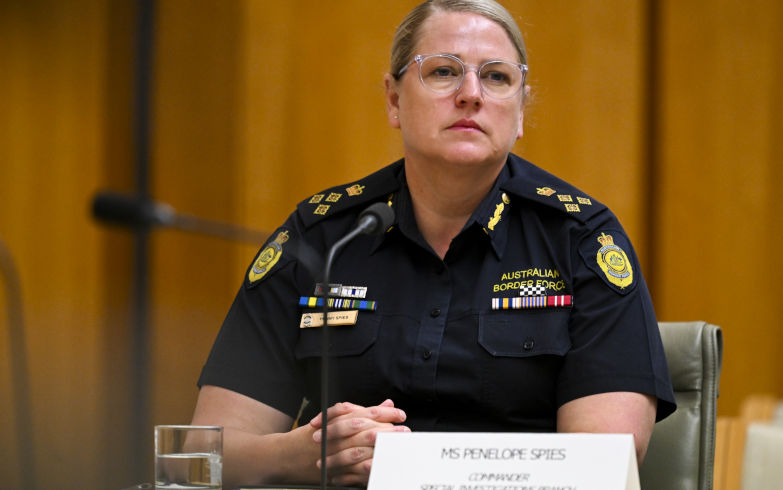
Chinese authorities have cooperated with the Australian Border Force to disrupt a major tobacco smuggling ring, proving the value of “strong operational partnerships and trusted information-sharing arrangements”, according to ABF Assistant Commissioner Penelope Spies.
This collaborative achievement deserves wider study and evaluation. I have written previously on P&I about the benefit of closer cooperation with China and I spoke about opportunities for extending this to the realm of international aid projects at the Sydney hearing of the AUKUS inquiry (where I called it the ‘Woolmark’ approach). This is not unrelated to the AUKUS pact, because AUKUS is based on policies that aim to prevent China from international engagement, and to thwart Chinese so-called ‘expansionism’.
The consequence of AUKUS is an end to all working relationships, initially in so-called ‘sensitive’ areas, but ultimately affecting all cooperation and people-to-people relationships. This would include our customs and police forces, although they know and have proved that working across borders is productive. As I noted in my submission to the inquiry, to step up from bilateral engagement to working together to achieve a common goal is to transform the relationship. In the case of the operation to stop the illegal tobacco trade, both countries shared such an aim: to regularise trade and to protect borders and national security.
Two recent operations, code-named Seahorse and Trailblazer, were mounted by the ABF and the Anti-Smuggling Bureau of the General Administration of China Customs (ASB). They started with the arrest of dozens of people in China who were suspected of international smuggling. ASB then informed ABF of suspect shipments about to leave Shanghai destined for Sydney and other ports. This led to the seizure on arrival of 60 million cigarettes and 60 kilograms of loose-leaf tobacco concealed inside legitimate cargo such as LED lamps and printers.
Such customs cooperation with China is ongoing. Mr Wang He, deputy director general of the Anti-Smuggling Bureau of the General Administration of China Customs, was quoted by the ABF as saying that the Bureau “remains committed to strengthening cooperation with the Australian Border Force and other international partners to combat cross-border smuggling activities and protect the integrity of global trade”.
Customs cooperation with China is not unique. Australia has an active partnership with Thailand to combat transnational crime, as announced during the visit to Canberra by Prime Minister Anutin Charnvirakul. This also will help disrupt cigarette smuggling and illegal imports into Australia.
Tobacco smoking is the largest preventable cause of cancer in this country and government authorities are rightly concerned to limit usage. Although smoking rates have fallen, many smokers have turned to black market tobacco because the price of regular cigarettes rose following the introduction of high excise taxes. These illegal smokes are smuggled goods, mainly originating in Southeast Asia.
China also suffers from this trade. In China more than half of all adult men, and an increasing number of young women, are smokers and tobacco tax contributes significantly to state income. Nevertheless, health care costs and productivity losses affect this revenue and national smoke-free laws are being rolled out across the country.
The Chinese government is working to stamp out transnational crime gangs operating across borders with Southeast Asia that are active in the supply and marketing of cigarettes as well as drugs. There are joint task forces between China, Thailand, Myanmar and Laos that are coordinated through the Lancang-Mekong Security Cooperation Centre and other international agencies. Clearly, international problems need international solutions.
Australia and China have a common goal of fighting crime and have proved that results come from working together. They can also join forces to fight natural disasters, to protect the environment, and to end pandemics. They can work together for technological solutions to these and other problems. Australia has technological strengths in quantum computing, field robotics, software service and fintech. China is a leader in green energy, electric vehicles, robotics and artificial intelligence. In all these fields, the benefits of collaboration seem evident.
Europe and the US perceive China as a threat to their manufacturing industries, leading them to raise barriers to cooperation with China. We do not have to follow their examples. Australia lost its manufacturing industries long ago and our economy has grown on the back of our trade with China. We need not fear a ‘China threat’. Rather, there is much to be gained from exchanges with China.
This message is not reaching the ears of our parliamentarians, who speak almost exclusively of security risk. According to an article in the Financial Review, former ANU vice-chancellor Brian Schmidt revealed this month that Foreign Minister Penny Wong had instructed the ANU to cut its ties with Shandong University in China after the Trump administration had placed it on a blacklist. This latest threat to research developments and innovations has not gone unnoticed. Vicki Thompson, chief executive of the Group of Eight universities, commented, “To close yourself off from research partners… you actually do yourself as a country a disservice.”
Would it not be better to learn from our police and customs officers and their collaboration with their Chinese counterparts?

Jocelyn Chey is Visiting Professor at the University of Sydney and Adjunct Professor at Western Sydney University and UTS. She formerly held diplomatic posts in China and Hong Kong. She is a member of the Order of Australia (AM) and a Fellow of the Australian Institute of International Affairs.