In the fourth of a six-part series on AUKUS infrastructure, the focus turns to workforce: Australia must build and sustain two geographically separated nuclear submarine hubs despite acute skills shortages, certification bottlenecks and competition from the resources sector.
While parts 1, 2 and 3 of this series examined the physical engineering hurdles and technical safety gaps facing Australia’s submarine infrastructure at Henderson and Osborne, a parallel human capital crisis threatens to undermine the entire enterprise. To execute AUKUS Pillar 1, Australia must concurrently build a new fleet of UK-designed SSN-AUKUS submarines at Osborne while expanding depot-level sustainment capabilities for visiting US and any RAN Virginia-class submarines at Henderson. The Australian Submarine Agency projects that this dual-site strategy will require 20,000 direct jobs over the next 30 years, reaching a peak industrial workforce of up to 8,500 highly specialised trades, engineers and nuclear technicians.
This strategy assumes that Australia can rapidly generate, certify and retain two massive, non-interchangeable industrial workforces across geographically isolated hubs. In reality, both South Australia and Western Australia face severe demographic constraints, acute trade shortages and intense competition from high-paying commercial resource sectors.
The spatial divide and the ‘All in Adelaide’ trap
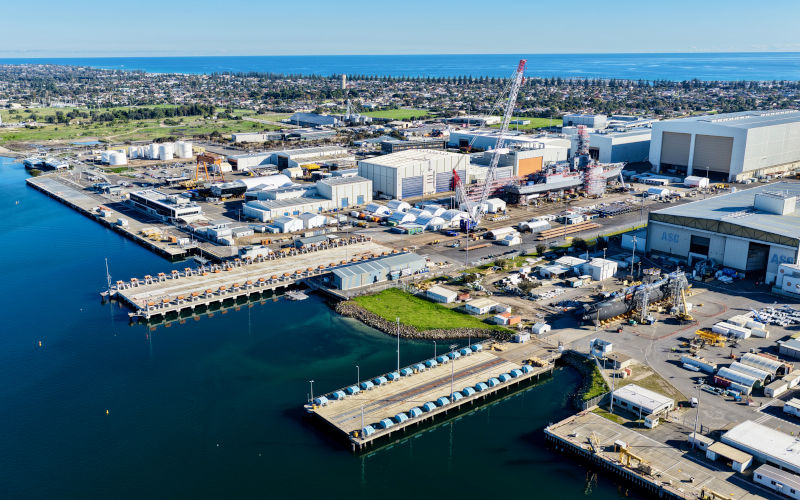
A fundamental flaw in Australia’s submarine workforce planning is the total separation of construction and sustainment nodes across a 2,700-kilometre spatial divide. Osborne in South Australia is designated as the sole nuclear construction yard, while Henderson in Western Australia is tasked with heavy depot maintenance, emergency docking and operational support.
This geographic separation prevents the flexible movement of skilled labour. In mature international naval shipyards, such as General Dynamics Electric Boat in Groton, shipbuilders and specialised engineers can be dynamically reassigned between new construction halls and repair dry docks during operational surge periods. In Australia, a high-pressure pipe welder, system integrator or nuclear quality-assurance technician certified at Osborne cannot easily assist with an emergency docking or heavy overhaul at Henderson without interstate relocation.
Furthermore, concentrating all domestic nuclear fabrication capital exclusively in Adelaide doubles down on single-site risk. By failing to distribute subassembly work to established East Coast industrial manufacturing hubs like Geelong Port, Newcastle or Williamstown, the Commonwealth risks overheating local South Australian housing, infrastructure and trade markets, failing to tap into broader eastern seaboard engineering and trades pipelines, and heightening vulnerable single-point supply chain bottlenecks across the construction phase.
Competing with the resource sector and demographic reality
Generating thousands of specialised trade workers requires drawing from an Australian skilled labour pool that is already under severe structural stress. Both Western Australia and South Australia face historically low unemployment rates and acute recruitment bottlenecks, with Jobs and Skills Australia data confirming severe trade shortages nationwide.
At Henderson, the Defence enterprise must compete directly with Western Australia’s lucrative mining, liquified natural gas and offshore resource sectors. A certified high-pressure pipe welder, electrical technician or heavy rig operator in Perth can command significantly higher remuneration in FIFO resource operations with far less regulatory burden than entering a heavily guarded, secure, nuclear-monitored defence enclave.
In South Australia, despite the Commonwealth’s $480 million investment in the Naval Shipbuilding Skills and Training Academy at Osborne, training pipelines take years to yield experienced, lead-level tradespeople. Building a nuclear submarine is not an entry-level endeavour; it demands a high proportion of master-level trades with decades of precision manufacturing experience. Attempting to rapidly scale a greenfield nuclear workforce from a standing start risks high turnover, quality-control failures and severe schedule slippage.
The nuclear certification bottleneck and statutory timeframes
Beyond basic trade qualifications, working on naval nuclear propulsion systems requires specialised security clearances and statutory nuclear safety certifications overseen by the Australian Naval Nuclear Power Safety Regulator (ANNPSR)and ARPANSA.
Achieving negative vetting and nuclear clearance for thousands of Australian workers creates an unprecedented administrative queue. Furthermore, key technical competencies – such as nuclear health physics, primary-loop pipe welding and reactor safety case authoring – require years of embedded training within operational US or UK nuclear shipyards. While Australian industrial personnel personnel are currently embedded in US and UK dockyards and training schools, these cohorts number in the low hundreds, representing a fraction of the thousands required to staff full-scale build and sustainment lines by the 2030s.
This training gap collides directly with US statutory requirements under 22 U.S.C. § 10431 (NDAA Section 10431). The US Executive cannot legally execute the transfer of Virginia-class submarines unless Australia demonstrates fully certified, sovereign workforce capacity capable of safely maintaining the platforms without degrading US operational readiness.
A high-risk bet on human capital
The assumption that Australia can simultaneously staff two isolated, world-class nuclear maritime hubs from a constrained domestic labour pool represents a major strategic vulnerability.
As recent ASPI analysis on AUKUS infrastructure governance indicates, uncoordinated capital injections without transparent workforce benchmarks risk driving up costs while failing to deliver operational readiness. Without a distributed national build strategy that engages wider Australian industrial bases or a realistic realignment of maintenance expectations, Australia’s dual-site workforce plan risks becoming the primary single-point failure of Pillar 1.
Read parts 1-3 below:

Peter Briggs
Peter Briggs retired from the RAN in 2001 after a 40-year career, specialising in submarines. This included two submarine commands, command of the RAN Submarine Squadron, director of Submarine Policy and Warfare and Head of Submarine Capability Team, established to rectify Collins introduction into service issues. He was the president of the Submarine Institute of Australia from 2006-09 and is a frequent contributor to public debate on Australian submarine matters.