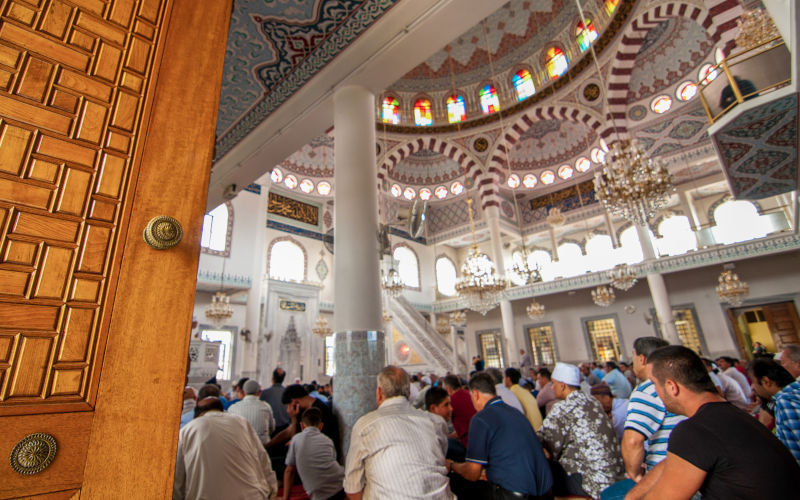
The 2026 Census is expected to mark more than a demographic milestone, with new Islamic denomination categories offering a fuller picture of Muslim diversity, representation and belonging in Australia.
The 2026 Australian Census marks an important milestone for Australia’s Muslim community. For the first time, the Muslim population is expected to exceed one million, representing around four per cent of Australians and making Islam the nation’s second-largest religion after Christianity.
Yet the significance of this Census extends well beyond demographics. It also introduces a notable change in the way religious affiliation is recorded. For the first time, the Australian Bureau of Statistics (ABS) will provide broader classifications within Islam, allowing respondents to identify as Sunni, Shia, or Other Islamic denominations. While seemingly a technical adjustment, it raises broader questions about identity, representation and how Australia understands religious diversity.
The ABS has made clear this is a statistical classification update, not a theological statement. Its purpose is to improve Census accuracy and better reflect Australia’s diverse religious landscape. Similar distinctions have long existed for Christianity, with denominations such as Catholic, Anglican and Orthodox separately identified, as well as for Judaism, Buddhism and other faith traditions. Extending the same approach to Islam simply brings the Census into line with the way Australia’s other major religions are already recorded.
Many Australians regard the Census as little more than a population count. In reality, it is one of the nation’s most important planning tools. Census data influences government funding, health and education services, multicultural and settlement policy, electoral boundaries, infrastructure investment and community services. It also provides the evidence on which researchers, policymakers and community organisations rely.
For Australian Muslims, more accurate Census data has practical consequences. It can strengthen the case for culturally appropriate health care, aged care, chaplaincy services, education, hospital and correctional services, refugee settlement programs and community initiatives.
The Census also reminds us that religion is only one aspect of identity. Australians are asked about ancestry, language spoken at home, country of birth and other demographic characteristics because identity is layered rather than singular. These different dimensions provide a richer understanding of Australia’s multicultural society.
The same applies to Muslims. Australian Muslims come from dozens of ethnic, linguistic and cultural backgrounds, with distinct migration histories, settlement patterns and community institutions. While united by a shared faith, they are not a homogeneous community. Recognising this diversity improves demographic understanding, strengthens community representation and enables governments to design policies and services that better reflect the communities they serve.
Australia is not alone in taking this approach. Across many western democracies, national statistical agencies have refined their religious classifications as societies have become more culturally and religiously diverse. Better statistical data allows governments and researchers to understand communities more accurately without making judgments about belief or practice.
Nevertheless, the change is likely to prompt discussion within Australia’s Muslim communities. Some will question whether distinguishing between Islamic denominations risks emphasising differences rather than the many values and beliefs Muslims share. Others may wonder whether this is the right time to introduce such distinctions, particularly amid renewed debates about multiculturalism, social cohesion and calls from some quarters for a more ‘monocultural’ national identity.
These concerns deserve respectful consideration. But recognising diversity should not be confused with creating division. Public institutions routinely acknowledge diversity within religious traditions without weakening their cohesion. The Census does not seek to define religious identity or encourage sectarianism. It simply aims to record Australia’s population more accurately.
Perhaps the more interesting question is what we actually mean when we speak of “the Australian Muslim community”. Increasingly, the answer is that there is no single, uniform Muslim community. Rather, there is a mosaic of communities, each shaped by its own migration history, cultural traditions and local experiences, yet connected by a shared faith and common aspirations as Australians.
Acknowledging this diversity is not about highlighting difference for its own sake. It is about recognising social reality. Diversity has always existed within Australian Islam and, if approached constructively, should be regarded as one of its strengths. More accurate statistical information allows governments and community organisations to better understand different communities while reinforcing the common interests that unite Muslims across Australia.
Indeed, recognising diversity can strengthen rather than weaken belonging. It affirms that Muslims of different traditions and backgrounds can maintain a shared faith, common purpose and collective identity while contributing to Australia’s civic, economic and cultural life. Diversity and unity are not opposing ideas; they are complementary features of a confident multicultural society.
The 2026 Census therefore presents an opportunity for Australian Muslims to reflect on their place within the national story. As communities become established across successive generations, there is an opportunity to move beyond a migrant mindset or the perception of being perpetual outsiders and instead embrace a confident Australian Muslim identity – one that is both authentically Islamic and unapologetically Australian.
Ultimately, the Census does not redefine Islam. It simply acknowledges, through better statistical methods, the diversity that has long existed within Australia’s Muslim population. The real challenge is ensuring better data translates into better representation, services and public understanding.
As Australia’s Muslim communities passes the one-million mark, this moment should be viewed not merely as a demographic milestone but as a measure of how far the nation has come. Recognising diversity within Islam is not a departure from Australia’s multicultural story; it is a natural expression of it. If the Census helps Australians better understand one another while strengthening both representation and social cohesion, then it will have achieved something far more valuable than simply counting people.

Nail Aykan
Nail Aykan is a respected leader within multicultural and multifaith communities with a strong record of active engagement in the social cohesion space. He served as the Executive Director of the Islamic Council of Victoria (ICV) for eight years.