AI delivers productivity gains only when firms have the skills, management capability, infrastructure and industrial networks to put it to work. Australia’s weakness lies less in the technology than in the ecosystem around it.
Governments and businesses are investing heavily in artificial intelligence, while the productivity gains remain hard to find in the statistics and uneven across firms, sectors and regions. Our new report, Turning AI into Productivity: The Role of Innovation and Industrial Ecosystems, asks why AI lifts productivity in some places and stalls in others, and what decision-makers can do about it.
The project began with a proposition that economists have tested on earlier general-purpose technologies, from the printing press, the internal combustion engine and the electric motor through to enterprise computing: a new technology lifts productivity only when firms combine it with complementary capabilities, in particular infrastructure, technical skills, standardised data, precision, management capability, regulation, insurance and supporting institutions. This is referred to as the complementarity principle and formed the foundation of the research program.
The research team drew on a case base of 110 innovation ecosystems in 35 countries, developed by the Acton Institute for Innovation, from urban innovation districts to regional agtech hubs and energy transition zones. Each was assessed against framework set out in the Handbook of Innovation Ecosystems (Howard, 2025) and seven performance indicators developed in the project, which allowed like-for-like comparison.
Four weeks of site visits in 2026 then tested the desk analysis against the judgement of the people who run these places, in cities including Cambridge, Eindhoven, Dortmund, Kaiserslautern, Munich and Stockholm. The European and Nordic focus was deliberate. Like Australia, these middle-power economies operate between the United States and China, and they are responding by applying AI to physical products and systems.
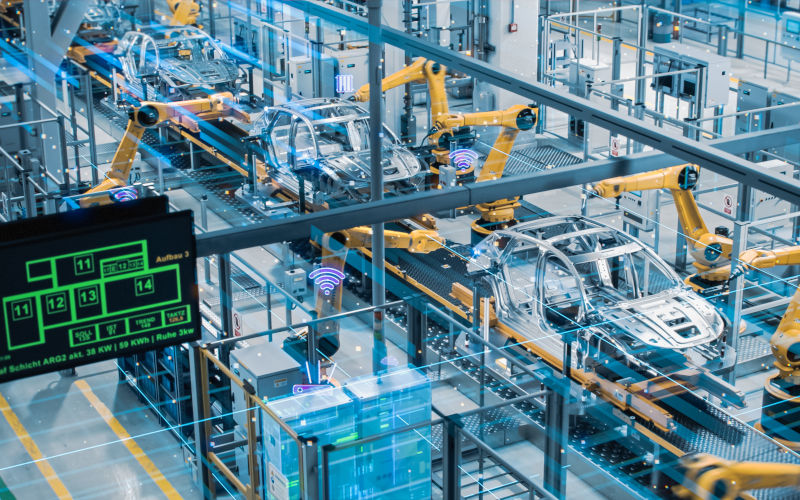
The central finding is that AI becomes productive as ‘industrial AI’, applied to a defined purpose in manufacturing, mining, agriculture, logistics and the energy transition. Every country can buy access to models, chips and data centres. Firms and places capture the returns when they combine that general layer with their own operational data, skills and redesigned processes.
In the strongest ecosystems visited, large research-intensive firms such as ASML, Ericsson, Siemens and Bosch anchor activity and generate industrial demand for research. Translation institutes such as Fraunhofer, VTT and DFKI provide the connective tissue between research and ordinary firms. Shared testbeds let firms trial AI in production-like conditions and fail cheaply, while governments act mainly as facilitators.
Australia’s long-debated gap between research and innovation reflects industrial structure more than research quality. The country lacks the large research-intensive firms that convert collaboration into demand, so additional public research funding alone is unlikely to close the gap.
Firms also run successful AI pilots and then struggle to move into production. The constraint practitioners cited most often was management capability, ahead of capital or technology. Firms tend to build that capability inside innovation ecosystems, drawing on shared facilities, peer learning and translation institutes.
The report advances a working hypothesis that firms with deep expertise may gain more from assistive or augmented AI, which amplifies professional judgement, than from agentic systems that act autonomously. If so, the productive path and the human-centred path may turn out to be the same.
A further finding concerns who gains, which the report calls the ‘migration of value’. People, firms and regions with the complements capture the returns from AI. Regions without them take part in the same economy as consumers of AI services, and the value accrues elsewhere.
What this means for Australia
The report’s seven recommendations include making industrial AI a central focus of the National AI Plan, attaching compute access conditions to data centre approvals, building an industry-led network on the existing precinct portfolio, and committing universities and CSIRO to translation partnerships with mid-sized firms.
The least glamorous intervention may be the most productive. Hands-on advisory services for mid-sized firms, delivered by institutes with engineering credibility, may return more than further technology subsidies, which risk funding pilots that firms can’t scale.
Public demand can also stand in for the anchor firms Australia largely lacks, since a young firm’s first major customer is often a public one. Offtake commitments in energy, defence, health, water and transport create the recurring industrial problems from which capable firms grow, provided procurement is open to young and mid-sized firms.
On compute, hyperscale investment in Australia leans towards remote capacity for training models, while Australian firms mostly need capacity to run them, which metropolitan facilities close to users supply. A reservation scheme designed around that use could reach the firms and researchers it is meant to help.
Measurement needs to start early, because the data now collected do not show whether adoption is raising productivity. The report proposes a short annual return attached to public AI investment and precinct-scale measurement from linked administrative data.
The final lesson concerns time. Eindhoven rebuilt after a corporate crisis, Dortmund after coal and steel, and Kaiserslautern from a sewing-machine works. Practitioners in each place doubted any plan promising results inside a single political or funding cycle. The report closes with the message that “places make the difference, and places can be made”.
The report by Green & Howard, 2026, is the outcome of a nine-month research project for the University of Technology Sydney, funded by the Google Foundation. The Minister for Industry and Innovation, Senator Tim Ayres, launched it in Sydney on 22 September 2026.
Dr John H Howard is executive director of the Acton Institute for Policy Research and Innovation, Sydney. This article first appeared as an Acton Institute Innovation Insight.

John H Howard
John H Howard is a researcher, policy analyst, management adviser, and author with three decades of experience advising governments, universities, and industry on science, research, and innovation policy and strategy. He is Executive Director of the Acton Institute for Policy Research and Innovation and an Honorary Visiting Professor at the University of Technology Sydney. He can be contacted at john@actoninstiyute.au