Australians increasingly accept that climate change is real, yet governments continue approving fossil fuel expansion and development in known risk zones. The longer action is delayed, the harder and costlier it becomes.
Climate change has been in the public mind for decades now. Are we getting anywhere?
We are certainly getting frustration. There has been much denial of the significance of climate change, and there is continuing delay in terms of action to deal with it – both from those with a vested interest in avoiding responsibility for climate change and from politicians for whom it is a serious distraction in the way of normal activity.
Nevertheless, there has been some progress. There is little doubt that the Australian community now accepts that climate change is real, problematic and largely the result of human activity, especially in relation to the use of fossil fuels. At the turn of the century, it was less possible to say that.
Scepticism remains, but it has retreated while the evidence of the reality of climate change has become stronger and more insistent. The pace of temperature increase has accelerated, and with it the rise in average sea level around the globe: underlying these trends has been a continuing increase in atmospheric carbon dioxide levels, now up about 50 per cent since 1880. All these trends have strong momentum, which suggests that they will be very hard (indeed increasingly hard) to arrest.
Likewise, weather-related disasters like bushfires are becoming more severe. Floods are possibly more frequent than they were, thanks to the increasing incidence of heavy short-term rainfalls.
Those with vested interests in what might be called the ‘traditional economy’, mostly in the fossil fuels industries, have been forced to change tack. Not long ago they largely denied the facts of climate change or argued that those facts were insignificant, whereas nowadays they are more subtle. We no longer hear that the puny impacts of humanity’s activities can’t possibly affect something as vast as the atmosphere. The dismissiveness of old has largely disappeared.
These days the fossil fuel industries increasingly recognise that warming and its consequences are real, largely humanly induced and significant. But they deflect responsibility to consumers, highlight their own investments in green energy to power extraction work and argue for unproven strategies such as carbon sequestration and storage. Their strategies have changed.
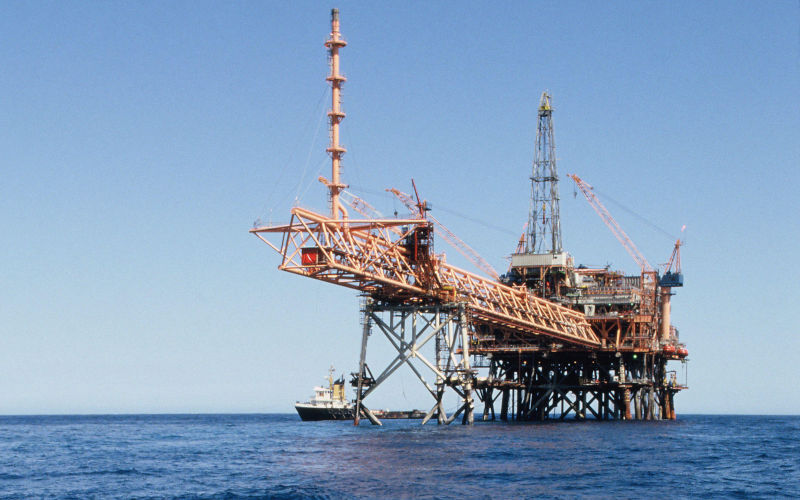
Governments in Australia have been disappointing. Numerous new coal mines and extensions to existing ones have been permitted, and gas extraction on the North West Shelf has been extended far into the future. It is as if we must exploit our resources while exploitation remains politically possible, since the time is coming when it won’t be.
Governments also continue to play dangerously with the impact of climate change on disasters. In New South Wales the current state government, having walked back on previously permitted residential development on the floodplain of the Hawkesbury-Nepean River, has partially backflipped to permit some of it to go ahead. The problem of weak housing supply, and the pressure applied by developers to permit large-scale development on easily developed flood-liable land, have seemingly proved too much to ignore – even though it is widely acknowledged that climate change will further exacerbate the problem of flooding in the Hawkesbury.
There are other valleys (like the Tweed in northern New South Wales) where demand for housing is also strong. Flooding is already the most dollar-costly environmental threat we face as a nation and the one most liable to bring about crises of housing uninsurability, yet we continue to allow development of considerable scale in locations where floods are certain to strike.
And where is the Australian community in all this? There is no doubt, as polls indicate, that the public is more accepting than it was a quarter of a century ago of the reality of the risks we face from climate change, and in various ways behaviour is changing – as the growing sales of electric and hybrid vehicles and the installation of rooftop solar panels and batteries suggest. But we are not putting pressure on governments to rein in the extraction of fossil fuels. Woodside’s contract with the federal government to tap the North West Shelf contains demands about the reduction of emissions produced by the extraction processes themselves, but the actual costs of burning the gas have remained on the margins of the government’s thinking – and the taxation regime is no heavier than it ever was. The effort, in terms of climate change, is marginal.
The probability is that we will punish governments more for failings in reining in costs of living than for failings of leadership on climate change. It is ever thus. The short term always trumps the long, and private good beats community good in people’s minds.
‘Hothouse earth’ and ‘planetary insolvency’ are approaching. In essence Australia, like the rest of the world, is waiting for action to be compelled. We want yet more proof of the likely harms of climate change. The matter is easy to put off for later.
The problem with this stance is that it requires all countries to wait for others to take the lead – which means none does so, and the problem gets more urgent and more costly to deal with. Do we really want global temperatures to rise through two or even three degrees above pre-industrial levels, or sea levels to increase by a further 25 centimetres or more – with dire consequences for atoll nations, coastal cities and estuaries? Future generations will have a view on this that won’t be favourable to those now supposedly in charge of the planet.
What more evidence do people and governments need? The beginnings of undeniable system collapse? One despairs.

Chas Keys is a former academic and Deputy Director General of the NSW State Emergency Service. He writes about floodplain management, climate change, the culture, ethics and politics of cricket and other matters. He is a member of the Emergency Leaders for Climate Action (ELCA)