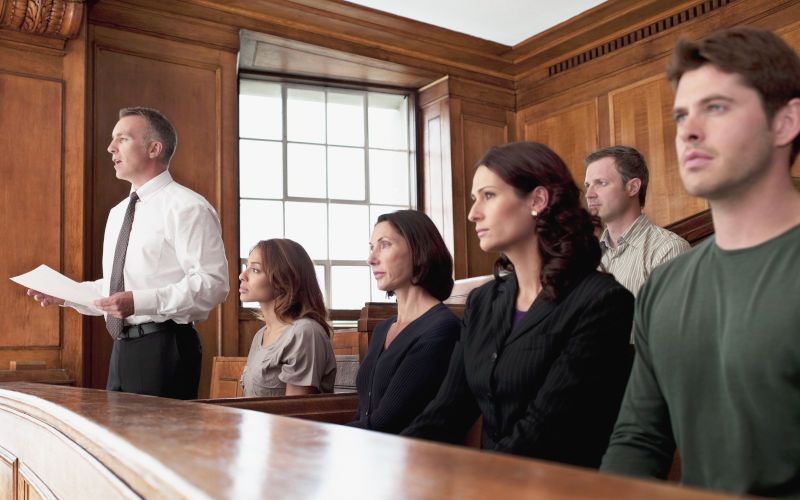
Trial by jury remains fundamental to criminal justice, but high-profile cases, media saturation and jurors’ exposure to outside commentary are testing old assumptions about impartiality.
Trial by jury is a fundamental feature of our criminal justice system and its origins date to the 13th century. In November 1215 by decree of the Fourth Lateran Council, Pope Innocent III prohibited trial by ordeal. Legal process had developed more quickly in Europe than in Britain, but following this holy intervention, judges there soon decided to adopt more rational methods of determining the prisoner’s guilt.
Persons who had then been required to attest to information sought by the monarch were adapted as jurors to judge members of their town or village accused of criminal conduct. No doubt everyone knew one another’s business. The prisoners were asked by the judge whether they were prepared to place themselves before God and their country and the jurors swore an oath to try the case which included the phrase “which country ye are”. Until recently similar words were used by a judge’s associate when empanelling a jury in a criminal trial in Victoria.
Jurors empanelled in a criminal trial take an oath to decide the case solely on the evidence and receive extensive instructions to proceed on that basis only. And whilst they may not be told they are the accused’s country, ‘which country ye are’, that fact is no doubt not lost on them and no doubt all are aware of the constant discussion that surrounds the criminal justice system.
However, it is rare for a criminal trial to generate extensive media coverage and expose the dark side of that discussion. Perhaps the last time it occurred here was when Lindy Chamberlain stood trial in 1982 for the murder of her daughter Azaria. The evidence in the trial was tenuous and the prosecution case that she slit her daughter’s throat in the front seat of the family Torana was plainly fanciful. But she was convicted. At the time bizarre theories were openly discussed that the name Azaria meant an offering to a deity, that Lindy’s religion worshipped satan and that she did not behave as an innocent mother would if her child had been taken by a dingo. We will never know how the jury reached its verdict in that case but no doubt the intense public commentary played its role. Her wrongful conviction was overturned following a Royal Commission.
The trial of Cardinal George Pell is another example of a trial miscarrying in the setting of extensive media coverage and public commentary. As conclusively determined by the High Court of Australia it was not open to the jury to convict him. But it did.
And so how can a person receive a fair trial in the context of extensive media and public commentary surrounding their case? That raises the first question of what, in fact, is a fair trial. The answer is that it depends on the circumstances of the particular case in question. And further, that a fair trial does not have to be perfect or free of defect. Errors occur in most trials but they do not necessarily mean there has been a miscarriage of justice.
The likely future trial of Ben Roberts-Smith will again raise this issue: is it possible for a high profile person to receive a fair trial in the setting of the media’s relentless participation in the criminal justice system? An allied and serious issue facing trial by jury is the ever increasing occurrence of individual jurors conducting independent research of matters related to the trial they are hearing. The trial of Bruce Lehrmann miscarried for this reason.
On the 21 July 2026 the Victorian Court of Appeal delivered its judgment in the matter of Price (a pseudonym) v The King. Price was unsuccessful in his appeal and the case may well find its way to the High Court to examine how trial by jury is holding up in the information and opinion age, 800 years after Pope Innocent’s decree.
Price was convicted of the rape of his wife together with a number of other serious offences. During the trial the judges staff discovered a copy of the novel Prima Facie in the jury room. The novel, written by Australian lawyer Suzie Miller, was adapted from a play she wrote and deals with a criminal defence lawyer who is the victim of rape by her boyfriend. In the novel the lawyer becomes the complainant and main witness in the criminal trial of her ex-boyfriend and suffers the indignities and humiliations of the process. The novel is a strong criticism of how the criminal trial process treats victim survivors of sexual assault.
When the novel was discovered in the jury room the matter was reported to the trial judge who conducted an investigation and questioned the juror in the absence of the balance of the jury. The juror stated it was her book, that she had been reading it for some time and had now finished it. She told the trial judge she had discussed the book with other jurors. The judge asked the juror whether the book had influenced her consideration of the evidence in the trial, to which she replied “No. Not really..”
An application by the defence to discharge the juror and the jury leading to a retrial was refused by the trial judge. Price was convicted and sentenced to nine years and three months imprisonment.
Price appealed and contended there had been a miscarriage of justice by reason of the trial judge’s refusal to discharge the jury and order a retrial after the discovery of the novel in the jury room.
In dismissing the appeal, the Court of Appeal emphasised that Prima Facie is a work of fiction and that a reader may agree or disagree with matters raised in a work of fiction. The Court accepted the trial judge’s conclusion that there was nothing in the juror’s possession of the book and taking it into the jury room to indicate that the juror was not impartial. The Court also concluded that reading and possession of the novel in the jury room was not a breach of the judge’s directions at the start of the trial to the jurors to not access any material relating to the trial.
On its face, the fact that a juror in a rape trial is reading a novel during the trial written by an Australian lawyer that is highly critical of the trial process and its treatment of complainants is plainly a matter of real concern. The capacity for the novel to influence the juror is obvious. And it seems clear the juror was undertaking research, albeit from a novel.
On the other hand it is also obvious today that all potential jurors are exposed to extensive commentary and opinion concerning the criminal justice system that may influence their examination of the evidence if they are selected to serve in a trial. The manner in which the trial of sexual assault offences is conducted is a significant social and legal issue.
Ben Roberts-Smith is charged with Commonwealth offences and by operation of the Constitution he must be tried by a jury. A judge-alone trial such as the current trial of Alan Jones is not an option. The outcome of the trial will be in a jury’s hands and it seems inevitable that the question of whether an impartial jury can be empanelled to try him will be the subject of intense debate, in court and in the community.

Mark E Dean
Mark E Dean KC practices in the areas of Alternative Dispute Resolution, Mediations, Investigations and related matters. Mark is also a Nationally Accredited Mediator.