
There has been a change in the way we understand the ANZAC tradition. Since 1945, the literature on ANZAC has led us to think of its ‘classical’ and ‘stoic’ sources as a ‘secular’ national religion. Darren Mitchell’s important Sydney University PhD Thesis ‘Anzac Rituals’ (2020) more reasonably demonstrates its British imperial religious ethos. (more…)
Category: Defence
-

ADF’s longest conflict has been in the battles of culture on the political frontline
As the ADF emerges from two decades of war fighting, they are called to fight natural disasters, pandemics and manage aged care. (more…)
-

Do you really want nuclear weapons in your super?
Do you really want nuclear weapons in your super? It is high time Super Funds classify nuclear weapons as “controversial weapons” and divest, now they have joined chemical weapons and biological weapons as illegal under international law. (more…)
-
If I were Minister for Defence in the incoming government
The primary requirement is the courage to tell the nation that it it can and should stand up on its own two feet and shed its ‘fear of abandonment’, once and for all. (more…)
-
If Penny Wong becomes foreign minister will she repeat the numerous blunders Australia and the US have made in the Pacific?
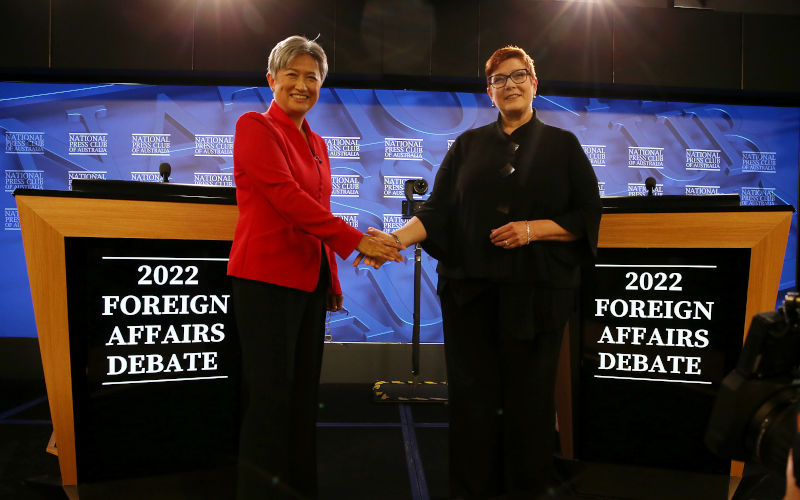
The discussion of foreign policy is one of the low points in the election. It is hard to be otherwise when both major parties are committed to integrating Australia’s military forces with those of the US. This severely curtails the scope for proposing independent policies and raises expectations ensuring the Government and Opposition contribute forces to almost any war America wants it to. (more…)
-
What Ministers in a new Government should do – climate change, China-US relations and our region
Foreign policy must be one of the areas where any government can find itself most constrained by the circumstances it has to deal with—“events, dear boy, events”, as former British Prime Minister Harold McMillan once said. But given that, even in the most pressing state of affairs a government can choose where it directs its discretionary resources. (more…)
-

‘New cold war’ in the South Pacific exposed
Having preened on the global stage for standing up to Beijing, the Morrison government has now been shown to have little influence in the region most crucial to our security. (more…)
-
Ethics and war: The Ukrainian tragedy
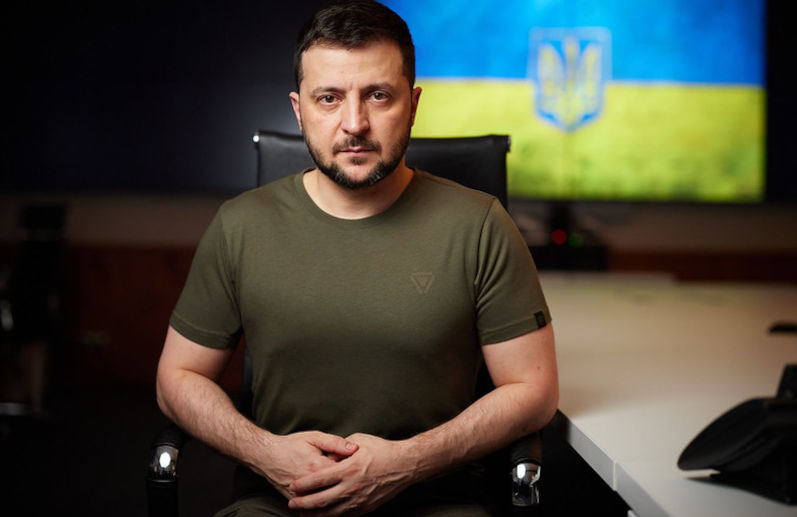
Among the headline grabbing events and the geopolitical speculations of the Ukrainian tragedy the ethical rights and wrongs of the conflict are largely ignored. For his criminal invasion, Putin rightly bears the greatest moral and legal opprobrium for the appalling death toll, atrocities, and widespread levelling of parts of eastern Ukraine. But once the war reaches its conclusion, retrospectively the contribution of others will come under closer scrutiny. (more…)
-
The Solomons have quite simply forgotten their place
The disciplines and sub-disciples of Political Science and International Relations are frequently embarrassed by their collective inabilities to provide comprehensive understandings of events ostensibly within their purview because, as disciplines, they suffer from constrained, even constipated imaginations. (more…)
-

Keith Mitchelson: Climate change and International security – Why defence is Morrison’s greatest policy failure
Scott Morrison claims to be Australia’s best defender. In reality he is its worst. His government’s subservience to local and international oligarchs has seen it neglect real interest in Australia’s long-term security and wellbeing. (more…)
-
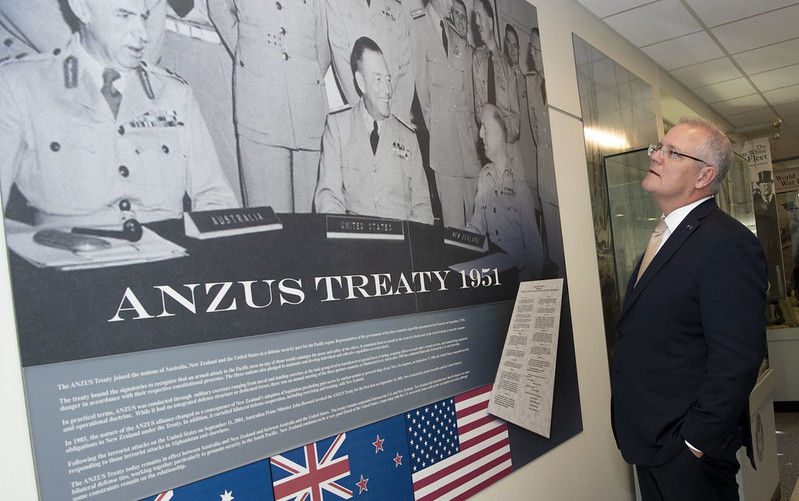
Mike Gilligan: AUKUS and submarines – a slippery slope
Not much of AUKUS adds up – at once there is too little and too much information. It looks like the bedrock of Australia’s security policy since the war is being swept aside. (more…)
-
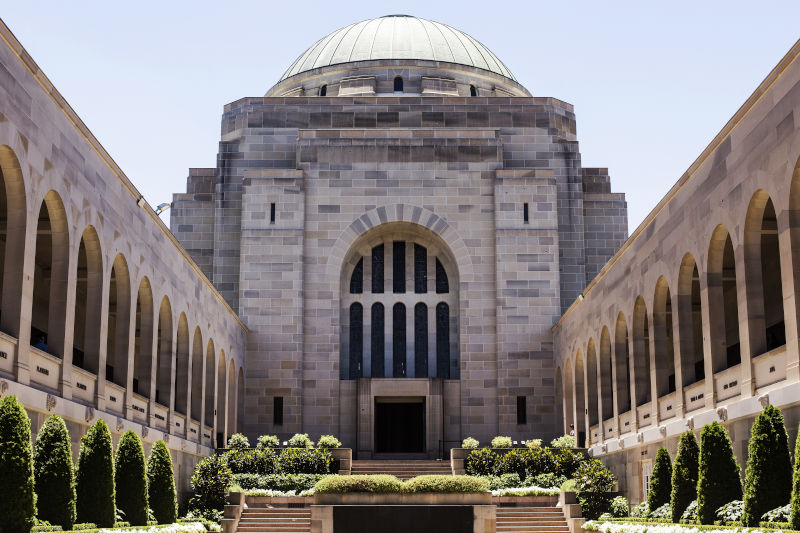
Time to reclaim remembrance
As the nation pauses to honour our war dead on Anzac Day, it is appropriate to reflect on the tainting of genuine commemoration at the Australian War Memorial (AWM) by vested interests. Added to deep concerns about the bitterly controversial $1/2 billion redevelopment, the Memorial is dividing rather than uniting Australians. (more…)
-
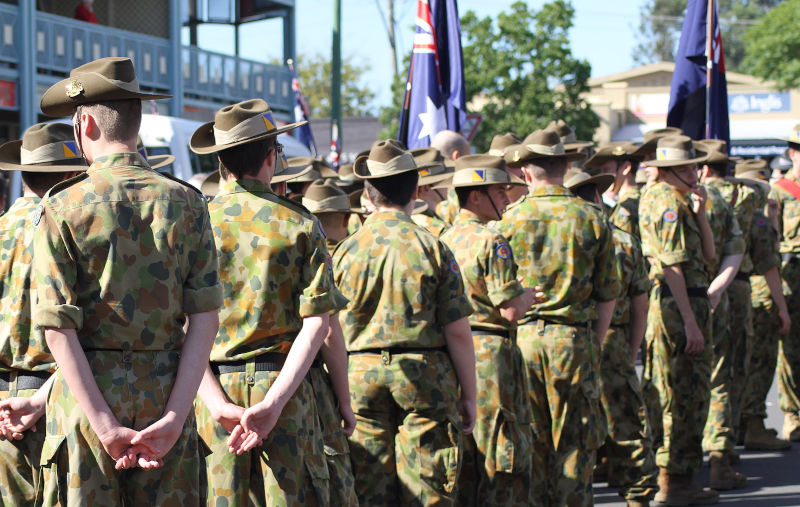
The khaki election this ANZAC Day
The khaki does not primarily represent the defence of Australia. It still represents something close to what Lord Salisbury intended it would be in the first khaki election of 1900: the defence of the empire. (more…)
-
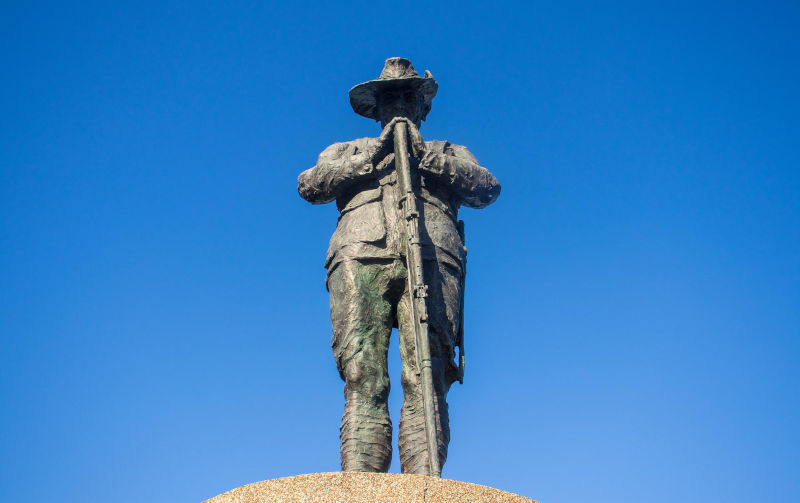
The fantasy that haunts our cult of the fallen
According to the fantasy, there is a ‘moral obligation’ toward dead Anzacs – but not to democratise the decisions that would throw live Anzacs into war. (more…)
-
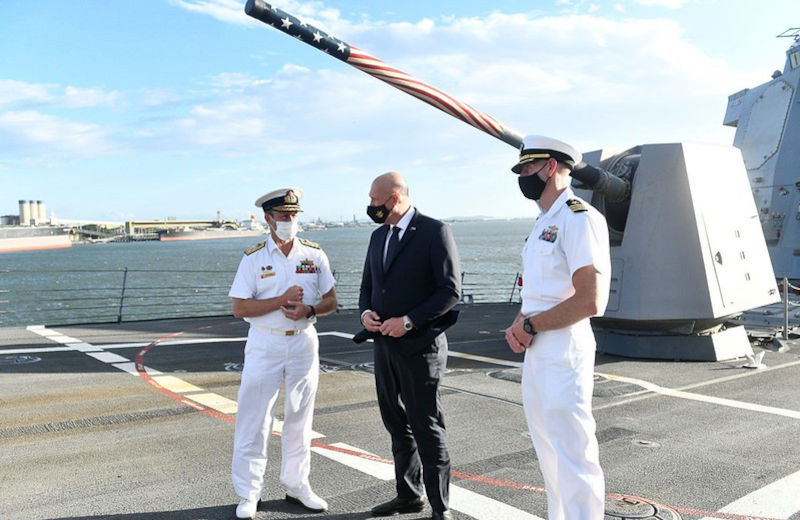
Habitual bipartisanship is toxic to good defence policy
The dominant object of Australia’s capability development program is simply to “continue to deepen Australia’s alliance with the United States”.
Politicisation and secrecy has allowed successive governments to exclude voters from defence policy decisions of the utmost importance. Only a radical shift in the portfolio’s governance can restore confidence and integrity to defence policy, and to the Defence Organisation. A courageous new minister committed to transparency and participatory democracy is required.
That the Defence organisation is struggling under mediocre management and procurement processes has been highlighted by the Australian National Audit Office, among others. First, to rectify this, defence policy has to be depoliticised and democratised. Only after that can strategic policy be aligned with genuine national interest and connected to the Defence acquisition program.
Bipartisanship over defence has mutated into a democratic pathology. Passive parliamentarians have denied the public the opportunity to hold governments accountable for defence policy. The result is alarming. Australia has apparently pre-committed to a war unexamined and uncontested. Wrapped in a veil of misleading verbiage and jingoistic sophistry, the security agencies have locked Australia into America’s strategic project in East Asia, and locked the arrangements behind a wall of secrecy.
A senior US General can openly suggest that ADF should become not “just interoperable but almost interchangeable” with the US military without causing controversy. This is so at odds with stated policy that it should have been the subject of furious Opposition scrutiny. It slipped by unremarked.
Without recourse to Parliament, the US has been given carte blanche to fly any aircraft into or berth any vessel in Australia for any purpose, whether or not it’s nuclear armed. The North is increasingly becoming home base for US forces. Without public consultation Australia has become a base for launching military operations into East Asia, a major transit and training hub for US forces, and, as a consequence, a potential nuclear target.
A cowed Opposition meekly submitted to AUKUS. It was bent on avoiding confrontation over defence policy and failed to pressure government to justify this shift. An arrangement not envisioned in or consistent with the 2020 Strategic Update. There was no parliamentary debate over Australia acquiring nuclear-powered submarines and where that might lead.
These things are not conducive to good policy making or a healthy democracy. But by talking up threats and exalting military investment as patriotism, and denoting criticism as weakness on security, successive governments have effectively stifled debate on defence policy.
The biggest policy question, that of war or peace, should be examined and debated objectively on its merits in a mature democracy. There are serious and informed disagreements on this matter which should be debated. Any government that regards itself as democratic should publicly test the mood of the voters and seek a clear mandate.
Perfunctory references to unspecified national interests, or to vague missions like maintaining the rules-based order, are not adequate to justify placing Australia and Australians in peril. The consequences of modern conflict are only too obvious around the world. However, practically, only a serving Minister can permit and energise a genuine discussion of defence policy in a way that depoliticises and democratises.
Confidence in defence policy can only be recovered through exercising a commitment to authentic participatory democracy. By acting on a recognition that only the electorate can legitimately choose between national interests and subservience.
Only demystification and transparency of defence policy making can reveal the real national interests. The Commonwealth is investing astronomical amounts in military capability. Is the current direction of taxpayer funded defence capability procurement focused on East Asia, the planned expenditure $48 billion for 2022-23, consistent with Australia’s interests? Is the militarisation of Northern Australia in the national interest? How could Australians know?
The alarmist rhetoric about threats analogous to pre-world war situations jar with the long project delivery times of major military assets. The lack of discussion of trends in counter-capabilities, or anticipated future balance of forces situations, or projected theatres of operations, means the government’s vision and logic is opaque. The connection has been broken between the capabilities being acquired and Australia’s strategic circumstances.
The 2020 Strategic Update stated “defence planning will focus on Australia’s immediate region: ranging from the north-eastern Indian Ocean, through maritime and mainland South East Asia to Papua New Guinea and the South West Pacific”. This where the ADF must be “most capable of military cooperation with the United States”. Yet, a common understanding of the text would not include China, the South China Sea or Northeast Asia. Surreptitiously and incrementally, the government been building the ADF to be an “interchangeable” part of the US military in the South China Sea, and a cog in the defence of Taiwan. The extent of this is largely invisible to observers outside of Defence.
The dominant object of Australia’s capability development program is simply to “continue to deepen Australia’s alliance with the United States”. Is it sensible for Australia to base its planning primarily on America coming to Taiwan’s defence? What is at risk for Australians? How many Australians would be acceptable causalities, and what degree of disruption and destruction permissible?
Of course, a Defence Minister doesn’t have a freehand either. Many major decisions affecting the portfolio are taken in conjunction with ministerial colleagues on the National Security Committee of Cabinet (NSCC), which reviews and endorses capital bids for capability assets or infrastructure. The Prime Minister will normally make decisions on the deployment of the ADF following consultations in the NSCC.
Nevertheless, a resilient and influential minister could effectively push for depoliticisation and democratisation against the pressure of a bureaucracy steeped in closed door secrecy and need-to-know policymaking. The Defence Minister could encourage and facilitate an open and informed debate on defence policy.
Direction, coherence, and purpose within the Defence Organisation would follow. Strategic policy, and the acquisition program, would have a logical connection to Australia’s interests.
-
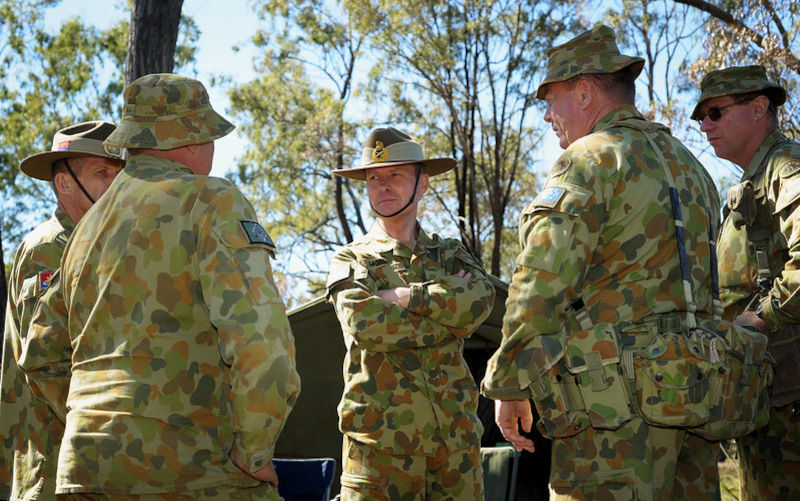
‘The standard you walk past’
The Australian Army has failed its own leadership test. Where does the buck stop? (more…)
-
Derek Woolner & David Glynne Jones – From AUKUS to the Solomon Islands: Australia’s urgent need for a cohesive strategic policy
The major issue for Australia’s program to acquire nuclear propelled submarines has little to do with the vessels. (more…)
-

Matt Robson: Sleepwalking to war: NZ is back under the nuclear umbrella
As Minister for Disarmament in the 1999-2002 Labour-Alliance Coalition I was authorised to state that we would pursue an independent foreign policy and we would not march off to almost every war launched by Great Britain and then the United States – our “traditional” allies. (more…)
-
Brett Wilkins: The US arms industry, Ukraine and the media
“The people who have the most interest in influencing the direction of the media coverage of the Ukraine War are weapons-makers.” (more…)
-

Where are the peacemakers to end the war in Ukraine? ( A repost from 22 March 2022)
We used to have globally respected statesmen, including people like Nelson Mandela, Kofi Annan and Desmond Tutu. Many of them were members of a council of “The Elders” which has tried to provide calm and sensible advice from time to time. Clearly, we seem to lack such distinguished statesmen today. (more…)
-
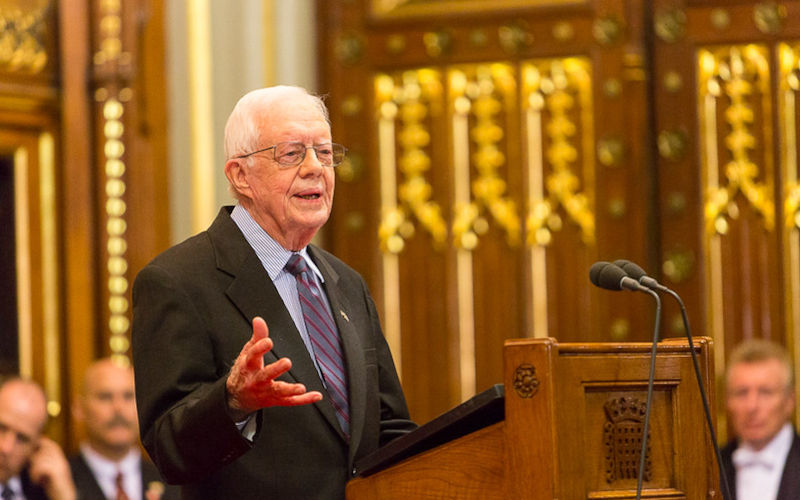
Brett Wilkins: Jimmy Carter says that the US is the ‘Most warlike nation in the history of the world’
The only US president to complete his term without war, military attack or occupation has called the United States “the most warlike nation in the history of the world.” (more…)
-
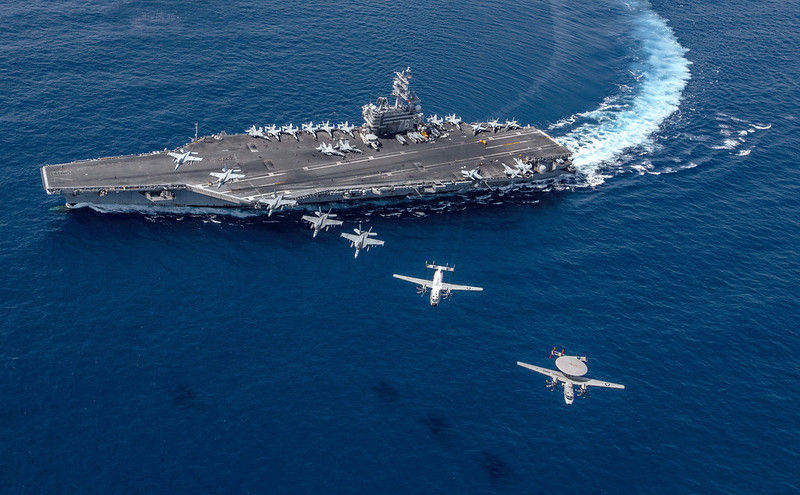
US-CHINA compromise in the South China Sea could be the basis of a larger strategic framework
China has already proposed “a new model of great power relations” implying equality and shared responsibility in world affairs. To avoid military conflict, the U.S. must accommodate to some extent China’s legitimate interests and aspirations by sharing power—when, on what issues, how, and how much are to be negotiated. (more…)
-
NATO – Western colonial shadow looms over Asia again
Making Australia an instrument of US/NATO in pursuit of objectives so consciously eschewed by our near neighbours will ultimately undermine both the security and prosperity of Australia. (more…)
-
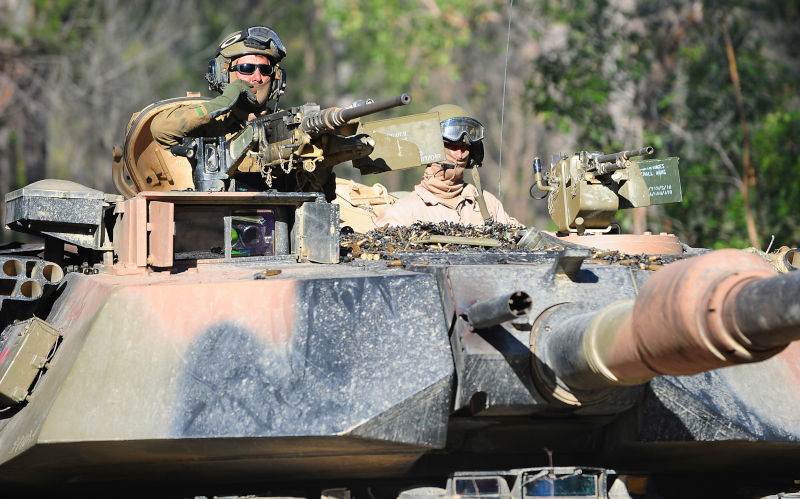
Don’t swallow the prunes – ADF’s inter-service rivalry on display
Admiral Prune’s unabashed bid for Navy funding has provided a window in to inter-service rivalry in the ADF. Also, it gives an unfortunate glimpse of the confused thinking infecting Defence. (more…)
-
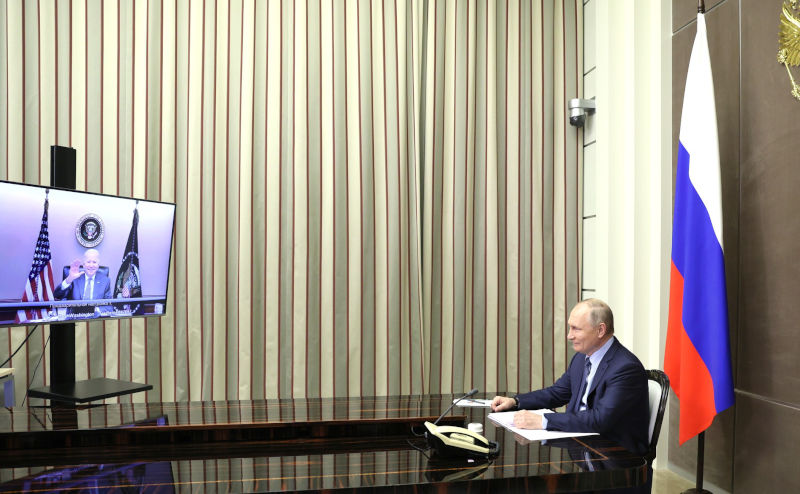
Russian and US parallel pathways to a nuclear conflict
Biden escaped rigorous critical scrutiny that is the normal lot of presidential campaigns with the help of major media and Big Tech platforms that despised Trump. The world is now discovering just how grave the real-world consequences can be when reality bites back. (more…)
-
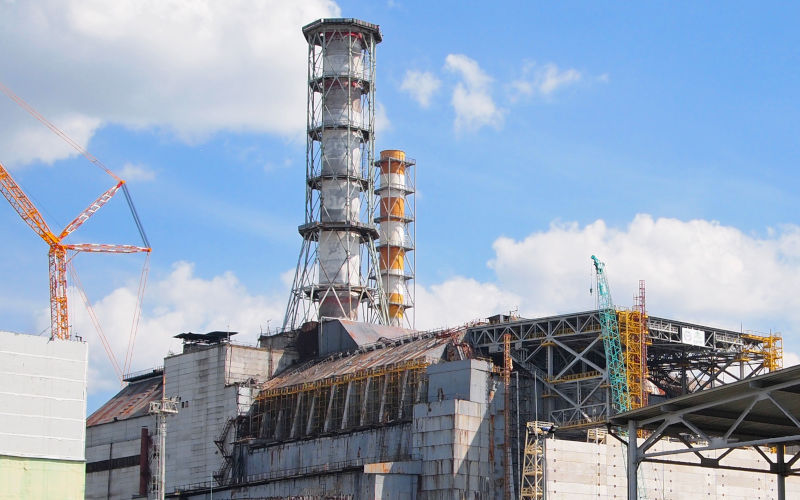
The war in Ukraine: Nuclear power, weapons and winter
Six weeks into Russia’s invasion of Ukraine, the death and destruction has been devastating. In addition, the targeting of nuclear power plants by Russia’s military has raised the spectre of a nuclear disaster. (more…)
-
Margaret Beavis: What really makes Australians more secure?
We are assured nuclear powered submarines and missiles will make us more secure, but with hospitals chronically underfunded and poverty and homelessness on the rise, are they the actually the right choice? (more…)
-

Admiral Prune: Defending Australia Part 4 of 4: People and Process
After thirty years of hand wringing about our deteriorating strategic circumstances, Australians have a right to know from the new government how it will fix Australia’s military weakness, without waiting decades. They must start with “The System”. (more…)
-

AUKUS in the hypersonic missile wonderland
As this idiotic, servile venture proceeds, Australian territory, sites and facilities will become every more attractive for assault in the fulness of time. (more…)
-
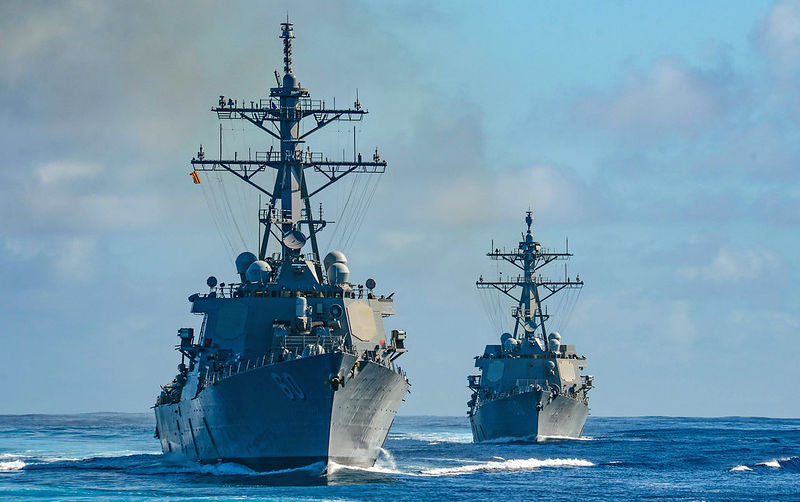
Admiral Prune: Defending Australia Part 3 of 4: What sort of ADF do we need?
Commentators suggest that the Morrison Government is attempting to frame a “khaki election”. It would be far better were it a “blue election” – sea and sky blue. (more…)