
Peter Wilenski helped reshape Australia’s public service, championing responsiveness, equality and openness. But his rejection of political neutrality left a more complicated legacy for public administration and reform today.
Peter Wilenski was a significant public servant, well deserving of the new biography by Dr Geoffrey Hawker, Peter Wilenski: Reformer.
However, Wilenski’s approach to public sector reform also warrants thoughtful criticism.
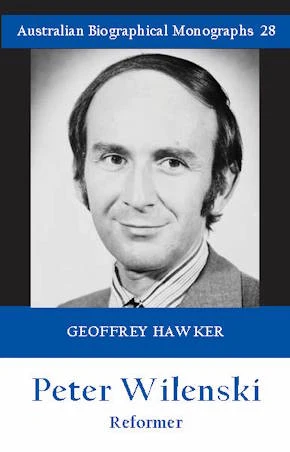 Born in Lodz, Poland, in 1939, four months before the Nazi occupation, Peter and his mother escaped through Russia to Australia; his father escaped to Britain and eventually reunited with his family in Sydney in 1946.
This harrowing Jewish background, along with student politics, laid a foundation for Wilenski’s strongly held values about equity and human rights and his interest in international relations.
His formidable academic record began with a double degree in medicine and surgery in 1962. Deciding medicine was not for him, he went to Oxford, gaining first-class honours in Philosophy, Politics and Economics and, later, a Master of Public Administration from Harvard and a Master of Arts in International Affairs from Carlton University in Canada.
On returning from Oxford in 1967, he joined the then Department of External (later Foreign) Affairs. There he experienced the first of many clashes with the public-service old-guard, including the Ambassador when he was posted to Saigon.
This had a silver lining – he met Gough Whitlam, visiting Vietnam as Deputy Opposition Leader, who recognised the bright young Wilenski’s unease about Australia’s involvement. Wilenski took a scholarship to Harvard, rejoining Foreign Affairs in 1971, then quickly moved to Treasury where he clashed with then First Assistant Secretary John Stone. Throughout his career he moved quickly from position to position; his constant was his passion for reform.
He joined the Shepherds Hut group, developing ideas for reform under a new Labor government. Whitlam met him twice pre-election and, the day after his election, read their papers on administrative arrangements and the appointment and role of ministerial staff.
Wilenski then ensconced himself in Whitlam’s office, shortly afterwards becoming his Principal Private Secretary.
Unlike many ministerial advisers under Whitlam, Wilenski remained a member of the public service. But he was hardly ‘apolitical’ and even (unsuccessfully) sought preselection for the seat of Fraser in 1974.
While his clashes with the old guard, particularly in the Public Service Board, Treasury and Foreign Affairs, may be seen as fighting those resistant to necessary reform, they are also understandable from the other side because Wilenski never accepted the necessity of public-service political neutrality.
After the 1974 election, Whitlam appointed him Special Adviser to the Coombs Royal Commission. Despite staying for just five months, his ideas are reflected in two of the three themes of Coombs’ 1976 final report:
- Increased responsiveness to the elected government by strengthening the role of ministers and providing them with greater support via ministerial staff;
- More openness in government administration, and a public service more representative of the Australian public.
Less clear is Wilenski’s influence on the third theme of increased efficiency and effectiveness.
In 1974, he was controversially appointed Secretary of the Department of Labour and Immigration where, despite his credentials, criticisms of ‘jobs for the boys’ were understandable. Less than twelve months later, Fraser replaced Whitlam and discontinued Wilenski’s appointment.
He moved to UNSW, then ANU, taking leave to review the NSW, Tasmanian and South Australian public services. Here he worked more as an active reformer alongside the Labor premiers than as an independent investigator.
He always advocated increasing the authority of ministers and the public service’s responsiveness to elected government.
He also promoted:
- Greater access to information in government;
- Openness in operations;
- Merit-based recruitment and promotions;
- Community involvement in decision-making;
- Improvements in service delivery;
- Strengthened management practices better aligned with policy goals;
- Ways to end systematic discrimination against women and underrepresentation of non-English speaking migrants in leadership roles.
Not a bad list even now, nearly 50 years later.
As the Hawke election victory approached, Wilenski became involved, with Gareth Evans, in another ginger group whose Quality of Government document highlighted the need to learn from Whitlam’s mistakes.
With Susan Ryan’s support, Wilenski became Secretary of Education and Youth Affairs then, eight months later, Chairman of the Public Service Board. At last, he had the opportunity to enact the reforms he had so long advocated.
His most successful reforms were in equal employment opportunities (EEO), delegating more authority to departments and agencies and strengthening ministerial authority. He was less comfortable with other Hawke-Keating management reforms.
In 1987, Hawke abolished the board. Wilenski next ran the new Department of Transport and Communications under Evans, tackling the enormous task of Government Business Enterprise reform.
A year later, the pair moved to DFAT, Wilenski initially as Ambassador to the United Nations. There, he pursued Australia’s ‘middle power’ role, including through work on Cambodia and APEC, protecting Antarctica and helping to dismantle apartheid in South Africa. He also advocated UN management reform.
In early 1992, he returned as Secretary of DFAT but illness forced him to take sick leave from May 1993 and he died in 1994.
Wilenski disputed the notion of an apolitical public service, once suggesting the 19th century UK reforms were not based on concepts of civil service neutrality, but were the consequence of power disputes between the Crown and the Parliament and resulted in a class-based civil service.
He saw the public service as a centre of power that needed to be countered by ministers. This was more than just enhancing ministerial authority.
He was right to argue for ministerial staff resources but went too far in advocating that ministers appoint up to 100 SES officers based on their political allegiance as well as competence.
Fortunately, Hawke did not agree, instead legislating the 1984 Members of Parliament (Staff) Act.
Wilenski also opposed tenure, notwithstanding his own long period as an unattached First Division officer. He regarded the appointment of departmental secretaries as necessarily political and believed Labor’s continued lip-service to the concept of neutrality only caused controversy when ‘spectacular appointments (presumably such as his own) appeared in breach of this principle’.
My own firm view is that the loss of tenure has contributed greatly to more recent failures such as Robodebt, Sports Rorts and Carparks.
I have no doubts about Wilenski’s many achievements, especially in improving the responsiveness of the public service to elected governments, promoting EEO and ensuring a more open and representative public service.
But just as the service was too independent and insufficiently responsive in the 1970s, it became too responsive and insufficiently independent in the 2000s.
It is sadly ironic that the politicisation Wilenski supported has caused damage beyond discouraging speaking truth to power, and over time has undermined public service capability and merit-based employment, the very things Wilenski held dear.

Andrew Podger is honorary Professor of Public Policy at The Australian National University, and former Australian Public Service Commissioner and Secretary of the Departments of Health and Aged Care, Housing and Regional Development, and Administrative Services. He was national president of the Institute of Public Administration Australia from 2004 to 2010, and a member of the foundation board of the Australian and New Zealand School of Government. He was made an Officer of the Order of Australia (AO) in 2004, and has written extensively on social policy including health financing, retirement incomes and tax and social security, and on public administration.