Miscarriages are rising, births are falling and malnutrition is harming mothers and children across Gaza, as war, displacement and the collapse of healthcare devastate reproductive health.
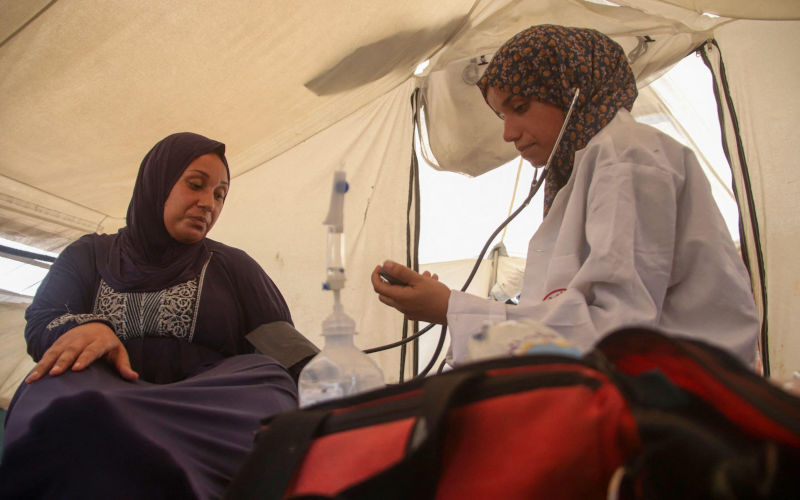
In hospitals across the Gaza Strip, pregnant women and women who have recently given birth stand in long queues to secure appointments for the medical examinations available to them and their children, before returning to their tents without treatment and without any change to the disease-ridden environment surrounding them and the health disasters they face.
Palestinians in the Gaza Strip are experiencing a comprehensive reproductive genocide, as Israeli crimes and genocide over the course of three years have compounded crises and direct and indirect impacts, resulting in an unprecedented health catastrophe.
Reports from the Palestinian Ministry of Health and international organisations such as Physicians for Human Rights and Médecins Sans Frontières (MSF) indicate a significant rise in cases of spontaneous miscarriages, a decline in the number of births, an increase in premature births, low birth weight, and congenital abnormalities, in addition to the effects of malnutrition, stunting, and disease on children. These developments are closely linked to the conditions of war, siege, displacement, and the collapse of the healthcare system since October 2023.
This reproductive collapse has manifested directly and immediately in the decline in annual and monthly birth numbers. In 2022, the annual birth rate in the Gaza Strip stood at approximately 54,700 to 57,000 births per year. But one year into the genocide, the number had fallen to approximately 38,000 births in 2024, representing a decline of around 42 per cent. This sharp decline continued, reflecting women’s inability to complete pregnancies under the prevailing conditions.
The Ministry of Health in Gaza recorded 6,076 births in November 2025. The figures then fell at an alarming and unprecedented rate during the first half of 2026, reaching 5,210 births in January, 3,433 in February, and 3,233 in March, before falling to only 2,004 births in April 2026, a decline of approximately 67 per cent compared with November 2025. The number fell again in May 2026, when only 1,701 births were recorded.
At the forefront of these crises is persistent fear, anxiety, and severe psychological pressure over prolonged periods as a result of continuous exposure to bombardment, repeated displacement, the loss of relatives, and constant fear. Prolonged elevation of stress hormones such as cortisol and adrenaline negatively affects blood circulation, reproductive hormones, and placental function, sharply increasing the risks of placental abruption, bleeding, spontaneous miscarriage, and premature birth.
Hospital data in the Gaza Strip indicate that a significant proportion of pregnancy losses are directly associated with severe psychological trauma, with women experiencing insomnia, recurring nightmares, depression, and symptoms of post-traumatic stress disorder. Field assessments estimate that more than 80 per cent of women experience persistent psychological symptoms.
These traumas and physiological disturbances have translated into an unprecedented rise in official statistics on pregnancy loss. While the miscarriage rate before the war stood at approximately 140 cases per 1,000 live births, the figures multiplied dramatically and alarmingly during the war. Approximately 1,200 miscarriages were recorded during the second half of 2025, while the first half of 2026 saw approximately 3,950 cases, more than three times the previous period. As a result, the miscarriage rate in the first half of 2026 rose to approximately 208.5 cases per 1,000 live births, reaching a peak of approximately 460 cases per 1,000 live births in April 2026. Cases of miscarriage recorded during the first trimester accounted for approximately 74 per cent of the overall total.
Alongside the psychological impact, famine, confirmed by Integrated Food Security Phase Classification (IPC) assessments at different stages, has caused acute malnutrition and severe anaemia among a large proportion of pregnant and breastfeeding women who require additional calories that are entirely unavailable. Severe deficiencies in micronutrients such as iron, folic acid, and vitamins impair foetal growth inside the womb and increase the risks of miscarriage, foetal deaths, premature birth, and low birth weight. They also impair milk production among breastfeeding women and increase life-threatening childbirth complications such as severe bleeding, as well as maternal and newborn mortality.
Reports by Médecins Sans Frontières and other medical organisations have documented that most children born to malnourished mothers were premature or underweight, with a significant increase in mortality among these infants compared with others. Despite the relative decline in the famine crisis in the Gaza Strip, the effects of periods of starvation continue and continue to severely affect women because their physical recovery remains incomplete, particularly as Israel continues to control aid and limits the types and quantities of materials entering the Gaza Strip.
This suffering is compounded by the deteriorating shelter crisis and the absence of public hygiene. Most displaced people live in overcrowded tents lacking clean water, sewage systems, and privacy, exposing women to recurrent infections and widespread genital, urinary, and skin infections, particularly amid severe shortages of sanitary products and hygiene supplies.
This environmental deterioration further increases the risks of miscarriage and serious complications during pregnancy and childbirth, as untreated infections can be transmitted directly to the foetus or cause premature birth. Doctors on the ground confirm that these unhealthy conditions directly contribute to the rise in pregnancy loss and make childbirth in an unsterile environment an additional and significant threat to the lives of mothers and newborns.
Biological risks are further intensified by the difficult new responsibilities and burdens that many women have been forced to assume because of the absence, injury, or killing of husbands and breadwinners. Women have been forced to take on dual and new roles, including managing and caring for their families entirely, fetching water and food supplies from long distances, carrying heavy loads and belongings, caring for injured and sick family members and children, engaging in strenuous physical labour in harsh displacement environments.
Field reports indicate that women have become the primary caregivers in most families, doubling their energy expenditure while depriving them of opportunities for rest or access to healthcare and placing pregnant women at heightened physical and psychological risk.
All of these harsh environmental, nutritional, and physical conditions have affected the biological development of foetuses and newborns. Congenital abnormalities doubled in 2025 compared with 2022, rising from 184 cases to 315 cases. These included severe abnormalities of the heart, nervous system, face, and limbs, which doctors link to mothers’ exposure to environmental pollutants resulting from military munitions and severe malnutrition during the early and critical stages of pregnancy. Indicators of premature birth and low birth weight also recorded major and catastrophic increases, reaching approximately 60 per cent in some indicators. This has led to an unprecedented increase in the number of children requiring intensive care units and scarce neonatal incubators.
The catastrophic health consequences for children are also clearly reflected in figures on malnutrition, stunting, and diseases resulting from the war and siege. Admissions of children for treatment of acute malnutrition peaked at approximately 17,000 cases in August 2025, coinciding with the confirmation of famine by the Integrated Food Security Phase Classification (IPC), before falling to fewer than 3,000 cases by March 2026 following improved access to aid after the ceasefire in October 2025.
A SMART survey conducted by UNICEF in June 2026 found that the global acute malnutrition rate stood at approximately 1.3 per cent in accessible areas, while stunting associated with chronic malnutrition affected 12.2 per cent of children under five, equivalent to one in every eight children. Underweight affected approximately 3.9 per cent, alongside a sharp rise in rates of infectious diseases such as diarrhoea. The same survey also recorded acute malnutrition among approximately 7 to 9 per cent of women of reproductive age, pregnant women, and breastfeeding women, in addition to significant increases in chronic anaemia.
The cumulative effects of malnutrition also create long-term risks to children’s cognitive and motor development, immune systems and likelihood of chronic disease. Thousands still urgently require treatment and ongoing medical follow-up despite improved access to aid.
Accordingly, Palestinian officials and human rights organisations use precise terms such as ‘reproductive genocide’ and ‘reproductive violence’ to describe these conditions, drawing closely on the provisions of the Convention on the Prevention and Punishment of the Crime of Genocide and reports by the United Nations Commission of Inquiry.

Refaat Ibrahim
Refaat Ibrahim is a Palestinian writer from Gaza and the founder of The Resistant Palestinian Pens ( https://resistantpens.org/ ). A graduate in English Language and Literature from the Islamic University, he writes about political, social, and cultural issues in Palestine. Through his work, he amplifies Palestinian voices under occupation, believing writing is a bridge between truth and people’s hearts and minds.