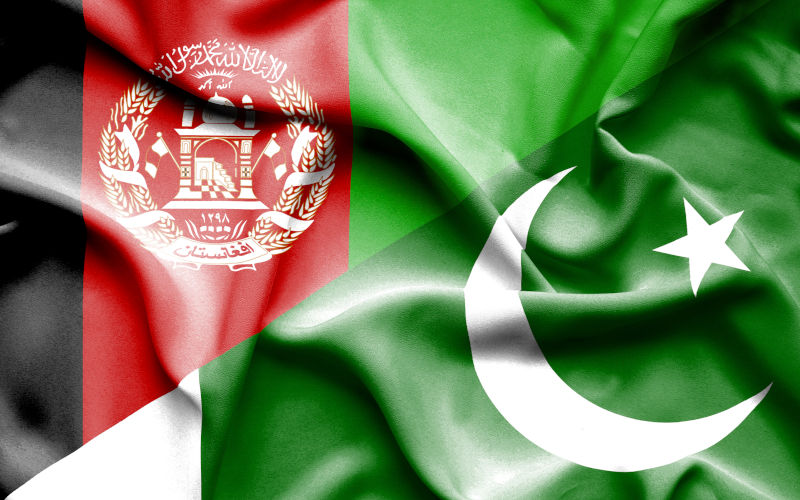
Pakistani and Afghan negotiators have to come to the table with a Plan B to break the endless cycle of bombings and retaliatory strikes.
Just before midnight on 28 June, Pakistani jets crossed into eastern Afghanistan and struck targets in Paktia, Paktika and Kunar provinces. The United Nations mission in Kabul confirmed that at least 28 civilians were killed and 49 injured, women and children among them. The deadliest strike hit a home in Paktia’s Chamkani district, where at least 22 people died in their sleep.
Islamabad told a different story. Its information minister said security forces had destroyed militant hideouts and killed 29 fighters, in retaliation for an assault on a paramilitary headquarters in Karachi days earlier. Both versions can be partly true at once, and that is the heart of the problem.
The strikes shattered barely a month of relative calm after what Pakistani officials had themselves described as an open war with their neighbour. Hundreds of people have died in cross-border fighting since February, and repeated rounds of talks have failed to produce a ceasefire that holds. Qatar, Saudi Arabia, China, Turkey and the United Nations have all urged restraint or hosted negotiations. Every effort has been overtaken by the next attack.
The uncomfortable lesson is that diplomacy is not collapsing for want of meetings, mediators or communiques. It is collapsing because the two governments arrive at every table wanting things the other cannot give.
Pakistan’s demand is security. It wants Kabul to act against the Tehreek-e-Taliban Pakistan (TTP), the militant network whose leadership and thousands of fighters found refuge across the border after the Pakistani military drove them from the tribal belt more than a decade ago. The group has since regrouped and escalated: 2025 was the deadliest year in a decade for Pakistan, with more than 600 police and soldiers killed in its attacks. Each new atrocity narrows the space in Islamabad for patience and widens it for retaliation. From Pakistan’s perspective, no normal relationship is possible while its most lethal enemy plans operations from Afghan territory.
Here is what Islamabad’s demand misses: the Taliban’s refusal is less about defiance than about survival. The TTP is not a guest to whom Kabul can quietly show the door. Its fighters share decades of trenches, tribal ties and marriages with the Afghan Taliban, and its leaders have pledged allegiance to the Taliban’s supreme leader. Turning guns on such men would test the loyalty of the Taliban’s own ranks, and any fighters cast out would find an eager recruiter waiting in Islamic State Khorasan, the Taliban’s deadliest internal enemy. Seen from Kandahar, the choice is not between pleasing Pakistan and provoking it. It is between a quarrel with a neighbour and a war inside the movement itself. Against that arithmetic, denial is the cheapest policy on offer, so Kabul insists the TTP is not there, condemns each strike as aggression and absorbs the bombs.
This is why the TTP question poisons everything else. Trade corridors, refugee returns and border management are all negotiable in principle. But Pakistan will not discuss them seriously while attacks continue, and the Taliban will not deliver the one concession that could crack their own foundations. Every bombing inside Pakistan therefore destroys whatever fragile trust the previous round of talks created.
Beneath the security dispute lies an older wound. The Durand Line, drawn by a British colonial official in 1893, divides Pashtun communities and has never been formally recognised by any Afghan government, including the Taliban. Pakistan treats the border as settled and its control of it as non-negotiable. Kabul treats formal acceptance as a betrayal of Afghan identity. When one side speaks the language of border security and the other the language of historical injustice, technical fixes such as fencing and crossing protocols settle very little.
Domestic politics deepens the trap. In both capitals, defiance sells. Pakistani leaders facing economic strain and rising insecurity gain more from striking Afghanistan than from explaining why previous strikes changed nothing. Taliban leaders short on legitimacy gain more from standing up to Islamabad than from quietly cooperating with it. Confrontation pays immediately. Peace pays slowly, if at all.
There is now evidence that the strikes are worse than ineffective. The UN documented at least 372 Afghan civilian deaths in the first three months of 2026 alone, and analysts describe Pakistan’s campaign as maximum pressure built on the untested assumption that bombing will change Taliban behaviour. Inside Afghanistan, the civilian toll is doing something Pakistan cannot want: it is rallying ordinary Afghans behind the Taliban, including many who oppose the movement’s treatment of women and girls. Each strike hands the Taliban a legitimacy it has struggled to earn on its own.
So the cycle turns. A militant attack inside Pakistan triggers a military response inside Afghanistan. Civilian deaths trigger international appeals for restraint. Officials return to a negotiating table in Doha or Istanbul. Tensions ease for a few weeks. Then another bombing restarts the sequence, each rotation leaving less trust than the one before.
None of this means diplomacy is pointless. It means mediators have been treating the symptoms. A durable settlement would need action against the TTP that the Taliban can afford, sequenced and face-saving rather than sudden and fratricidal, matched by a Pakistani commitment to end cross-border strikes. That bargain is difficult, but it is at least the right problem.
Until then, the sharpest irony of this conflict will keep working against Islamabad. Every raid meant to coerce the Taliban strengthens them politically, and every gain in Taliban confidence makes the concession Pakistan seeks less likely. Pakistan is not just failing to win the peace. Strike by strike, it is arming the other side’s argument.

Muhammad Amir
Muhammad Amir is a PhD researcher in International Relations at Deakin University, focusing on conflict resolution and regional politics.