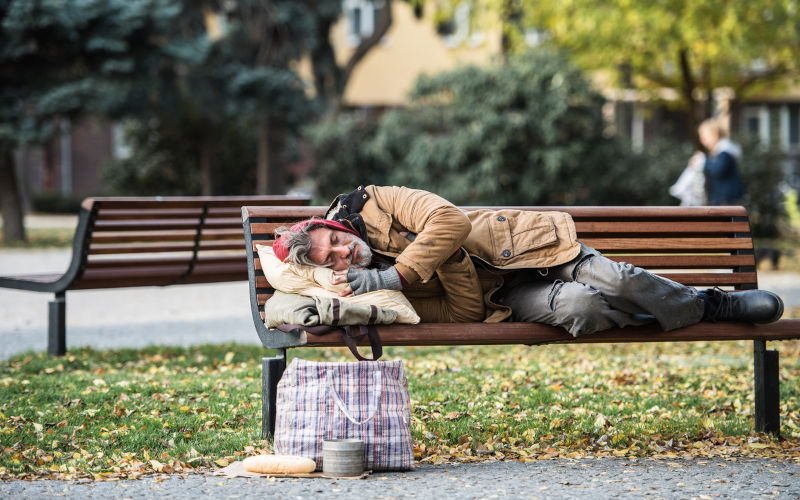
Allowing homelessness to continue is a choice. Ending it must become one too.
When we talk about homelessness, we tend to reach for the language of systems: service demand, housing markets, rough sleeping counts, vacancy rates, cost-of-living pressures, workforce shortages. All of these things are real, and all of them help explain the shape and scale of the crisis. But they can also obscure something simpler and far less comfortable. Homelessness is, at its core, unfair.
It is unfair that in a wealthy country, people are sleeping in cars, tents, parks and crisis shelters, or staying in overcrowded houses and unsafe relationships, because a secure home is out of reach. It is unfair that a person’s chance of having somewhere safe to live can turn on circumstances they never chose. These may be that they were born into poverty, experienced violence, left care without support, live with mental illness or disability, are Aboriginal or Torres Strait Islander, cannot navigate a maze of forms and waiting lists or happen to live in a region where the rental market has tightened beyond reach.
And it is unfair that we have built systems in which people must often demonstrate the depth of their suffering before help arrives; systems in which homelessness is still treated, too often, as a personal failure rather than a failure of policy, planning, investment and shared responsibility.
Understood this way, homelessness is a social justice issue before it is anything else. It is a question of who gets safety and who does not; who gets privacy; who gets the chance to recover, work, parent, study and take part in community life; who is left simply trying to survive from one day to the next.
A home is not just a roof. It is the foundation on which people build everything else, and without it, everything else becomes harder. Health deteriorates, employment becomes precarious, children’s schooling is disrupted, family relationships come under strain, trauma deepens and the ability to plan for the future shrinks.
When we allow homelessness to continue, we are not simply allowing people to go without housing. We are allowing them to be pushed steadily further from fairness, dignity and opportunity.
This is why the language we use matters. If we describe homelessness only as “complex”, we risk making it sound unsolvable. If we describe it only as “unfortunate”, we make it sound accidental. And if we reduce it to “demand pressure”, we remove the human injustice from the centre of the conversation.
Homelessness is genuinely complex, but it is not mysterious. We know that people need enough income to afford housing, and that communities need enough social and affordable homes. We know that people leaving hospitals, prisons, care systems and situations of domestic and family violence need safe pathways into housing; that rough sleeping requires assertive outreach, health support and permanent housing options; that young people need early intervention before crisis becomes entrenched; and that First Nations people must have access to culturally safe housing and support shaped by self-determination.
The problem, in other words, is not that we do not know what helps. The problem is that we have tolerated a gap between what we know and what we are prepared to do. That gap is where injustice lives. It lives in housing systems that cannot keep pace with need, and in short-term funding cycles that reward activity but rarely produce lasting change. It lives in eligibility rules that exclude people who plainly cannot afford a home, on the assumption that emergency responses are sufficient even as people remain trapped in homelessness for months or years, and in the quiet acceptance that some people will always be left out.
No community should accept that as normal. The persistence of homelessness puts a moral question to all of us: what level of suffering are we willing to walk past? If we believe in fairness, we cannot be satisfied with managing homelessness more efficiently. Better crisis responses matter, but justice asks for more than crisis management. It asks for prevention, for housing supply that matches real need, for support that stays with people for as long as it is needed, and for systems that share responsibility rather than passing people from door to door.
Above all, it asks for a shift in expectation. We should expect that when someone becomes homeless, a coordinated system stands ready to help them quickly. We should expect that no child grows up in a motel room because there is nowhere else to go, that older people are not left sleeping rough after a lifetime of contribution, that escaping violence does not mean entering homelessness, and that people with complex health needs are met with housing and care rather than judgement and delay.
These are not radical expectations. They are basic ones. The genuinely radical position is to accept homelessness as inevitable.
Because it is not. Homelessness is produced by choices: choices about housing investment, income support, planning, health, justice, child protection, domestic and family violence responses, service funding and political priorities. If choices created the conditions in which homelessness grows, then different choices can reduce it and, ultimately, end it. That does not make the work easy. It demands discipline, coordination, resources and persistence, and it requires governments, services, housing providers, health systems, councils, communities and people with lived experience working together toward measurable outcomes. Difficulty is not an excuse for injustice.
We have ended other things we once tolerated. We have changed laws, built systems, shifted norms and expanded rights whenever enough people decided the status quo was no longer acceptable. Homelessness belongs in that same category, not as a charitable cause, not as a seasonal concern, not as something to notice during awareness weeks and fundraising campaigns, but as a social justice issue that demands structural change.
The measure of a fair society is not how comfortable life is for those who are already secure; it is whether people in the hardest circumstances are still treated as fully human, fully worthy and fully entitled to safety, dignity and a place to call home.

Fabian Webber
Fabian Webber is a community-sector leader dedicated to driving systemic change across housing, health, and homelessness in Central Queensland. As Program Development Manager at Roseberry Qld and Project Lead for the region’s CQ Zero initiative, he champions data-driven, person-centred approaches to ending homelessness, integrating Advance to Zero methodology with strong place-based collaboration. Fabian also serves as Chair of the CQ Housing & Homelessness Alliance, working closely with local councils, health services, and government partners to strengthen coordination, influence policy, and expand regional housing solutions.