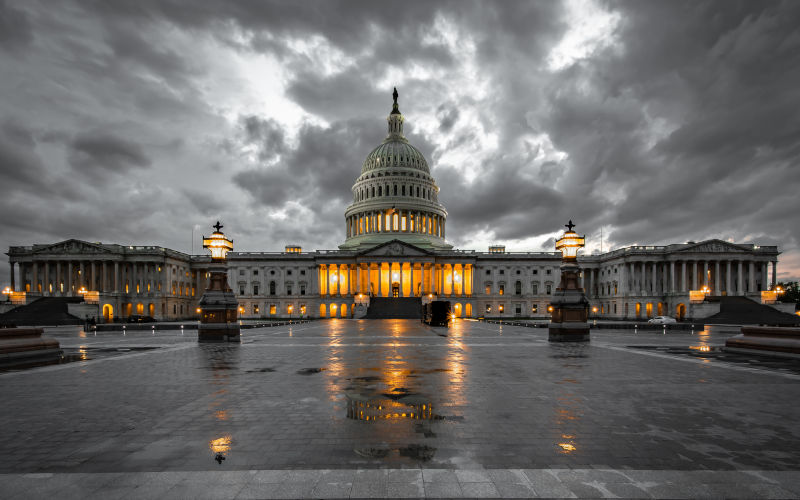
The US and UK governments continue to ignore their parliaments and public opinion, on the most important issue, going to war. Again Australia is on the wrong side.
Non-drinker President Trump returned from Beijing with a glass an eighth-full at best, with China refusing to join him in the Gulf. Prime Minister Benjamin Netanyahu urged Trump to revive bombing of Iran, and to push for a ground force invasion, ostensibly to seize nuclear fuel. Netanyahu knew that Trump was wedged between on the one hand, his Jewish-American financial and political backers who would not countenance peace with Iran, and on the other, Trump’s need to safeguard his own and his family’s investments against the looming global recession brought on by his unprovoked attack on Iran.
Trump doesn’t need another ‘forever war’ if he hopes to win the mid-term election in November, let alone a Nobel Peace Prize. But he does need a perpetual distraction from the Epstein files to which Mossad reportedly has access and could threaten to release.
So Trump, to oblige the Zionist regime in its determination to destroy Iran, has committed the United States to a war it cannot win. The attack Israel wants may resume soon, even though the US Constitution states that only the legislature, not the president, can declare war.
In an eighth bid to oppose the war since the attack against Iran on 28 February, US Senators advanced their bill on 20 May with a vote of 50-47. Four Republicans and all but one of the Senate’s Democrats voted for it . A later motion for a war powers resolution from the Senate Foreign Relations Committee failed by a vote of 49-50.
These were the closest such measures have come to passing. They were timed for the expiry of the 60-day limit set by the War Powers Act of 1973. The Act requires the president to notify Congress within 48 hours of military action launched in response to an imminent threat (there was none from Iran). It bars armed forces from remaining deployed for longer than 60 days without congressional approval. Trump notified Congress of the use of force against Iran on 2 March, so expiry was on 1 May. A president may request a 30-day extension to ensure the safe withdrawal of troops. That would be Trump’s next ‘off-ramp’.
In the House of Representatives, a resolution under the 1973 Act that would have required Trump to withdraw US armed forces from the war was narrowly defeated by Republicans in a tied vote: 212-212. More of them supported it than before, while others said they would vote for a future resolution with a clear withdrawal deadline. Secretary of War Pete Hegseth has cited Trump’s announcement in April of a ‘ceasefire’ to claim that the war has not exceeded 60 days. But Trump and Secretary of State Marco Rubio say the Act is unconstitutional. If Congress soon passes a war powers resolution against the war on Iran, the next battle with the Administration could be in the courts.
Meanwhile in Britain, the fog of war and war powers persists. An unlegislated convention requires a government proposition for war to be approved by Parliament. David Cameron tried to use that convention to attack Syria in 2015, and was rejected by the Commons. Since then his prime ministerial successors have found ways around it: an ‘emergency’ in Syria in 2018, and a ‘defensive’ deployment in 2026 against Iran.
In March, former Labour leader Jeremy Corbyn wrote to Prime Minister Starmer demanding a debate and vote in Parliament on the use of UK military bases for the US war on Iran. The government’s reply to Corbyn stated that as the attacks from British bases are ‘defensive in character’ they did not meet the threshold requiring a prior parliamentary debate. Corbyn, who now heads Your Party, told his followers that there is nothing ‘defensive’ about helping the US to attack Iran. The official letter to Corbyn admitted that Parliament should ‘ordinarily be given the opportunity to vote before the UK becomes involved in significant military operations’. But in Corbyn’s view, destructive, fatal military strikes against Iran are significant, not ordinary. The British government, he told his social media followers, in seeking to bury its complicity in a catastrophic, illegal war.
And finally to Australia, where no War Powers Act exists, nor a convention, and where Greens motions for a Parliamentary debate and vote before a war have repeatedly been rejected by both major parties. Like the UK, Australia knew in advance of long-standing American and Israeli plans for regime change in Iran. It can have come as no surprise to Prime Minister Albanese to be woken by Trump in March with a demand for Australian support of the attack, to which he immediately agreed. The despatch to the UAE of a Wedgetail reconnaissance aircraft, 83 Australian forces, and probably SAS as well, committed Australia to the unprovoked, illegal US war of aggression.
Australia is again participant on the wrong side. Unless we get either a War Powers Act like the US or a convention like the UK, and honour them with a debate and vote in parliament, further disasters are inevitable.

Dr Alison Broinowski AM is a former Australian diplomat and a member of Australians fr War Powers Reform