Cheaper and more effective ways of waging war are emerging, but then there’s the American (and Australian) way that still sees the waste of horrendously expensive equipment.
In early April a US A-10 Thunderbolt II ‘Warthog’ was hit by a drone or missile over Iran near the Persian Gulf. Whatever it was doing there, the pilot ejected over Kuwaiti territory and according to US officials was rescued unharmed. The A-10 has been in service since 1977, so in US terms it is obsolete, and its loss was apparently unmourned by the Air Force.
That a single old Warthog is worth an estimated $18.8 million (all figures in US$) hasn’t been mentioned. With comprehensive upgrades, modern weapons systems, and the high cost of maintenance, its total value can exceed $120 million. But despite that expensive lipstick, it’s still a warthog.
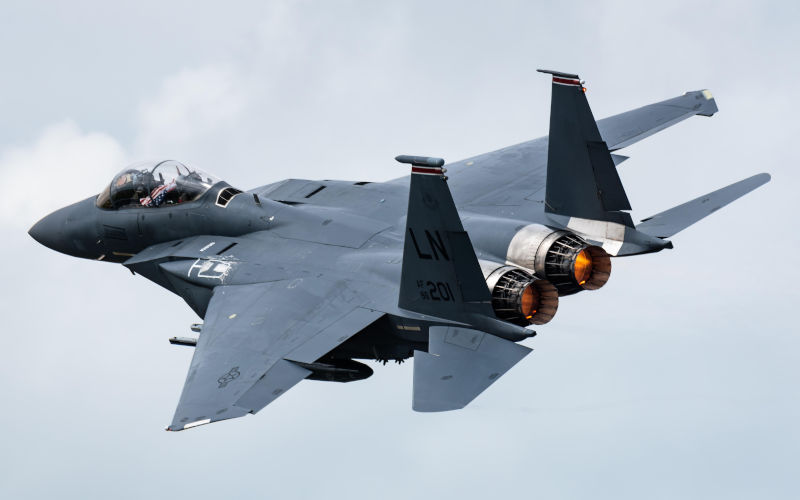
Also costly, at $65 million, was the F-15 Strike Eagle jet fighter that crashed on 3 April, brought down by Iranian shoulder-fired missiles or advanced air defences in Isfahan province. The US mission over two days to rescue the pilot resulted in the loss of two helicopters and, to prevent capture by local forces, destruction of two transport aircraft. The airman and his ‘weapons systems officer’ were extracted, but the incident was compared with Iran in 1980.
Why 1980? In that year, the US attempt to rescue 52 diplomats and others taken hostage by Iran’s revolutionary government in 1979 included the ‘Desert One’ incident, in which a US
C-130 transport plane and a Navy helicopter collided, killing five Air Force personnel and three marines. The mission was aborted. That Sikorsky RH-53D helicopter is now worth between $1 million and $30 million.
An earlier example of extravagant US military wastage was in April 1975 when the imminent fall of Saigon to North Vietnamese forces inspired the US military to push millions of dollars’ worth of UH-1 ‘Huey’ helicopters off aircraft carriers into the sea, to make landing space for incoming evacuees from the north. An estimated 40-50 Hueys were ditched.
In 1993, the US mounted a mission to Somalia to capture militia leaders. Two Black Hawk helicopters were shot down by rocket propelled grenades (RPGs) and elite American forces were trapped in Mogadishu. Eighteen US military people died, 84 were wounded, and so were hundreds of Somalis. Today, a new baseline UH-60M helicopter costs approximately $21 million, but when fully equipped, armed and with export packages, its price is nearly $80 million.
In Afghanistan in 2005, multiple US helicopters were lost, including a Chinook shot down by an RPG in Kunar province while trying to rescue four US Navy SEALS. All 16 US Special Operations forces (including three of the SEALs) were killed. Another Chinook crashed in a sandstorm near Ghazni, killing another 16 personnel. In August 2011 a Chinook was again shot down, and all 38 on board were killed, including 17 SEALS. Today, one Boeing CH-47F Chinook costs $83 million.
Other SEALS from Afghanistan in two Black Hawk helicopters raided Osama bin Laden’s house in Abbottabad, Pakistan in 2011. Modified for stealth at great expense, one helicopter crashed. It was abandoned by the escaping SEALS.
Concern that secret US technology might fall into the wrong hands caused the sabotage of aircraft in Iran in April 2026. After the F-15E on an unexplained mission was shot down east of Isfahan, two Black Hawks were sent to find the pilot and weapons officer. One helicopter, with the rescued pilot on board, was hit by small arms fire; some of the crew were wounded. The weapons officer, who was injured, was trapped in what President Trump called ‘treacherous mountains’ near the crash scene, ‘behind enemy lines’. To rescue him, two MC-130 J special operations transport planes went in but suffered a ‘technical malfunction’, possibly stuck in mud on a short, little used airstrip. To prevent Iranian forces acquiring their secret technology, the US team blew both aircraft up. One new C-130 Super Hercules, built by Lockheed Martin, is worth between $100 million and $115 million.
Meanwhile, Iran is using Shahed 136 drones with 50 kilogram warheads and a range of 2,500 kilometres to attack Israel and Gulf nations. They are easy to make and cost between $300 and $50,000 each; hundreds can be made in a week, according to Steven Kinzer of Brown University. The US AIM-120 interceptor missiles to shoot drones down cost over $1 million each, while Patriot interceptors cost $4 million per shot. A THAAD interceptor missile costs at least $10 million.
Kinzer says Iran’s drones are not intended to produce military victory, but to score some hits: ‘Iranians have realised that they can win simply by surviving’. The United States is learning that raw power no longer wins wars or achieves stability: ‘Superpowers do not seem so super anymore’.
As the US national debt reaches $40 trillion, the Trump administration, like its predecessors, is borrowing at unsustainable rates to wage endless war in the Middle East at a cost of nearly a billion dollars a day, more than $60 billion so far.
All of it is wasted. A land invasion from the Gulf would fail, reviving memories of Gallipoli. All 13 US bases in the Gulf States allies are either destroyed or badly damaged. Yet Trump wants Congress to approve $1.4 trillion for war.
Meanwhile in early May the US gave Israel 6,500 tons of weapons, bringing the total for this war to 115,600 tons, transported by 403 planes and 10 ships, says Chicago’s West Suburban Peace coalition Walt Zlotow. Israel uses much of it to wage a Gaza-like genocidal war in Southern Lebanon.
The horrendous, expensive waste of US wars is something Australia should consider as we pay billions for American weapons that will not ensure we win or even survive a war. The government should spend Australian taxpayers’ money on saving human lives, not destroying them.

Dr Alison Broinowski AM is a former Australian diplomat and a member of Australians fr War Powers Reform