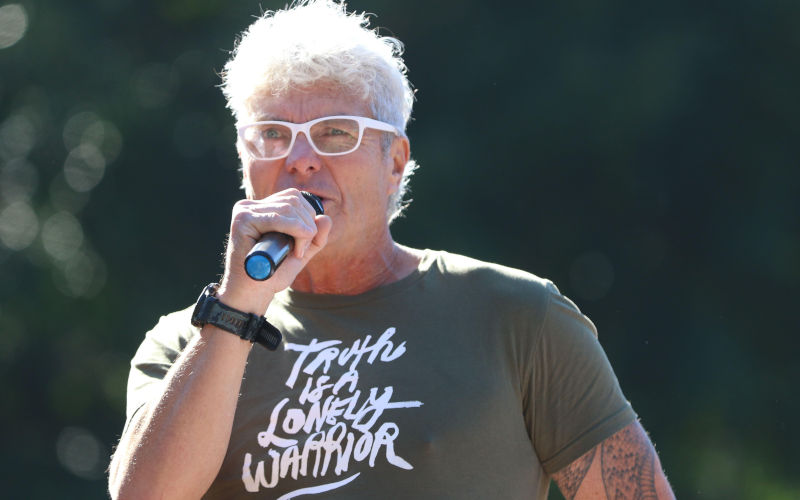
David McBride has emerged from prison after paying an extraordinary personal price for exposing information about alleged war crimes. His case should leave Australia with more than gratitude – it should leave lasting whistleblower reform.
Ask a lawyer what courage looks like and you will often get an abstraction.
Here is a concrete one involving David McBride, a former military lawyer who leaked information to the ABC that revealed alleged war crimes in Afghanistan. In November 2023, in a courtroom in Canberra, McBride watched the argument he had spent five years preparing fail. The court would not allow him a public interest defence – in essence that he had a duty to act in the public interest to ensure serious allegations saw the light of day, including where that was in conflict with a lawful order. He would not be permitted to tell a jury why he acted.
He pleaded guilty. He went to prison and served two years and three months of an almost six-year sentence. This week he walked out. He is 62 years old.
I want to write about the man rather than the law. The law has had quite enough attention in this case. It needs reform because whistleblowers should not be punished.
Consider what McBride gave up. McBride was a graduate of Sandhurst and of Oxford, a military lawyer with a high-level security clearance who held the rank of major. He served in Afghanistan twice.
Individuals in that position have everything to lose and every institutional reason to stay quiet. Almost all of them take that path. He did not. That is the whole of it.
Let us be clear about the cost, because courage means nothing without a price attached. He lost the career. He lost his liberty. He spent eight years in and out of courtrooms, from the police raid on his home in 2018, through sentencing in 2024, through the Court of Appeal, to a failed High Court application for an appeal.
Most people cannot sustain a grievance for eight months. McBride sustained a position for eight years.
He did it in public, which is harder again. He stood outside those courts and spoke to cameras when the outcome was already running against him. He said he had kept his oath to the Australian people. That is a remarkable thing to say on the way into a cell.
I have practised law long enough to know how rare that steadiness is. Defendants, often in high-pressure circumstances, break and cut deals. Perfectly understandable. McBride never abandoned his position.
The material he handed to journalists underpinned the ABC’s Afghan Files reporting in 2017. That reporting contributed to the inquiry conducted by Justice Brereton, which found credible information of unlawful killings by Australian special forces in Afghanistan. Somebody paid for that knowledge. McBride is the somebody.
There is a version of patriotism, common enough and thin, that treats loyalty as silence, particularly among those in the military, security agencies and police. But there is another that holds a country to what it says about itself. McBride’s is the second kind, and it cost him dearly.
As a nation we owe David McBride.
Thanks you for your service. All of it. The eight years in uniform and the eight years since. Thank you for being harder to break than the many in the military and political establishment assumed you would be.
The country you were arguing for is a better one than the country that jailed you. Your legacy should be a public interest defence in criminal and civil proceedings available to whistleblowers. A Whistleblower Protection Authority. The winding back of the statutory scaffolding developed particularly since 9/11 that enables governments to hide information about what this nation does to individuals and institutions in the name of national security.
That Australia does not exist yet. But it is closer than it was, and it is closer because of you. Your legacy must inspire the much-needed change in culture that ensures people like you – and other brave whistleblowers like the Canberra lawyer Bernard Collaery who revealed the Howard government’s bugging of the Timor-Leste government’s cabinet room – will no longer be dragged through a legal process that is so patently unjust.
Millions of Australians understood this. Some attended court proceedings for McBride. They held protests and fundraised. They were not confused about who he was.
Ask a lawyer what courage looks like.
It looks like a 62-year-old man walking out of the Alexander Maconochie Centre in Canberra, having been proved right but having paid for it.

Greg Barns SC is a former National President of the Australian Lawyers Alliance and Deputy Chair The Information Rights Project