Three women repatriated from Syria have been charged with serious offences under Australian law, but the response from political leaders risks undermining the right to a fair trial.
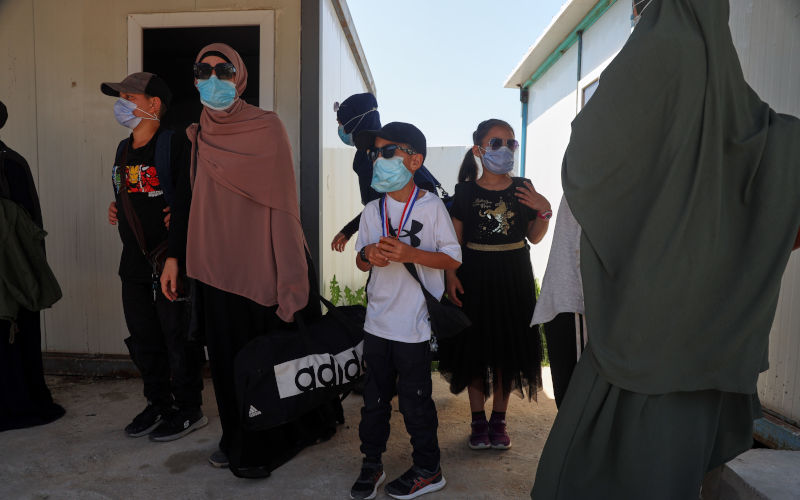
On return to Australia last week of four women and nine children from Syria, pejoratively known as the ISIS brides, three found themselves charged with criminal offences – Kawsar Abbas, 54, her daughter Zeinab Ahmad, 31 in Melbourne, and a 32 year old woman in Sydney.
All have been charged with Commonwealth Criminal Code (Code) offences. What we know from an Australian Federal Police media statement last Friday and the subsequent release of details of the charges later that day is that they are alleged to have committed slavery offences.
Both are charged with slavery and using a slave, and Ms Abbas is charged with possessing a slave and engaging in slave trading.
The AFP provided these details in its statement; “It will be alleged the woman [Abbas] travelled to Syria in 2014 with her husband and children, and was complicit in the purchase of a female slave for $US10,000 ($13,875) and knowingly kept the woman in the home.’
The charge sheets released by the Melbourne Magistrates Court tell us that Ms Abbas is accused of trading a person in Syria’s Deir ez-Zur province near the Iraqi border in June 2017, and that she and her daughter illegally used and exercised ownership over a slave until November 2018.
If convicted of these offences there is a maximum penalty of 25 years’ imprisonment facing both women.
Meanwhile the 32-year-old woman in Sydney has been charged with entering, or remaining in, declared areas, and being a member of a terrorist organisation.
The AFP says; ‘It will be alleged the woman travelled to Syria in 2015 to join her husband, who had previously left Australia and joined ISIS.’
The slavery offences are considered to be ‘crimes against humanity.’ Offences such as slavery, people trafficking, and slavery-like practices such as forced labour are incorporated into Australian domestic law by virtue of Australia signing the Rome Statute on 9 December 1998 and depositing its instrument of ratification on 1 July 2002. The International Criminal Court (ICC) was established by the Rome Statute, and commenced operations in 2002. The Rome Statute lists a number of offences that are deemed to be ‘crimes against humanity’.
It was the Howard government in 2002 that amended the Code to include divisions called ‘Offences against humanity and related offences’. In other words, Australia has incorporated the Rome Statute into Australian law.
What is meant by ‘slavery’ in the Code? It defines it in broad terms, to mean ‘the condition of a person over whom any or all of the powers attaching to the right of ownership are exercised, including where such a condition results from a debt or contract made by the person.’
And ‘slave trading’ is also defined in the Code. It means includes: ‘(a) the capture, transport or disposal of a person with the intention of reducing the person to slavery; or (b) the purchase or sale of a slave.’
The important feature of such offences is that Australia has extra-territorial jurisdiction in relation to these offences. In other words, like for example bribery offences, Australians who are alleged to have committed offences that fall within the ‘war crimes’ and ‘crimes against humanity’ categories of Commonwealth law are generally able to be charged here. On this site my colleague Benedict Coyne and I have previously discussed this possible use of the Code if there was evidence to support offences committed in Gaza by Australians.
The use of the charge of entering, or remaining in, declared areas in relation to the Sydney woman reflects a 2014 law which made it an offence carrying a maxim penalty of 10 years. It’s up to the Minister for Foreign Affairs to declare an area in a foreign country if they are satisfied that a listed terrorist organisation is engaging in a hostile activity in that area.
In 2014 Foreign Minister Julie Bishop announced the Al-Raqqa province in Syria, said to be the defacto capital of ISIS, is a declared area. The consequence of this declaration ‘means it is an offence under Australian law to enter, or remain in, Al-Raqqa province without a legitimate purpose.’
Not everyone risks jail for being in a declared area. There are legitimate purpose exceptions such as for those delivering aid, members of the media, or when undertaking UN work.
While these cases, if they proceed to trial, will raise interesting questions of law what is crucial is that each of these individuals are able to get a fair trial.
The bellicose language of the Prime Minister Mr Albanese, and his Home Affairs Minister Tony Burke, needs to end. As does that of the opposition parties, including particularly the racist One Nation.
And as for stories, such as the Herald Sun carried over the weekend that, shock horror, these women would have access to welfare and childcare subsidies, think of it this way: they are Australian citizens who have the same rights to access government programs as the rest of us.

Greg Barns SC is a former National President of the Australian Lawyers Alliance