
Modern society can measure inequality, power and behaviour in extraordinary detail, but struggles to explain despair, loneliness, hope and the human need for meaning.
We live in a culture that has lost its spirit. We know how to measure behaviour, track trends, and analyse systems, yet we no longer know what it means to be human.
Modern western culture primarily understands human beings in material terms. It speaks endlessly of identity and power but neglects the question of meaning.
The discipline that seeks to understand modern society is sociology. Yet it has moved a long way from the creative tension embedded in its own foundations between our material environment and the spirit that animates human life. To recover this neglected tension, I propose a new framework: Spiritual Sociology, which understands human beings as both material and spiritual beings.
In modern sociology, the language of the spirit has been almost entirely replaced by the language of systems. Sociologists can describe inequality in exquisite detail, yet cannot explain despair. They can trace networks of capital and power, yet cannot account for hope, forgiveness or transformation.
Spiritual Sociology begins with questions that contemporary sociology struggles to answer. Why does mental health continue to decline despite extraordinary advances in wealth, education and technology? Why has loneliness become endemic in affluent societies? Why does political polarisation continue to deepen? These questions cannot be understood solely in terms of economic disparity, identity and institutional malfeasance. They also point to the spiritual condition of modern society.
For centuries human life has been explained through religion, which provided the dominant framework for understanding order, morality and purpose. Only with the rise of modern science did thinkers begin to ask whether society itself could be studied systematically, independent of divine revelation.
Western scientific methodology was shaped by Francis Bacon’s warning against the “idols of the mind”. By “idols”, Bacon meant human instinctual beliefs and prejudices, and deference to grand systems and unquestioned authority. To combat these idols, Bacon argued that inquiry must be guided by observation and evidence rather than instinct or inherited belief.
Over time, the scientific worldview Bacon helped to shape increasingly excluded faith and spirit from legitimate ways of understanding the world. The result was dazzling progress and spiritual impoverishment.
Sociology emerged from this transformation. Karl Marx located the foundations of society almost entirely in material production. Marx’s critique of capitalism remains indispensable, since it exposes the violence of a system that converts human life into labour. His critique is still one of the best ways to understand the casualisation of work, the gig economy and growing economic inequality. Yet materialism alone cannot explain why people still ache for redemption, forgiveness or transcendence.
Max Weber recognised this missing dimension. In The Protestant Ethic and the ‘Spirit’ of Capitalism, he showed how Protestant Christianity transformed work into a spiritual vocation, which eventually hardened into a secular ethic of relentless productivity. Weber illustrated how Benjamin Franklin’s maxims – “Time is money” and “He who is idle loses money” – captured this shift from religious devotion to economic imperative. In doing so, Weber revealed that capitalism is sustained not only by material interests but also by moral and spiritual ideals.
Today that ethic survives in burnout societies, the pursuit of endless self-optimisation and the belief that human worth is measured by economic success alone. Yet Weber stopped short of developing a sociology that treated spiritual life itself as an enduring object of inquiry. As sociology became increasingly secular, that spiritual dimension largely disappeared.
Spiritual Sociology calls for a reawakening of the spiritual dimension in contemporary sociological thought, taking seriously what it means to be a spiritual creature in the modern world. Its central premise is that humans are not merely biological or economic actors, but beings who seek meaning, suffer morally, experience transcendence and long to belong. Recovering this dimension allows sociology to become what it was always meant to be, not just a science of social facts and structural forces, but a study of the spirit in society.
Spiritual Sociology begins with the radical claim that people are not confined to their present identities or past mistakes. It rejects both fatalism and reductionism. We suffer not simply from inequality or alienation, but from a loss of faith in transformation itself.
We have forgotten that people can change.
Spiritual Sociology draws from the Christian tradition, not as dogma but as a story of transformation and inclusion. Jesus of Nazareth, poor, unmarried and politically marginal, did not seek worldly power or status. He called disciples not from the religious elite but from the margins – fishermen, prostitutes, tax collectors. When Jesus encountered Matthew, a tax collector and collaborator with Roman authority, he did not demand prior righteousness or moral purity. He simply said, “Follow me”. Jesus saw not what Matthew was, but what he could become.
Spiritual Sociology is ultimately a sociology of hope – not naive optimism in material progress and endless innovation, but grounded hope, the belief that people can change, that meaning can be recovered, and that society is not a scientific machine but an unfinished moral drama. It does not deny power, structure or injustice, but insists there is also a spirit that is difficult, ambiguous, revelatory and real.
The task of Spiritual Sociology is both challenging and essential: to study the economic, political and cultural forces that shape society, while also taking seriously the spirit through which people seek meaning, belonging and hope. Only by recovering that spirit can sociology hope to rehumanise a world that has learned to explain everything except what it means to be human.
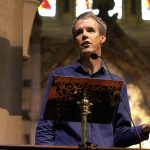
Adrian Rosenfeldt
Dr Adrian Rosenfeldt teaches at Melbourne University. He is a journalist, public speaker and the author of The God Debaters: New Atheist Identity-Making and the Religious Self in the New Millennium (2022).