In the first of a two-part series, Peter Briggs examines the technical and security risks of relying on highly enriched uranium and an unproven British reactor design for AUKUS submarines.
The political narrative surrounding the AUKUS submarine project anchors itself to a valid technical premise: that Australia will receive a sealed, life-of-type reactor, ensuring strict containment of its nuclear material throughout the operational lifecycle. However, this focus on the end product obscures two distinct, unexamined challenges on Australia’s waterfront: a demanding, early-stage industrial integration sequence, and Australia’s absolute dependence on an un-prototyped British reactor design.
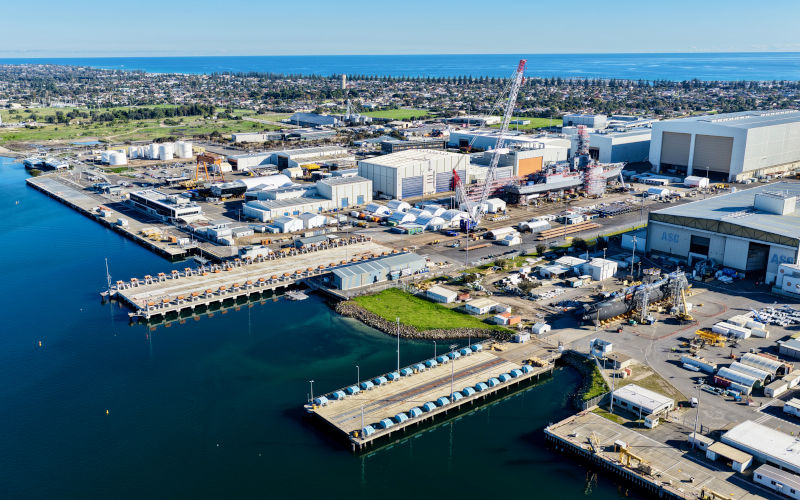
Long before a domestic AUKUS submarine ever touches salt water, the construction line at Osborne, South Australia, must accommodate these complex realities. This brings forward the timeline for physical security, regulatory oversight and international safeguards frameworks well before the first hull modules are even joined, as forecast in the March 2023 AUKUS Nuclear-Powered Submarine Pathway.
Prior to initial criticality, a new naval reactor core generates no decay heat and produces no fission-product radiation, making it radiologically benign in an industrial environment. Consequently, the immediate industrial challenge at Osborne during assembly is not one of radiological containment, active shore-supported cooling loops or real-time telemetry. Instead, the burden is defined entirely by the stringent demands of physical security, strict chain of custody and international non-proliferation protocols.
Assuming SSN-AUKUS uses the standard manufacturing sequence followed in the US and UK, the reactor will arrive from Rolls-Royce UK, fully sealed as a self-contained unit encasing the fuel and control rods, shipped inside a robust transportation vessel. Shipyard personnel then weld the external pipework and slide the hull “tube” module over the reactor unit, creating a single, integrated hull section that is subsequently mated with other modules during final consolidation. The immense structural, safety and operational challenges of relying on these un-refuellable British architectures are highlighted by independent research submitted to the Parliament of Australia. Alternatively, the reactor could be imported within a completed hull section containing the reactor. The intended solution should be confirmed in the interest of public understanding.
Either method requires similar handling on the domestic build line at Osborne. The engineering sequence presents a significant logistical and regulatory pathway. Once the fuel-bearing module arrives at the shipyard, the platform requires absolute physical isolation. Long before the submarine is launched or the reactor is brought to criticality, the Osborne facility itself is transformed into a high-value security asset. This automatically escalates the domestic physical security, regulatory oversight and international safeguards frameworks required on the South Australian waterfront from day one.
Satisfying International Atomic Energy Agency (IAEA) protocols for hosting Category I Special Nuclear Material will demand ultra-high-security physical barriers, armed security constabularies, dedicated exclusion zones well before a single vessel reaches salt water and positive vetting for all personnel on site with access to the submarine.
This regulatory burden highlights a stark contrast with the alternative Low Enriched Uranium (LEU) pathway, such as that used by France’s Suffren-class submarines or Australia’s Lucas Heights OPAL research reactor. Because LEU fuel is enriched below the threshold for weapons usability, during transport and construction it falls into a significantly lower IAEA safeguards category. In an LEU build process, the uncommissioned core requires strict industrial quality controls, but it does not trigger the immediate, draconian physical protection protocols dictated by Category I Special Nuclear Material, a distinction explored in the Princeton University Science & Global Security Program analysis.
Choosing a Highly Enriched Uranium (HEU) pathway means Australia inherits the maximum international oversight framework very early in the shipyard line. While an LEU SSN construction program certainly demands rigorous sovereign stewardship, it avoids transforming a domestic commercial shipyard into a multi-layered, heavily armed military exclusion zone years before the vessel receives its final systems.
Crucially, the broader strategic debate over naval fuel types is shifting rapidly, driven by legislative prodding within the United States itself. For over a decade, the US Congress has consistently directed the National Nuclear Security Administration (NNSA) and the Office of Naval Reactors to research and assess the feasibility of transitioning US naval propulsion away from weapons-grade HEU to an advanced high-density LEU fuel system. Bipartisan congressional coalitions have repeatedly authorised and increased targeted R&D funding specifically to evaluate LEU alternative reactor concepts for next-generation carriers and attack submarines.
The Office of Naval Reactors has historically demonstrated significant institutional resistance to this legislative pressure. The command has routinely pushed back, maintaining in successive formal reports to Congress – such as the July 2016 Conceptual Research and Development Plan for Low-Enriched Uranium Naval Fuel – that an LEU system remains uneconomic and impractical for space-constrained submarine hulls, arguing that it would inevitably decrease reactor core endurance or demand unacceptably large hull diameters. Proponents of non-proliferation have characterised this stance as systemic bureaucratic stalling. Some warn that by dragging its heels on validating LEU fuels ahead of the looming engineering freeze for next-generation submarine replacement programs, the Office of Naval Reactors could effectively lock out the possibility of an LEU conversion until at least the 2070s.
This friction underscores another aspect of reactor design to be considered. The PWR3+ is a variant of the PWR3, itself developed with extensive US Navy engineering support and modelled closely on the US S9G reactor used in Virginia-class SSNs. The PWR3 is being installed in the UK’s Dreadnought-class ballistic missile submarines, the first of which is due to go to sea in the early 2030s, under architectures authorised by the 1958 US-UK Mutual Defence Agreement. The PWR3 reactor has yet to go critical and has had a chequered development, meaning that successful delivery of the project may be unachievable.
As a cost-saving measure, the UK has broken with previous practice and has not constructed a shore-based prototype to test the reactor ahead of its use at sea. It is relying instead on computer simulation. This flys in the face of experience gained when the PWR2 shore-based prototype detected a critical problem with fuel cladding fatigue, which subsequently triggered the urgent refuelling of HMS Vanguard.
The operational reality of a sealed reactor introduces a profound exposure to low-probability, high-consequence failures. In the realm of nuclear engineering, minor structural or design anomalies can have disproportionate operational consequences. This reality was starkly demonstrated in May 2000, when the Trafalgar-class hunter-killer submarine HMS Tireless suffered a thermal-hydraulic leak in its primary coolant circuit while operating in the Mediterranean. Although the boat safely reached Gibraltar under auxiliary diesel power, technical assessments concluded that towing the damaged hull back to the United Kingdom introduced an unacceptable risk of a catastrophic loss-of-coolant accident. As a result, Tireless was marooned alongside at Gibraltar for 353 days while a highly complex, politically charged engineering remediation facility was constructed to repair the primary circuit in situ.
If a mature, prototyped reactor design can suffer a generic welding fatigue defect that completely paralyses its deployment and defies easy transit, the risks surrounding an unproven, un-prototyped architecture are multiplied significantly. The Tireless incident underscores the fact that a sealed reactor is an asset only as long as its internal systems remain completely defect free. Should a sealed, life-of-type core suffer a premature internal cladding failure or primary circuit defect on our shores, it would be a long, high-risk transfer back to the United Kingdom for a warranty claim. (The differences between LEU and HEU technologies in end-of-life handling of spent fuel and radioactive reactor shells are far starker, a subject for my next article.)
A transparent, unembellished understanding of these technical trade-offs is essential if Australia is to successfully execute its responsibilities as a sovereign nuclear steward. Before the first steel is cut at Osborne, the Australian public requires explicit technical and political clarification on how this unprecedented security and industrial sequence is to be managed.
Ultimately, the decision to rely on an unproven, un-prototyped PWR3+ variant introduces an acute layer of sovereign risk to the domestic build line. If a sealed reactor suffers a premature internal defect on our shores, Australia faces a catastrophic operational and logistical bottleneck with zero domestic capacity for remediation. When it comes to the realities of securing HEU reactors and managing un-prototyped propulsion systems on our shores, there is indeed far more than meets the eye.

Peter Briggs
Peter Briggs retired from the RAN in 2001 after a 40-year career, specialising in submarines. This included two submarine commands, command of the RAN Submarine Squadron, director of Submarine Policy and Warfare and Head of Submarine Capability Team, established to rectify Collins introduction into service issues. He was the president of the Submarine Institute of Australia from 2006-09 and is a frequent contributor to public debate on Australian submarine matters.