After a landmark High Court ruling on the Scope 3 emissions from exported coal, the Minns government plans special legislation allowing Mount Pleasant to keep producing at higher levels until 2032.
This month, in a landmark ruling, the High Court upheld the NSW Court of Appeal’s invalidation of approval for extension of MACH Energy’s Mount Pleasant coal mine in the NSW Hunter Valley. This extension would have doubled the mine’s production to 21 million tonnes a year, producing a total of 870 million tonnes of carbon dioxide equivalent emissions, roughly twice Australia’s annual emissions. Yet another massive Australian-supplied climate bomb as the world hurtles towards climate catastrophe.
A 3–2 majority found that the NSW Independent Planning Commission (IPC) failed to consider imposing conditions to minimise, to the greatest extent practicable, all of the project’s greenhouse gas emissions, including Scope 3 emissions released when the coal is burned overseas. These make up the overwhelming majority of the project’s total emissions, some 98 per cent. The IPC had treated them as dealt with because importing countries account for them under their Paris Agreement obligations.
This was the High Court’s first substantive climate change judgment. As the litigants’ lawyer Elaine Johnson said, NSW planning authorities must now consider how to limit emissions from coal burned overseas – consequential since Australia is the world’s second-largest coal exporter. The judgment also notes the statutory responsibility on MACH, as the proponent, to propose conditions to mitigate the project’s adverse environmental effects.
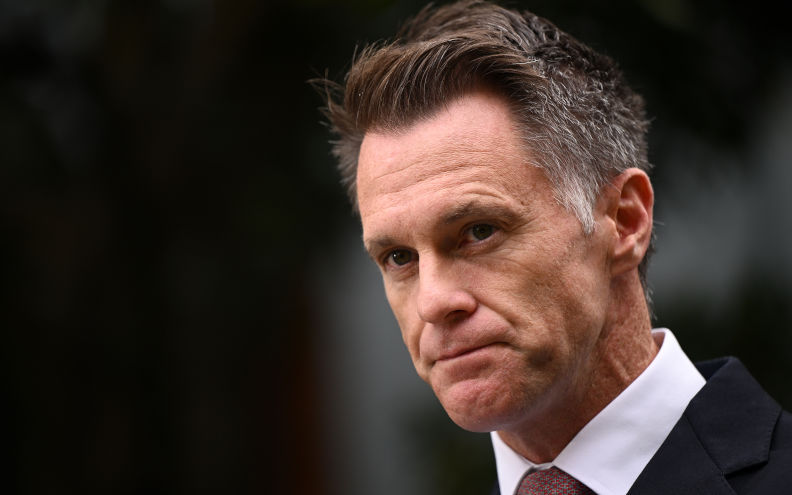
Now there has been a further twist. Capitulating to threats from the coal multinational to cut jobs, NSW Labor Premier Chris Minns announced this week special legislation to legislate around the High Court’s decision, authorising MACH to increase the mine’s annual output by 32 per cent, or 4 million tonnes, to 16.5 million tonnes a year to 2032. Former Supreme Court judge Anthony Whealy, now on the board of the Centre for Public Integrity, says the intervention is “reprehensible“, ignores the “rule of law”, and sets “a dangerous precedent”. As Greens MP Sue Higginson observes, this legislative overreach means that “under Labor the coal mining giants are writing the laws, and they are laws that will cause significant unassessed climate pollution and hurt communities”.
Fossil fuel mining approvals rely on cost-benefit analysis of the proposal. These analyses count the benefits of a mine (royalties, tax, wages and supplier spending) but almost none of the cost of the emissions the coal causes. Scope 3 emissions are either omitted by convention or scaled down to an irrelevant share of their global cost on the grounds that they occur overseas. This accounting convention entirely ignores that there is one atmosphere, irrespective of where our coal is burned.
In our view, the key test should be a cost-benefit analysis that prices all emissions, including Scope 3, at levels set in established carbon markets, such as the Australian Carbon Credit Unit (ACCU) price or, better still, the EU emissions trading scheme (ETS) price. On that basis, the negative carbon liability would vastly outweigh the localised royalty and wage benefits. Applying EU ETS pricing of €85/tonne, or even ACCUs at A$38/tonne, almost no new coal mine proposal would pass that test: the market at work.
Minns’ move underscores how critical it is for NSW to invest in building out new low-emissions industries and jobs, and show the courage to align policy with climate science. Policies to ensure coal mining pivots from reliance on expensive, high-emissions imported diesel to electric mining trucks powered by domestic renewable electricity would be a good start.
Predictably, the coal lobby is cheering Minns’ latest intervention on behalf of Big Coal, responding that the High Court ruling undermined investment certainty. The fact is that the uncertainty was a product of an approval that did not meet the legal test. The real investment risk for coal investors is flagging demand in a global marketplace where our key trading partners are transitioning to economy-wide decarbonisation, and will depend less on our coal exports.
For example, this month South Korea announced its Korean Green Transformation plan, committing about US$747 billion over 2026–35. It targets 100GW of renewable capacity by 2030, a high-capacity grid overhaul, and decarbonisation of the five highest-emitting industries including steel. Korea plans to develop a roadmap to phase out its 60 coal-fired power plants by 2040. Ember estimates Korea’s 100GW renewables target would avoid a further US$12 billion a year in fossil fuel imports.
This is an opportunity for what Professor Elizabeth Thurbon terms Australian Green Energy Statecraft, for example, a Korea-Australia bilateral agreement for green value-adding of Australian commodities, sold to Korean corporate majors under assured long-term offtake. Australia has the renewable resources, critical minerals and industrial base to supply green iron and steel to Korea. In return, Australia would commit to offtake of Korean-manufactured products, as Mission Possible Partnership’s James Boyle argues.
Unlocking this green industrial growth potential – and reducing emissions – requires domestic policy architecture that addresses systemic carbon market and pricing failures, and ensures that polluters pay. The federal Safeguard Mechanism covers Scope 1 emissions at large industrial facilities, that is, emissions generated by the operation of those facilities, and puts a price on these – a critical lever to drive industrial decarbonisation. In CEF’s September submission to the current federal Safeguard Mechanism review, we recommended lowering the coverage threshold for facilities to capture more of them, and extending the mechanism to electricity sector emissions. In other words, more polluters would pay, incentivising them to slash emissions.
CEF also advocates for a path towards an Asian carbon border adjustment mechanism (CBAM), developed jointly by Australia, China, South Korea, Singapore and Japan, starting with steel, aluminium and cement, which together account for about 15 per cent of global emissions. A rising carbon price in real terms in regional trade would reward lower-emission producers such as Australian green aluminium, iron and steel, reduce the subsidies otherwise needed to bridge the grey cost discount (where commodities produced using fossil fuel energy enjoy an artificial cost advantage over low-carbon alternatives), and raise revenue for further industrial decarbonisation.
There remains the elephant in the room. The Albanese federal government has approved dozens of new, expanded or extended coal, oil and gas projects since it came to office. A week before the High Court ruled, the NSW IPC approved Hunter Valley Operations coal mine extension to 2045 (again, powered by scarce, expensive imported diesel), the largest coal mine extension in NSW history. This now requires federal environmental approval to proceed.
This is the fatal dissonance at the heart of the Albanese government’s climate and energy policy – great strides on clean energy, egregious ongoing betrayal of future generations on fossil fuel approvals. The climate science is clear: there is zero room for new coal and gas, and an urgent need to accelerate their phase-out. It’s more fossil fuels or a liveable planet, we can’t have both. The government needs to decide which side of history it is on. This High Court decision should give them pause.
AM Jonson
Dr AM Jonson is editorial director of CEF.
Tim Buckley
Tim Buckley is director of leading independent think tank Climate Energy Finance (CEF) and a former MD of global investment bank Citigroup.